


Even so, she had not yet finished her requests and asked, “Can I have your change?”
This time I was direct and harsh in my reply and gaze. In an authoritarian tone I told her, “No.”
It was a moment after the fact when both hemispheres of my brain reminded me why I was there. It was to observe the organization out to aid and assist women like her. Yet my first instinct upon my initial direct human encounter in Albuquerque was to be a dick.
In an attempt to recant, I grabbed my digital camera and began taking photos. I caught the one below as the woman worked her way across the street and lingered in between two of the many nearby motels. I made a note of where she went, and then began tracking everything and everyone around me so that I might pass off current and solid information to my contact, who arrived as she made her way inside a motel.

We wasted little time on pleasantries and got straight to work over a diner lunch and coffee. My contact was working in the capacity of field collection and target analysis for DeliverFund. As an expert on the local area, with a special operations background, my contact was a truly competent and capable individual. This was a person who regularly travelled alone at all hours for the sake of the cause, and was not glamorously paid or praised to do so—despite the risks and importance of the task at hand.
Before me was a member of a diverse team made up of technically and tactically savvy individuals, masters of human and signal (digital/electronic) intelligence-gathering, analysis and evaluation of that intelligence, surveillance techniques, linguistics, and a host of other skills. In all probability, there are most likely no others as well suited for this massive undertaking. With such a unique wealth of capabilities and knowledge comes experienced discipline and understanding to collect information with integrity and then strategically package that information to empower law enforcement with actionable data.
That is what DeliverFund is all about: gathering intelligence to assist the law in disrupting human trafficking. As a 501 (c) (3) non-profit organization staffed by preeminent representatives of the U.S. special operations forces and intelligence communities, DeliverFund possesses the education, methodology, and practice to realistically achieve its goals. Those goals are all focused on DeliverFunds’s overall mission: the global disruption of illegal activities that facilitate human trafficking.
DeliverFund is not a law enforcement agency, and makes no presumptions as to being one, nor does it or its staff act as law enforcement officials. The seasoned staff of DeliverFund, in their own words, “partner with law enforcement to provide the additional data and intelligence that they need to do their jobs: to save lives and rescue those unable to find a way out on their own. We are law enforcement’s biggest supporter and we advocate on their behalf by outlining strategic intelligence opportunities that allow their success rate in rescue and arrests to be that much higher.”[2] DeliverFund provides critical information in the support of law enforcement’s effort to diffuse the drastic rise of human trafficking in the United States of America.
The need for DeliverFund is apparent. There is a famine of operational data as functionary systems and perceptive knowledge on human trafficking are obtusely overcompensating. This reflects an imperceptive understanding of the symptoms, and falls short of the common knowledge field test for individualized prognosis or treatment for a prospective victim. The National Institute of Justice admits their lack of clarity on the issue, stating, “Due to the underground nature of trafficking, the number of victims is unknown.”[3] Additionally, the last holistically sound, comprehensive study on human trafficking in the United States of America was conducted in the year 2000 by the U.S. Department of Health and Human Services.
This shortfall does not deduct from current actions of individuals such as those in DeliverFund or the multi-agency support being drummed up to deter human trafficking. Although, even with increased concern and involvement from academics, healthcare professionals, and law enforcement, the lack of information is facilitating an interchange of bad data, misrepresentation, and poor accountability. This has slated the National Human Trafficking Resource Center as the data collection point for human trafficking, which tracks only the victims who are contacted.
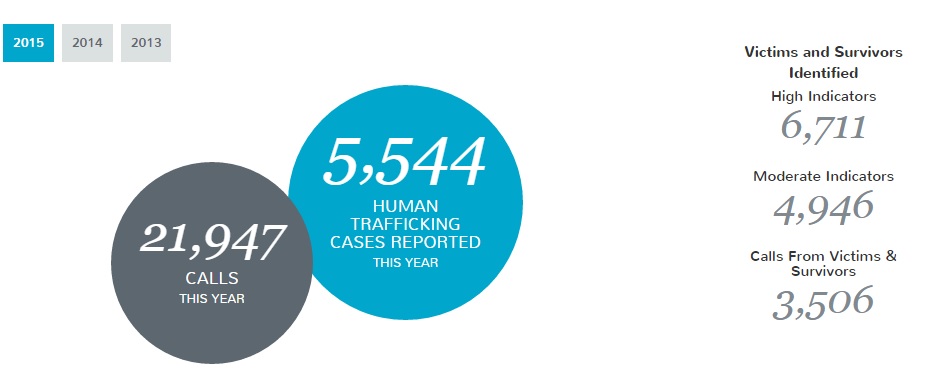
The lack of new data and understanding on human trafficking and how it operates has hindered realistic results in law enforcement and legal code. DeliverFund continues to fine-tune its intelligence-gathering and analysis capabilities as it continues to establish itself in a developing network of cities across the nation. Thus far, DeliverFund appears to be law enforcement’s Ockham’s Razor in the battle for information and knowledge to defeat human trafficking.
Image courtesy of ABC10Up








COMMENTS