

Ceiling: 50,000 feet (15,151.5 meters)
Length: 159 feet, 4 inches (48.5 meters)
Height: 40 feet, 8 inches (12.4 meters)
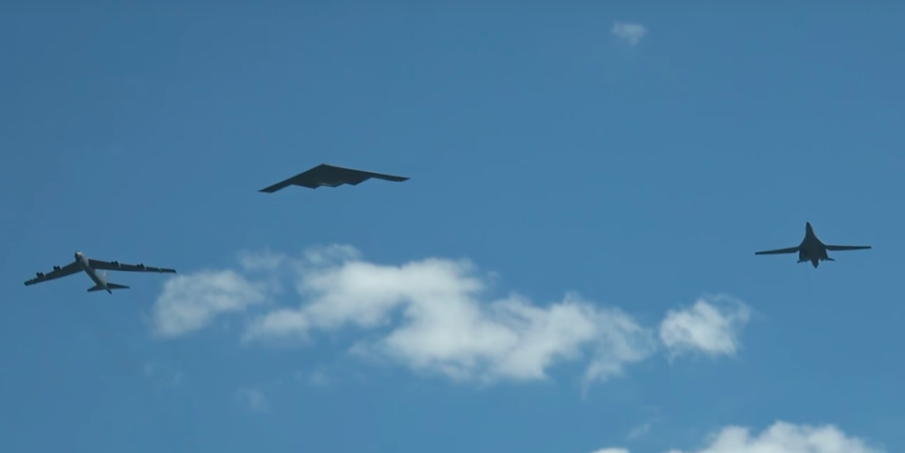
The B-52H Stratofortress is considered by the Air Force to be a long-range, multi-purpose bomber, and it serves as America’s principal strategic nuclear and conventional weapons platform – which means the B-52H represents the airborne leg of the U.S.’s nuclear triad. The oldest jet of the trio, the first B-52s entered into service in 1961, though the platform dates back as far as 1952. Thanks to comprehensive updates over the years, the plane is expected to continue to serve as America’s airborne nuke-delivery service until at least 2030. The United States currently maintains 76 of these massive aircraft, of only 104 ever built.
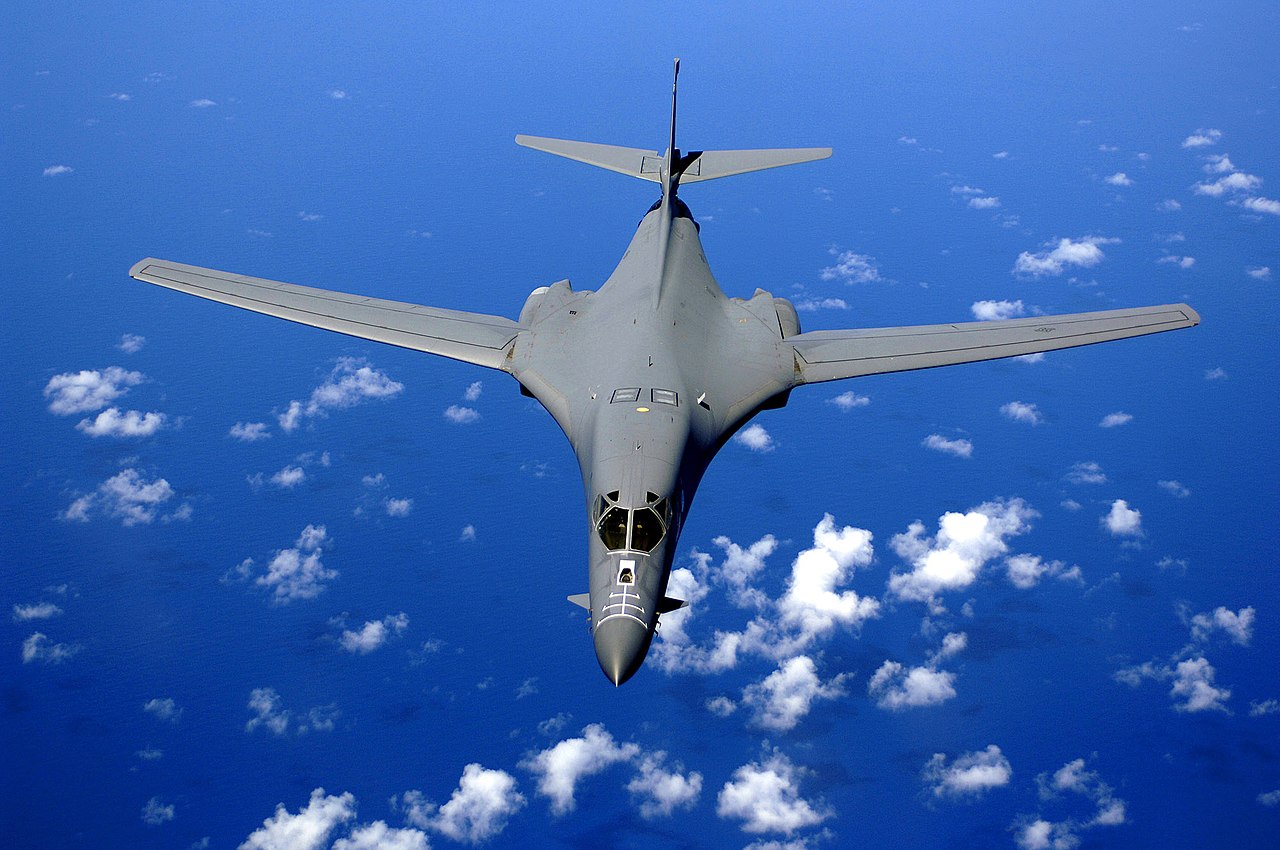
Wingspan: 137 feet (41.8 meters) extended forward, 79 feet (24.1 meters) swept aft
Speed: 900-plus mph (Mach 1.2 at sea level)
Range: Intercontinental
Payload: 75,000 pounds (34,019 kilograms)
Ceiling: More than 30,000 feet (9,144 meters)
Length: 146 feet (44.5 meters)
Height: 34 feet (10.4 meters)
The Boeing B-1B Lancer Bomber, nicknamed “the bone,” is a long-range, multi-mission, conventional bomber, though it was once outfitted to be able to carry nuclear weapons. It first entered into service in 1985 as a replacement for the B-52H, but saw a shift in strategy during the 1990s that led to it serving in a strictly conventional combat role. This supersonic bomber is said to fly like a fighter jet, making it a preferred choice for bombing runs over combat zones. In fact, during 1999’s Operation Allied Force, six B-1s flew only two percent of the strike missions, yet they dropped a whopping 20 percent of the ordnance expended by U.S. forces, thanks to its massive payload capacity of 75,000 pounds.

Wingspan: 172 feet (52.12 meters)
Speed: high subsonic
Range: intercontinental
Payload: 40,000 pounds (18,144 kilograms)
Ceiling: 50,000 feet (15,151.5 meters)
Length: 69 feet (20.9 meters)
Height: 17 feet (5.1 meters)
The B-2 Spirit, sometimes referred to as the “Stealth Bomber” is also a multi-role bomber capable of delivering both conventional and nuclear payloads. What sets it apart from its peers, however, is the aircraft’s stealth capabilities, making it extremely difficult to locate and track on radar, despite entering service back in 1993. Its composite materials are said to absorb radar waves, with reduced infrared, acoustic, and electromagnetic signatures all contributing to the aircraft’s overall stealthiness. B-2s are known to fly long duration combat missions, often leaving air fields inside the United States to deliver ordnance to targets on the other side of the world.
Image courtesy of YouTube








COMMENTS