The briefing followed days of criticism that Congress was sidelined, prompting a Senate vote this week on a war powers resolution to limit further military action without approval.
Lawmakers remain divided over Trump’s expanding use of force abroad, with concerns growing about constitutional authority, regional stability, and the absence of a clear plan for Venezuela’s political future.
Maduro’s Capture Fuels Global Fears of a Return to Power Politics
The US military operation that captured Venezuelan leader Nicolás Maduro and brought him to court in New York has intensified global concern that the post-World War II international legal order is eroding.
The Trump administration says the operation was legal, framing it as a surgical law enforcement action against alleged narco-terrorism and part of a broader strategy to restore US dominance in the Western Hemisphere.
United Nations (UN) officials, European allies, and rivals such as China and Russia condemned the move, warning it undermines the UN Charter and the principle against the use of force.
A top UN official condemned the US attack on Venezuela, saying it violated international law and could fuel instability in the region https://t.co/PZ2id8OzqF pic.twitter.com/TtD0UOj35s
— Bloomberg (@business) January 5, 2026
Critics fear the action could set a precedent for further unilateral interventions, with potential implications for conflicts and tensions involving Ukraine, Colombia, Greenland, Taiwan, Iran, and the Middle East.
As debate unfolds at the UN and among US allies, questions remain over when and how Washington may again use force, who could be targeted next, and what the long-term consequences will be for global security and international law.
Mexico Dismisses Risk of US Military Action as Trump Uses Cartel Threats for Leverage
After the US military intervention in Venezuela, Mexican officials and analysts say the likelihood of unilateral US military action against drug cartels in Mexico remains low, despite repeated threats from US President Donald Trump.
Mexican President Claudia Sheinbaum said Monday that close coordination and cooperation with Washington make such action unlikely, stressing that foreign military intervention would not address organized crime.
Analysts say Trump’s rhetoric serves as a negotiation tool to extract concessions on trade, security, and migration as Mexico complies with US demands through increased arrests, seizures, extraditions, and acceptance of deportees.
Mexican President Claudia Sheinbaum reaffirmed Mexico’s sovereignty and opposed US intervention after President Trump hinted at military action in Mexico to combat drug cartels https://t.co/uw5OwWnNvB pic.twitter.com/OHF69zG9fL
— Reuters (@Reuters) January 5, 2026
The stakes are high given Mexico’s role as the United States’ top trading partner and the upcoming review of the US-Mexico-Canada Agreement.
While experts expect continued pressure and threats from Washington, they warn that actual military intervention would jeopardize bilateral cooperation and carry significant political and economic risks, even as few are willing to rule it out entirely.
Colombian President Warns of Armed Resistance
Colombian President Gustavo Petro said Monday he would consider taking up arms if the United States threatens Colombia, responding to escalating rhetoric from US President Donald Trump following a US military operation that seized Venezuelan leader Nicolás Maduro.
Petro, Colombia’s first leftist president and a former guerrilla fighter, made the remarks on social media after Trump publicly insulted him and warned him to “watch his ass,” while accusing him, without evidence, of ties to drug trafficking.
#UPDATE 🇨🇴 🇺🇸 Colombian President Gustavo Petro said on Monday he was ready to “take up arms” in the face of threats from US counterpart Donald Trump, who over the weekend seized the leader of neighboring Venezuela in a military strike ➡️ https://t.co/MT3mii1ds1 pic.twitter.com/tTNvUscMJ1
— AFP News Agency (@AFP) January 5, 2026
The dispute comes as the Trump administration expands its military campaign in the Caribbean, imposes financial sanctions on Petro and his family, and removes Colombia from a list of US allies in the war on drugs.
Petro defended Colombia’s anti-narcotics efforts but warned that aggressive US military action could fuel civilian casualties and renewed insurgency.
Denmark Warns US Move on Greenland Would Shatter NATO
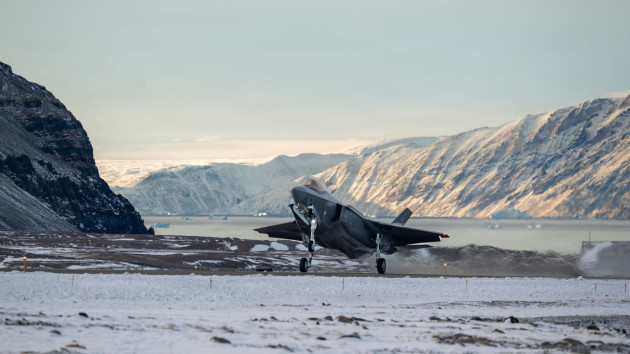
Danish Prime Minister Mette Frederiksen warned Monday that any US attempt to take control of Greenland would effectively end NATO, responding to renewed statements by US President Donald Trump calling for US authority over the Arctic island.
Trump’s comments followed a US military operation over the weekend in Venezuela that captured leader Nicolás Maduro, raising fears in Denmark and Greenland about possible American unilateral action.
Greenland, a semiautonomous territory within the Danish kingdom and a NATO member through Denmark, rejected comparisons to Venezuela, with Greenlandic Prime Minister Jens Frederik Nielsen urging calm while insisting the island cannot be conquered.
🇩🇰 🇺🇸 🇬🇱 #Danish Prime Minister Mette #Frederiksen on Sunday urged Washington to stop “threatening” #Greenland following US President Donald #Trump‘s claim that the #US “absolutely” needs the territory for national security. pic.twitter.com/lqJgeR6s4u
— FRANCE 24 English (@France24_en) January 5, 2026
Trump cited national security concerns, Russian and Chinese activity in the Arctic, and Denmark’s alleged inability to defend Greenland, claims Danish officials and experts dispute.
European leaders expressed support for Denmark as tensions rise over US intentions, existing American military presence at Greenland’s Pituffik Space Base, and the broader implications for NATO unity and international security.
Ukraine Allies Meet in Paris as US Focus on Venezuela Clouds Security Talks
Leaders from Ukraine’s allied nations met Tuesday in Paris to discuss how to secure the country after a potential ceasefire with Russia, even as uncertainty grows over US commitment following Washington’s military intervention in Venezuela.
Hosted by French President Emmanuel Macron, the summit brought together 35 participants, including 27 heads of state or government, with the United States represented by envoys Steve Witkoff and Jared Kushner instead of Secretary of State Marco Rubio.
‘Coalition of the willing’ to gather in Paris to revive Ukraine peace talks
➡️ https://t.co/ZuaSGOPd5w pic.twitter.com/a2LiCuIykF
— FRANCE 24 English (@France24_en) January 6, 2026
The talks aim to define postwar security measures, including monitoring a ceasefire, strengthening Ukraine’s military, deploying a multinational force, and setting guarantees against renewed Russian aggression.
Ukraine is pressing for firm US backing, which it views as essential to securing broader allied commitments, while Ukrainian President Volodymyr Zelenskyy warned that unresolved political and logistical hurdles could limit troop deployments.
As discussions continue, allies face questions over whether they can translate pledges into concrete action amid shifting US priorities and ongoing concerns about Russia’s long-term intentions.
Israeli Airstrikes Hit Lebanon as Disarmament Talks Near
Israel’s Air Force struck multiple sites in southern and eastern Lebanon late Monday and early Tuesday, including a commercial area in the coastal city of Sidon, as tensions persist more than a year after a ceasefire with Hezbollah.
The strikes, which Israel said targeted weapons storage sites and infrastructure used by Hezbollah and Hamas, came days before Lebanon’s Army commander is set to brief the government on efforts to disarm Hezbollah near the Israeli border.
Lebanese officials condemned the attacks as undermining deescalation and state authority, while Israel said militant groups bear responsibility for operating in civilian areas.
💢 Israeli army carried out airstrikes on several towns in eastern Lebanon
Israeli genocide leaves more than 4,000 people killed and 17,000 injured in cross-border attacks pic.twitter.com/UPczLNdBlL
— Anadolu English (@anadoluagency) January 6, 2026
At least three people were wounded in separate drone strikes, but no deaths were reported from the Sidon attack, where the building was uninhabited.
Magnitude 6.4 Earthquake Hits Western Japan, Causes Minor Injuries and Travel Disruptions
A magnitude 6.4 earthquake struck western Japan on Tuesday, shaking Shimane prefecture and nearby areas but causing no major damage or life-threatening injuries, authorities said.
The inland quake hit at a depth of about 10 kilometers (6.2 miles) near the prefectural capital of Matsue, with strong shaking also felt in neighboring Tottori prefecture. Local fire departments reported several minor injuries, and operators suspended or delayed Shinkansen bullet train services in the region.
Live footage from Shimane, Japan captures the moment a 6.2-magnitude earthquake shakes the region. https://t.co/kXN1yH3wRL pic.twitter.com/lVNw6draI3
— Open Source Intel (@Osint613) January 6, 2026
The Japan Meteorological Agency said there was no tsunami risk and warned that additional strong quakes could occur over the next week.
Nuclear regulators reported no problems at the Shimane nuclear power plant, underscoring that Japan’s location on the Pacific Ring of Fire leaves it highly vulnerable to seismic activity.
Sources: News Agencies
Morning Brief: Trump Administration Briefs Congress After Venezuela Strike, Colombia Warns of Armed Resistance, Denmark Warns US Move on Greenland
US briefed Congress on Venezuela raid as tensions rise across the region. Here’s your Tuesday morning brief for January 6, 2026.
Advertisement