Nigeria’s special forces are active and improving but still maturing, and they fight Boko Haram and ISWAP through joint, intelligence-led raids and rapid-response missions inside a larger military strained by multiple internal conflicts.
Nigerian Navy SBS (NNSBS) during a training exercise. Image Credit: Military Africa
Nigeria has been fighting a grinding internal war for more than a decade. Boko Haram and its offshoot, the Islamic State West Africa Province (ISWAP), remain active, adaptive, and lethal, particularly in the country’s northeast. The Nigerian military response hss been costly. Less understood is the role Nigeria’s special forces play inside that fight.
Advertisement
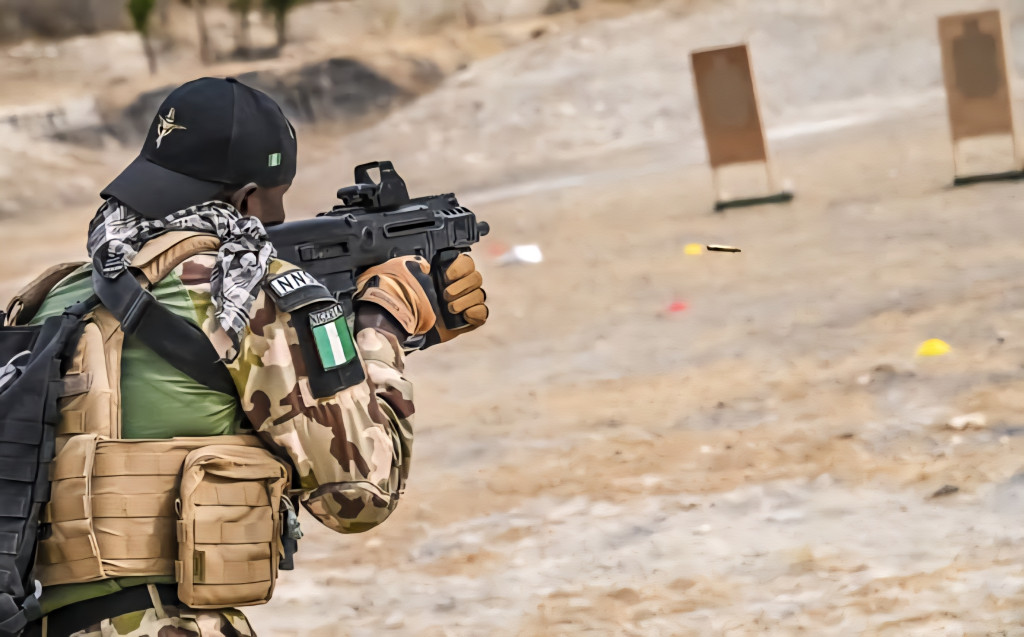
A member of Nigeria’s Navy’s Special Boat Service (NNSBS) a Tier 1 element. Image Credit: Military Africa
Nigeria’s special operations capability exists, it is active, and it is improving, but it is still maturing. It operates inside a much larger conventional force that is stretched thin by insurgency, banditry, and internal security missions across a massive country.
Nigeria fields one of the larger militaries in sub-Saharan Africa, with the Army, Navy, and Air Force all engaged in ongoing domestic security operations. The northeast remains the main battlefield against Boko Haram and ISWAP, but violence tied to armed bandit groups in the northwest and central belt has diluted manpower and attention. Special operations elements sit inside this broader force structure. They are not a standalone command with global reach. They are tools used selectively, usually in support of conventional formations and joint task forces.
The Nigerian Army maintains dedicated special forces battalions and at least one special forces brigade within its land forces order of battle. Units such as the 72nd Special Forces Battalion are publicly described as trained for counterterrorism, hostage rescue, and other high-risk missions. Open-source reporting does not provide full tables of organization and equipment, verified selection standards, or complete pipelines. What can be stated with confidence is that these units exist, deploy regularly, and are used against Boko Haram and ISWAP in roles that go beyond standard infantry work.
Advertisement
Nigerian special forces have been repeatedly employed during major counterinsurgency campaigns, including Operation HADIN KAI and earlier Operation LAFIYA DOLE. In practice, that means they are used for intelligence-led raids, targeted strikes against leadership and logistics, reconnaissance, and rapid reaction missions that demand speed and precision. These operations are typically executed as part of joint task forces that combine special forces with conventional troops, police elements, and air support. In the northeast, air power and ISR can be the difference between a raid that hits and a raid that walks into a trap.
While Boko Haram has fractured and weakened over time, it remains brutal and dangerous. ISWAP has generally been more disciplined and operationally focused, and it targets Nigerian forces deliberately while adapting to pressure. That means Nigerian special forces are not fighting a static insurgency. They are dealing with mobile units, improvised defenses, ambush tactics, and a population caught between fear and survival. This is attrition warfare. There is no single decapitation strike that ends it.
Advertisement
Most of these soldiers have lost friends and family to Nigeria’s insurgency, so this is a very personal fight for them.
Defense leadership has publicly emphasized reforms aimed at improving training, welfare, and professionalism across the force, including special operations units.
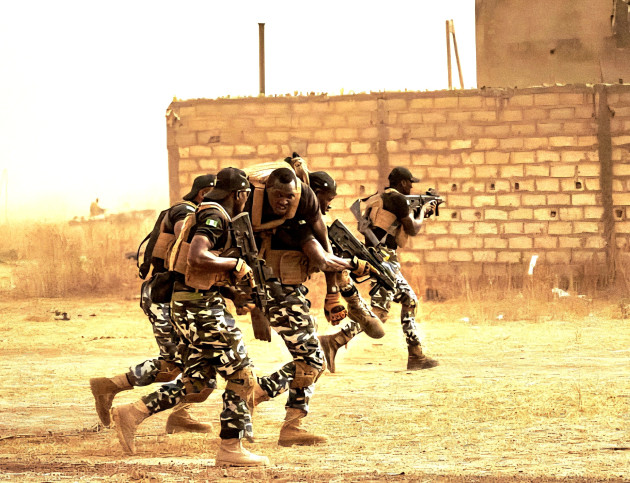
Special operations forces conduct a simulated raid on a militant camp during Exercise Flintlock. Image Credit: ADF
Nigerian special forces also participate in multinational exercises such as Flintlock, where African special operations units train together on missions like hostage rescue, reconnaissance, and high-value target raids. These are visible indicators that Nigerian operators are plugged into regional networks and exposed to evolving doctrine and standards.
Advertisement
A lot remains unclear in public reporting. Open sources do not provide a complete, verifiable list of all Nigerian special operations units, detailed selection criteria, or full operational histories. That lack of transparency is not unusual for forces fighting an internal war. The more solid, verifiable picture is simpler: these units exist, they deploy, they focus on counterterror and counterinsurgency, they work inside joint operations, and they are part of an ongoing effort to professionalize and modernize.
Nigeria’s special forces are not a silver bullet. They cannot solve Boko Haram and ISWAP alone, and they are constrained by the same logistical, political, and manpower realities facing the rest of the Nigerian military. But they are increasingly professional, and central to how Nigeria fights its enemies. As this conflict drags on, the effectiveness of these units, and the reforms supporting them, will play a major role in whether Nigeria can finally break the cycle of insurgency in the northeast.