Editor’s Note: This is a long-form manuscript by former Green Beret and SOFREP contributor Curtis Fox examining the Rhodesian Bush War, decolonization, and the political decisions that shaped modern Zimbabwe. The full work runs well beyond a single article, so we’re publishing it here as a serialized series over the coming weeks. What follows is Part I. Enjoy! – GDM
—
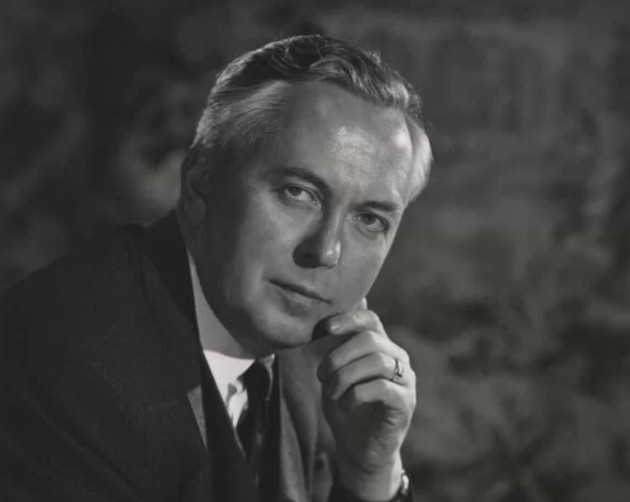
British Prime Minister Harold Wilson was instructed by Queen Elizabeth II to form a government in her name on 16 October 1964. Wilson was the head of the Labor Party and a self-proclaimed democratic socialist. Amidst the slew of domestic legislation his government pushed forward regarding liberalizations in culture, education, housing, social welfare, urban renewal, and labor, he was also forced to grapple with the decay of the British Empire.
Following World War 2, the United Kingdom was strategically exhausted. Though it had emerged a victor, the UK was strategically outclassed by its American and Soviet counterparts. In addition to being smaller, Britain had been at war since September 1939 and fought Germany alone. Both the Soviet Union and the United States had not entered the war until later (22 June 1941 and 7 December 1941, respectively).
By the end of the War, the British people were only capable of putting a single Army in the field. In comparison, in Europe alone, the United States was fielding 1st Army (under Courtney Hodges), 3rd Army (under George S. Patton), 9th Army (under William H. Simpson), and 7th Army (under Alexander Patch), and the Americans were supplying the French 1st Army (Armée B under Jean de Lattre de Tassigny). With victory came a hard period of paying off war debt, economic contraction, and strategic consolidation.
New global norms had also emerged (largely led by the American Roosevelt and Truman Administrations) regarding Imperialism, concepts of national sovereignty, and democratic legitimacy. These norms were now captured in the Charter and statutes of the United Nations. The European Colonial Trade System had been shattered by two World Wars, and with the development of the Bretton-Woods protocols on global trade and the emergence of the UN came hard international pressure for European powers to relinquish their colonies.
The Inception of the UN and the Influence of Joseph Stalin
When the United Nations was designed (1944–45), the first most fundamental goal was to prevent another catastrophic war from erupting between the great powers. The League of Nations proved fundamentally unable to restrain great powers. Any nation with a robust army could harness rhetoric surrounding “minority protection” or the need to extend “civilization” as pretexts for military intervention. For these reasons, the UN’s designers prioritized preventing interstate war, global stability and predictability, and consensus-seeking amongst the great powers. Naturally, this deprioritized prevention of tyranny and enforcement of objective standards of justice. Peace between states was the core mission—not justice within states.
As 100% participation among the world’s great powers was necessary in order for the UN to perform its function, the Soviet Union was given great influence in developing the institution. Joseph Stalin’s Communist regime in Moscow relied on mass internal repression in order to stay in power. However, since the emergence of the Rus ethnicity in the 8th Century or the Muscovite Principality in the Middle Ages, Russia has always harnessed expansion, conquest, and internal repression to achieve a degree of security. Tzarist Russia was less of a nation-state and more of an authoritarian multi-ethnic Empire.
Stalin’s recent conquests of Eastern Europe and imposition of authoritarian socialist regimes in each of these respective countries was part-and-parcel of traditional Russian strategic thinking, which pre-dated even Peter the Great (1682-1725) by centuries. Moreover, the ideological underpinnings of Marxism generated a fanatically natured government in Moscow with a fundamental disposition towards proselytizing Communism abroad. A good Communist leader was expected to free the proletariat by facilitating respective “workers revolutions” of oppressed peoples across the globe.
At Stalin’s insistence, the UN adopted statutory language capturing concepts of national sovereignty and non-interventionism in international law. Once a nation was recognized by the UN as a member state, its national sovereignty was considered inviolable. A military intervention into that nation could only be authorized by a resolution passed in the General Assembly. Going further, the world’s five most powerful nations, the United States, United Kingdom, France, China, and the Union of Soviet Socialist Republics (USSR) were made permanent members of the UN Security Council.
Each of these five permanent members had veto power over resolutions passed in the UN General Assembly. So, in addition to sovereignty under international law, the USSR’s veto in the UN Security Council allowed Moscow to shield itself from the one institution that could authorize a violation of its soverignty—the UN General Assembly.
Already have an account? Sign In
Two ways to continue to read this article.
Subscribe
$1.99
every 4 weeks
- Unlimited access to all articles
- Support independent journalism
- Ad-free reading experience
Subscribe Now
Recurring Monthly. Cancel Anytime.
’s veto in the UN Security Council allowed Moscow to shield itself from the one institution that could authorize a violation of its soverignty—the UN General Assembly.
With a lack of any legal responsibilities or requirements connected to maintaining sovereignty in good standing, Stalin had impregnated the UN with a paradox where sovereignty could be used as a legal shield, protecting a regime from any international scrutiny regarding the internal abuses heaped on its people.
The UN didn’t become this way because diplomats were necessarily naïve (although some are). It’s because the alternatives were/are terrifying. If sovereignty becomes conditional on the capacity of governments to secure human rights, establish stable institutions, or ensure minority protections, the immediate question becomes: Who decides? By what standard? With what enforcement power? And how do you stop selective application by great powers?
The post-1945 order chose to recognize nations first and worry about their conduct later (if ever). The alternative was to risk endless intervention, proxy wars, and moral pretexts for domination.
The result is that cynical actors like Joseph Stalin could always rely on a large number of non-democratic or marginally-democratic nations to vote with them in the UN General Assembly, especially Security Council members like Soviet Union (or modern Russian Federation). It was/is in the interest of other authoritarian regimes to provide a legal screen for (or largely ignore) Soviet sponsorship of Marxist insurgencies and insurrections across the globe.
In the modern era, authoritarian regimes in places like Cuba or Iran prattle about respecting their sovereignty, insisting that the brutal repression going on inside their borders is “an internal issue”. Like Stalin, these nations can rely on a large block of similarly authoritarian states at the UN. And Russia or China are happy to exercise their veto on the Security Council on behalf of an authoritarian state—for a price.








COMMENTS