

The CIA officer’s guide to blending in overseas
Overseas travel is one of life’s great pleasures, and like everything else in life, there are smart ways to go about it, and not-so-smart ways.
260 articles
Frumentarius is a former Navy SEAL and a former Clandestine Service officer with the Central Intelligence Agency's Counter-Terrorism Center. He has a Bachelor's degree in International Politics and a Master's in History. He is currently a professional firefighter. Follow him on Twitter @SOFFru1

Overseas travel is one of life’s great pleasures, and like everything else in life, there are smart ways to go about it, and not-so-smart ways.
What cannot be accepted, though, is when a trainee is clearly struggling, being dunked under water by instructors, and then that struggling trainee begins to turn cyanotic — purple and blue — due to lack of oxygen caused by drowning.

Intelligence officers should always assume that what they put in an intelligence report might see the light of day — no matter what classification handling procedures are applied.
Are we now, then, witnessing your teenage years, America? Is that why we find ourselves in this state of national angst? Is this your adolescent period, during which you “find yourself?”

The crews “did not brief or even plan their route from Kuwait to Bahrain,” and decided to take a shortcut en route — one that took them directly through Iranian waters, and near an IRGC base.
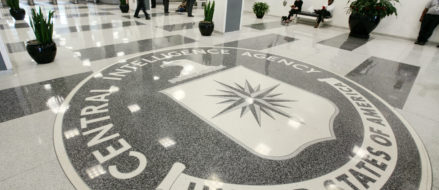
The operational tempo of the CIA’s Counter-Terrorism Center (CTC), like that of U.S. special operations forces (SOF), has been intense over the past fifteen years, and significant turnover of leaders and mid-level officers has probably contributed to a feeling of inadequate leadership at times.

It is one thing to delight in upsetting the international order. It is quite another to deal with the aftermath.
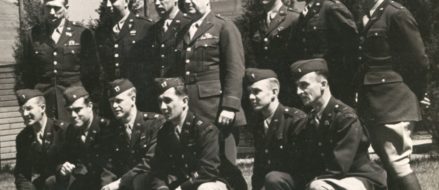
A bill making its way through the U.S. Congress is seeking to bestow Congressional Gold Medal status on the Office of Strategic Services (OSS), the World War II predecessor to the Central Intelligence Agency (CIA) and the U.S. Special Operations Command (SOCOM). On June 13, 1942, President Franklin D. Roosevelt signed Executive Order 69 creating […]
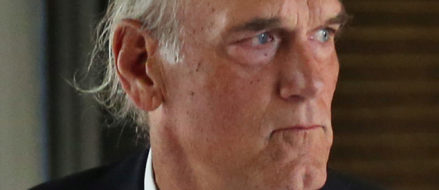
Telling this story gives me pause, because Jim Janos is now known as “Jesse Ventura,” former professional wrestler and former governor of Minnesota.
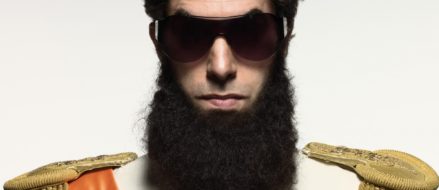
Nothing ruins your “benevolent leader” vibe like a free press hounding you constantly about freedom, human rights, abuses, corruption, and all the other issues you will need to suppress in order to show your people that you are good for them.
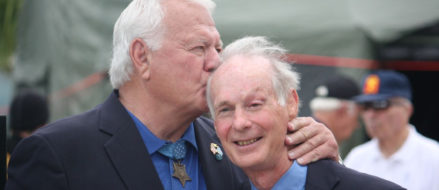
Norris refused to abandon the downed pilots, even after initial failure, and went behind enemy lines over and over again, using daring, subterfuge, and ingenuity to execute his mission.
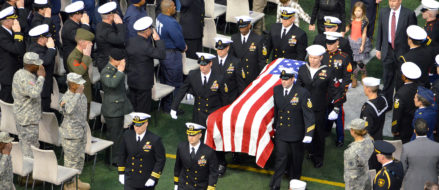
That is where I think the Intercept article is flawed. While the article did address the discrepancy between Kyle’s DD214 and his personnel record, they did so in a cursory, shallow way.

Hywell is a premium gear brand specializing in heavy-duty Merino wool boot socks for blue-collar professionals and outdoorsmen. Backed by an ironclad 10-Year Warranty.

Praesidus builds rugged, American-assembled watches inspired by historic military timepieces. Designed for accuracy and tested for endurance, each watch is made for outdoor explorers, everyday adventurers, and anyone who needs reliability when it matters.

SIG Sauer is a world-class firearms manufacturer trusted by military, law enforcement, and responsible civilian shooters, delivering precision-engineered weapons, optics, and training systems while maintaining a strong commitment to veteran hiring, American manufacturing, and the professionals who rely on their gear when it matters most.

FightCamp is an at-home boxing and kickboxing training system built around real technique, structured programming, and measurable performance. Members train with fighters and professional coaches while using connected punch and kick trackers that record volume, speed, and power in every round. The result is training that builds conditioning, skill, discipline, and resilience — all from home, on your schedule.

Essential Provisions Field Fuel® meals [ready-to-eat] & sports nutrition products have been developed with the cleanest, high-quality nutrient and energy-dense ingredients available. Research has shown that the whole food nutrients contained in our products have the ability to help.

Have you ever tried to wear a fleece hoodie in bad weather? We don’t recommend it. That’s why we founded BÆRSkin in 2019 – to create the world’s best outdoor gear that’s just as comfortable at home as it is durable outdoors. “Bad fitting, bulky, and boring” is how we felt about 1000’s of regular fleece hoodies we tested.

If you’re 21 or older and use nicotine or tobacco, charge ahead with Black Buffalo, America’s only credible smokeless tobacco alternative. Black Buffalo dips just like the real thing without the tobacco leaf or stem. Find Black Buffalo in Wawa, Circle K, Sheetz, Love’s, Pilot, Racetrac, and many more retail locations across the United States.

Stay Locked In. No Matter What. NEORON is a brain-boosting beverage built for the mission: sugar-free, crash-free, and engineered for clean, tactical focus through long hours and high-stakes operations. Made for those who grind, stay sharp under pressure, and refuse to fold—if failure isn’t an option, NEORON has your six.