

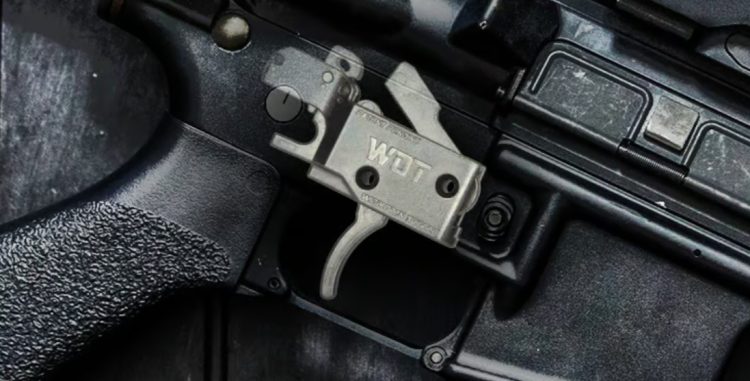
The Trigger Pull Heard ‘Round the Nation
In a move that’s sure to ignite both celebration and consternation, the Trump administration has reversed the Biden-era ban on forced-reset triggers (FRTs). These devices, which allow semi-automatic rifles to fire at rates approaching those of machine guns, were previously classified as illegal under the National Firearms Act by the Bureau of Alcohol, Tobacco, Firearms and Explosives (ATF) during President Biden’s tenure.
Legal Battles and Settlements
The war over FRTs has finally reached a ceasefire. It all started a few years back when the ATF took a hardline stance and declared some of these triggers illegal under federal machine gun laws. That move didn’t sit well with gun owners, manufacturers, and the folks who actually read the Constitution. They launched a barrage of lawsuits, arguing the ATF had once again overstepped its bounds and basically tried to legislate with a pen and a badge.
The most prominent of these lawsuits came from the National Association for Gun Rights (NAGR), Texas Gun Rights (TXGR), and Rare Breed Triggers. Their case—NAGR v. Bondi—was filed in the Northern District of Texas and took aim directly at the ATF’s reclassification and heavy-handed enforcement tactics.
Everything changed in July 2024, when the Supreme Court dropped its decision in Cargill v. Garland, ruling that the ATF had gone rogue (my words) in classifying bump stocks as machine guns. That precedent swung the door wide open. The Texas court applied the same logic to forced reset triggers, ruling that the devices don’t qualify as machine guns either. An injunction quickly followed, blocking the feds from enforcing the ban on NAGR and TXGR members. The court even told the government to hand back all the seized triggers—an embarrassing moment for the alphabet boys, no doubt.
Fast-forward to May 2025, and the Department of Justice waved the white flag. They reached a sweeping settlement that shut the door on all the major federal lawsuits. Under the agreement, the DOJ and ATF agreed to stop enforcing federal machine gun laws against FRTs, as long as the devices meet certain technical specs and aren’t installed in handguns. That last part is key—FRTs in pistols are still off-limits.
As part of the deal, anyone who had an FRT lawfully seized or handed over can now get it back—but you’ve got to file the paperwork before September 30, 2025. All the big cases—NAGR v. Bondi, U.S. v. Rare Breed Triggers LLC, and U.S. v. Misc. Firearms & Related Parts—are now officially dismissed with prejudice. That’s legal speak for “it’s over, don’t bring it up again.”
Rare Breed Triggers also agreed not to mess with handgun-compatible versions of these triggers, and they promised to go after knockoff products that might be unsafe. On top of that, the ATF agreed not to try to reclassify these devices as machine guns again, provided they stick to the specs in the settlement. In other words, the bureaucratic backpedaling is now official policy.
This settlement is more than a win—it’s a full-blown knockout for gun rights advocates. It slams the brakes on the ATF’s habit of rewriting the rules without Congressional approval. Critics called it “lawmaking-by-letter,” and this result proves the courts agreed.
Naturally, the other side isn’t thrilled. Gun control groups have warned that this could flood the market with rapid-fire devices and spike gun violence. But for now, their objections didn’t carry enough weight to stop the legal tide. It’s also worth noting that this doesn’t preempt state-level bans—some states still have their own restrictions on FRTs, and this federal settlement doesn’t touch that.
Bottom line: the ATF overreached, got slapped down in court, and now has to play by the rules. If you legally owned an FRT and the government took it, you’ve got a path to get it back. Just don’t expect your local blue-state government to be as forgiving.
Big win for all forced reset trigger owners, manufacturers, and Americans in general here 🇺🇸 pic.twitter.com/hIN7z3upHw
— Mrgunsngear (@Mrgunsngear) May 17, 2025
A Divided Response
U.S. Attorney General Pam Bondi isn’t wasting any time making her stance on the Second Amendment crystal clear. She’s come out swinging, championing gun rights with the kind of gusto usually reserved for campaign rallies and Marine Corps ballads. Under her watch, the Department of Justice has doubled down on the idea that the right to bear arms is not some dusty museum piece—it’s a constitutional guarantee, and she’s hell-bent on protecting it.
Bondi argues that the forced reset trigger bans put in place by the previous administration were an example of bureaucratic overreach. Her DOJ settled lawsuits that had been hanging in the air like stale cigar smoke, rolling back those bans and allowing FRTs to be sold and returned to their owners. She didn’t stop there—she set up a Second Amendment Task Force, cracked down on ATF enforcement zealotry, and made it her mission to “restore rights” to gun owners who’d gotten the short end of the regulatory stick.
Meanwhile, over on the other side of the ideological firing range, you’ve got Giffords, one of the leading gun control advocacy groups in the country. They’re sounding the alarm bells with all the urgency of a DEFCON 1 alert. Their main beef? They say forced reset triggers are basically just machine guns in disguise—and that by legalizing them, the DOJ is opening the floodgates to faster, deadlier mass shootings.
Vanessa Gonzalez, one of Gifford’s top political operatives, didn’t mince words. She said the Trump administration had “effectively legalized machine guns” and warned that people are going to die because of it. According to her and the Giffords camp, the only ones celebrating this policy shift are the people making money off selling these devices, while everyone else is left to brace for the consequences.
Here’s how I see it: Bondi sees this as a return to constitutional sanity—a win for law-abiding citizens tired of being treated like criminals for owning gun parts. Giffords, on the other hand, sees it as a dangerous rollback that puts public safety in the crosshairs. It’s a classic American standoff—freedom versus fear, rights versus regulation—and neither side’s backing down.
If you ask me, this whole fight boils down to a fundamental difference in worldview. Bondi believes the government’s job is to get the hell out of the way and let responsible citizens exercise their rights. Giffords thinks that same hands-off approach is a recipe for disaster. And somewhere in between? Millions of Americans are left wondering which side will call the next shot.
The Mechanics of FRTs
In case you were wondering about the device itself, a forced reset trigger isn’t some voodoo science or illegal machine gun hack—it’s a mechanical upgrade that speeds things up without crossing the legal line. Think of it like putting a supercharger on your truck. Same engine, just faster response.
Here’s the basic idea: when you pull the trigger on an AR with an FRT installed, you get one shot—just like any semi-auto. But here’s where things change. As the bolt carrier group (BCG) cycles back from the force of that shot, it doesn’t just passively reset the trigger. It physically forces it back into the ready position using springs and internal parts that are built for speed. The result? The trigger resets much faster than your finger can think, and you’re cleared to squeeze again. Still one shot per pull, but the tempo can get wild.
The trick is all in the mechanics—there’s no battery, no chip, no Wi-Fi signal beaming in from Langley. Just brute mechanical engineering. Most of these are “drop-in” units, meaning you can install them yourself with basic tools and a little know-how. No need to pay a gunsmith in a back alley (not that you would ever do that).
Now, compare that to other trigger setups: your standard semi-auto trigger resets by finger pressure, at the pace of human dexterity. A binary trigger fires once when you pull and again when you release. An FRT? It resets itself so fast and forcefully that you can lay down strings of fire that approach full-auto rates (usually between 300 and 350 rounds per minute), without actually becoming full-auto. That’s the legal loophole that’s been driving the ATF up a wall.
The forced reset system is perfect for rapid follow-up shots, which makes it popular with competitive shooters, tactical trainers, and guys who just want their gear dialed in tight. It can sharpen your trigger discipline and build muscle memory like nothing else—because you’re firing fast, but with intent.
Bottom line: FRTs use your rifle’s own recoil energy to slam the trigger back into place faster than you could ever do it manually. You still have to pull the trigger every time, but it’s like tapping out Morse code with a jackhammer. Fast, loud, and perfectly legal—depending on which zip code you’re in.
Final Thoughts
So here we are—another chapter in the never-ending saga of government agencies playing constitutional hopscotch and getting smacked by the courts for it. If nothing else, the forced reset trigger fight proves one thing: when bureaucrats start writing laws with ink and ego, they’d better be ready to eat their own rulebook.








COMMENTS