

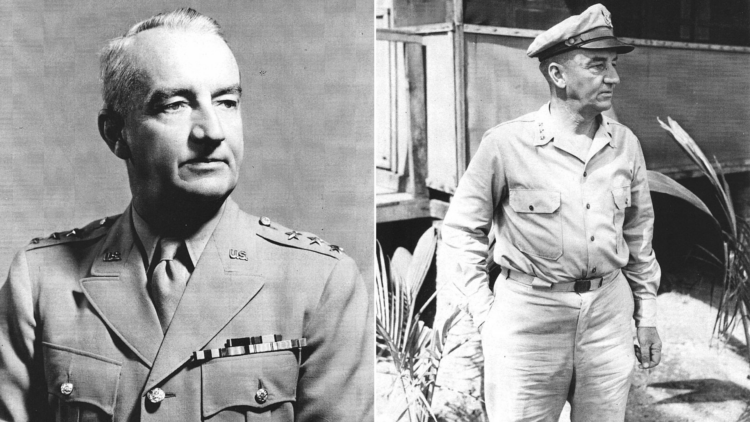
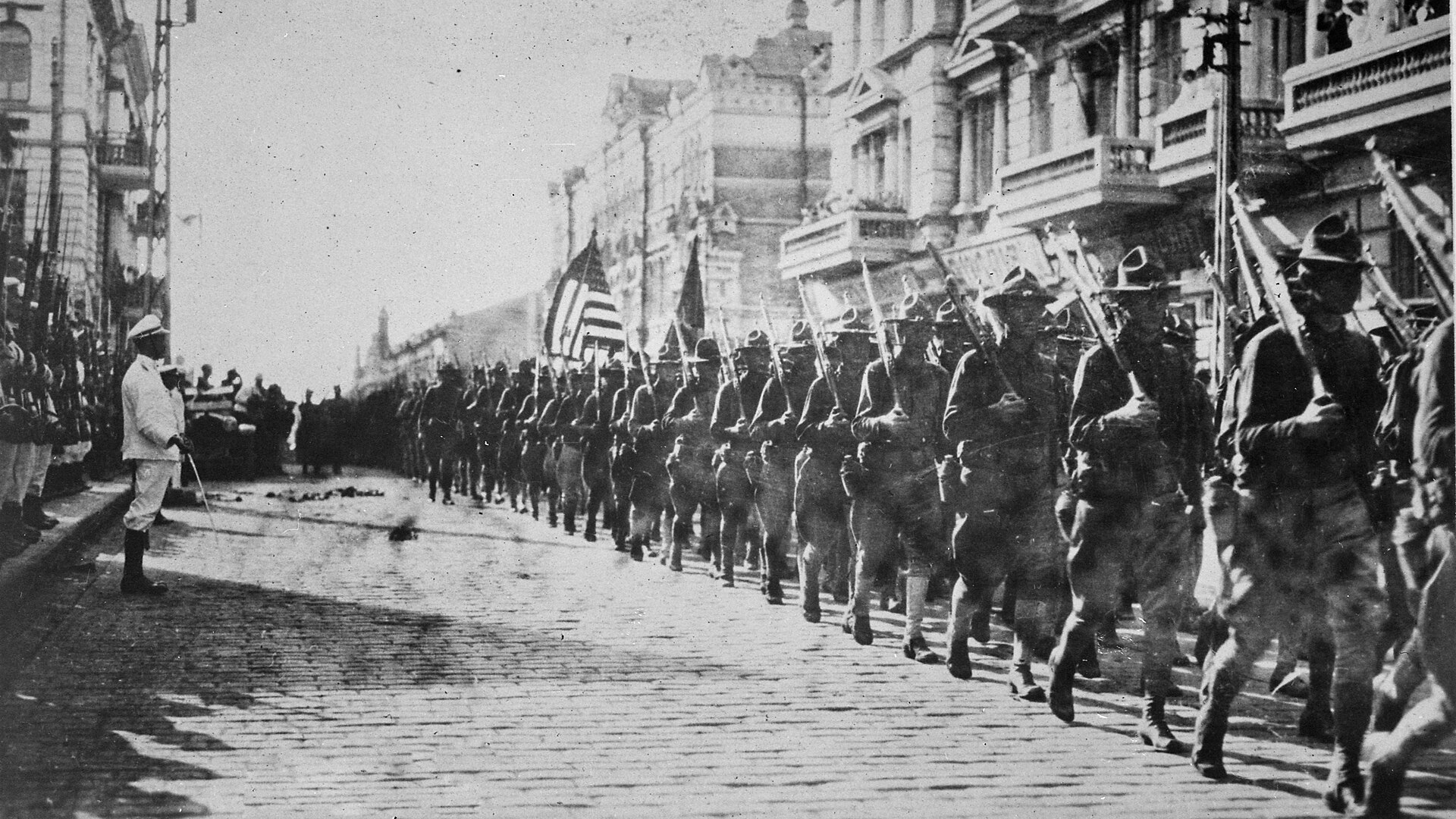
His daring actions in the face of hostile fire earned him the Distinguished Service Cross, a testament to his courage and leadership under pressure.
Below is a short excerpt from his Distinguished Service Cross citation:
“[…] (then-)Colonel Eichelberger voluntarily assisted in establishing the firing line, prevented confusion, and, by his total disregard for his own safety, raised the morale of the American forces to a high pitch.”
Turning the Tide in the Pacific: The Baptism by Fire
By December 1942, the Pacific War was a brutal stalemate.
The Japanese had stormed across Southeast Asia, capturing strategic islands and inflicting heavy losses on Allied forces.
The American front in Buna, New Guinea, was particularly grim. Bogged down in relentless fighting, American troops faced a seemingly insurmountable Japanese stronghold.
Enter General Eichelberger.
Unlike many generals who soared to prominence through battlefield heroics, Eichelberger’s strength lay in meticulous planning and tactical innovation.
He meticulously studied the Buna terrain, pinpointing Japanese weaknesses and identifying potential routes for flanking maneuvers.
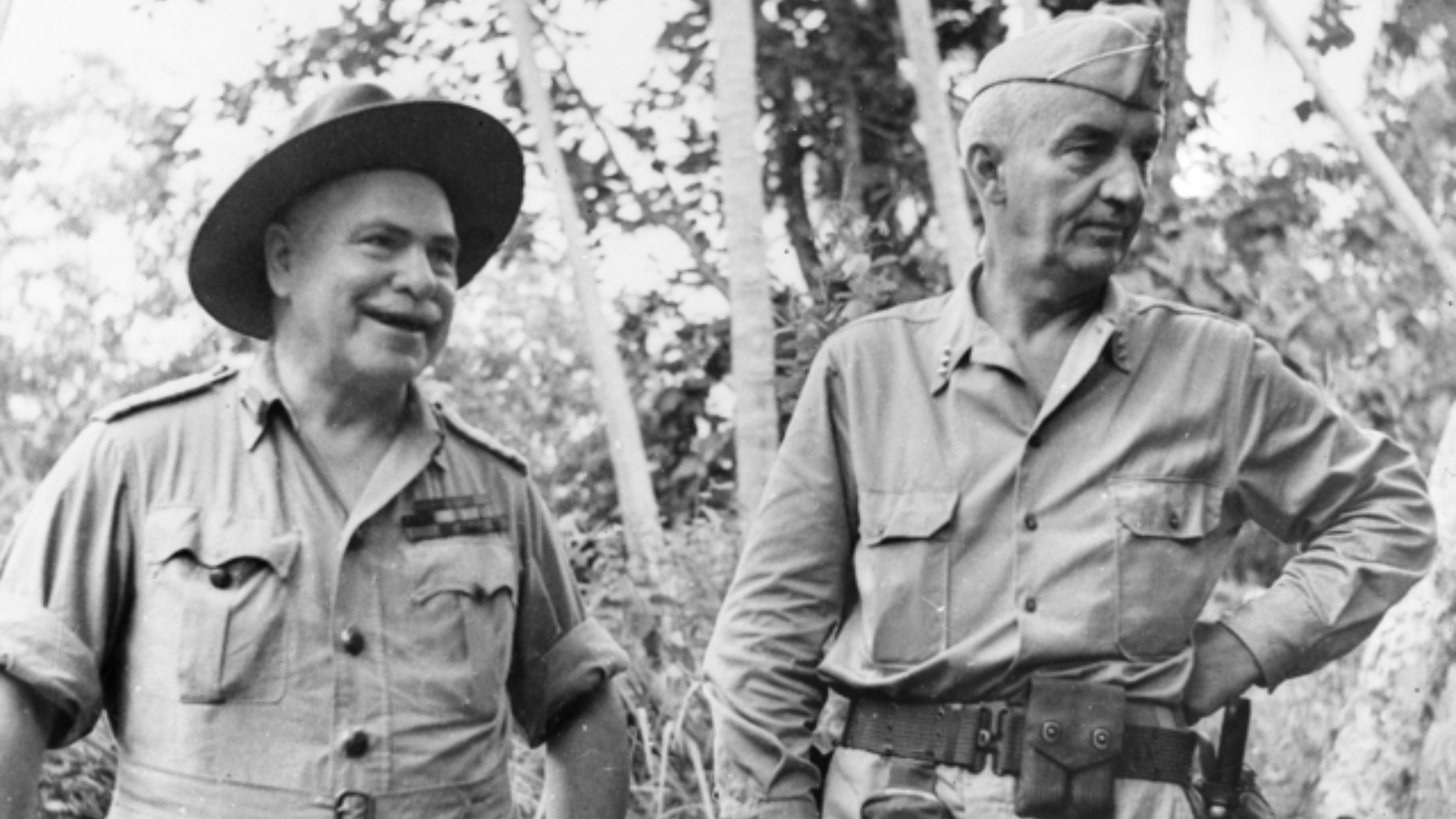
Crucially, he recognized the essential role of the Australian troops fighting alongside the Americans.
Eichelberger fostered a spirit of cooperation, ensuring seamless coordination between the Allied forces.
The resulting counter-offensive was a textbook example of strategic brilliance.
Utilizing combined arms tactics and leveraging the harsh jungle environment, Eichelberger’s forces slowly squeezed the Japanese out of their heavily fortified positions.
The Buna campaign, a brutal slog through mud and disease, was a turning point. It marked one of the first successful land offensives against the seemingly invincible Japanese army, a critical step towards ultimate victory.
Eighth Army’s Architect of Island Hopping
Eichelberger’s success at Buna propelled him to lead the newly formed Eighth Army. This was a pivotal moment.
Conventional wisdom at the time dictated a head-on assault on heavily fortified Japanese strongholds, a bloody and potentially disastrous strategy.
Eichelberger, however, championed a daring alternative – “island hopping.”
This innovative campaign focused on bypassing heavily defended Japanese islands and capturing strategically valuable islands that could serve as stepping stones toward the Japanese mainland.
Eichelberger, a master of amphibious warfare, meticulously planned these assaults. He ensured meticulous logistical support, close air support, and a relentless focus on minimizing Allied casualties.
Campaigns like New Guinea and New Britain, spearheaded by Eichelberger, were brutal affairs. Yet, his leadership and strategic acumen steadily chipped away at Japan’s grip on the Pacific, severing vital supply lines and steadily pushing the enemy back.
A Legacy of Quiet Strength and Strategic Brilliance
Following the war, Eichelberger oversaw the occupation of Japan, ensuring a peaceful transition and laying the groundwork for the nation’s eventual economic and political recovery.
He retired in 1948, leaving behind a legacy of unwavering resolve and strategic brilliance.
General Eichelberger wasn’t a flashy leader; his victories weren’t celebrated with fanfare. But his quiet competence and ability to inspire his troops were invaluable assets.
Eichelberger’s story serves as a reminder that leadership in war can take many forms.
He wasn’t a charismatic figure rallying the masses but a meticulous planner and a steady hand on the tiller, guiding his forces through some of the Pacific War’s most brutal campaigns.
His legacy lies in his unwavering dedication to his duty, his strategic acumen, which helped turn the tide against a seemingly invincible foe, and his quiet strength, which inspired those around him.








COMMENTS