

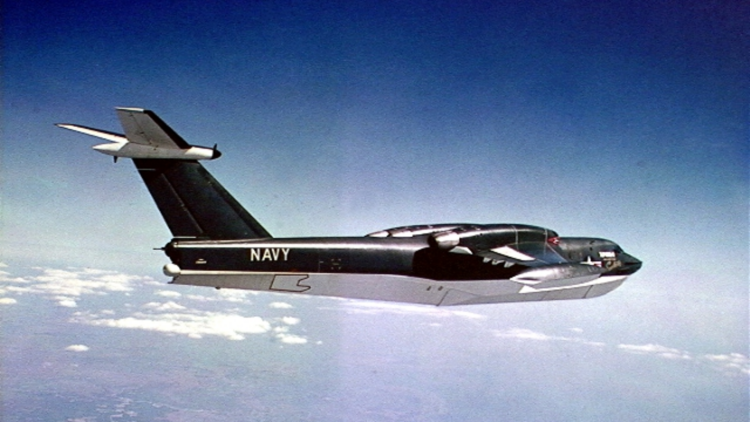
Additionally, the control systems proved unreliable, leading to two tragic prototype crashes in under a year.
These setbacks cast a dark cloud over the program, forcing the engineers back to the drawing board.
Engineering Marvel or Development Hell? Refining the Beast
Despite the setbacks, the Navy remained committed to the SeaMaster concept.
The program persevered, resulting in the P6M-2 variant, a more refined iteration of the original design.
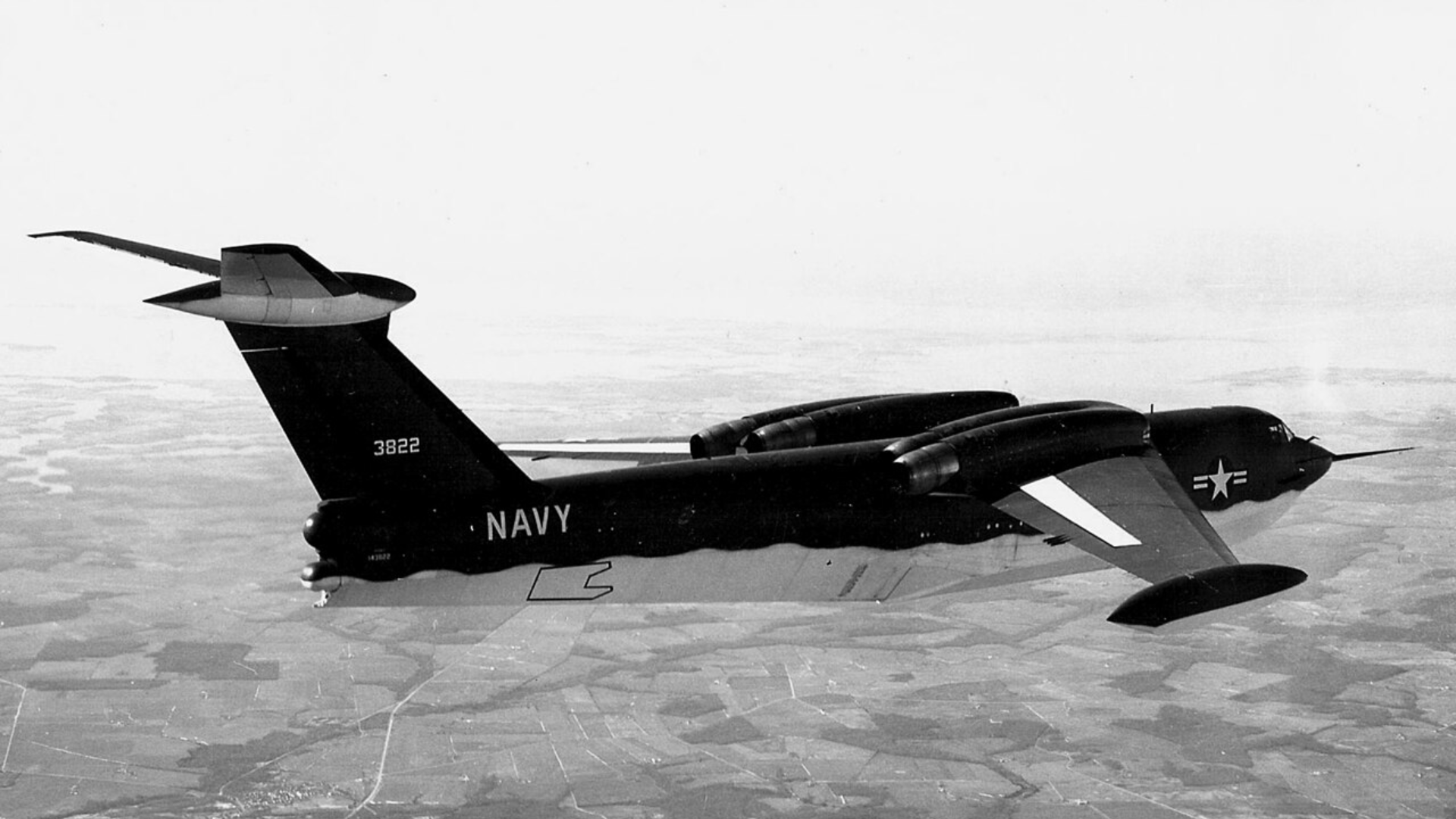
The new SeaMaster boasted improved Pratt & Whitney J75 engines, a refueling probe for extended range, and a novel rotating watertight bomb bay that could accommodate a diverse array of weaponry.
This new iteration promised impressive performance – a top speed exceeding Mach 0.9, surpassing even the Air Force’s B-52 bomber at low altitude.
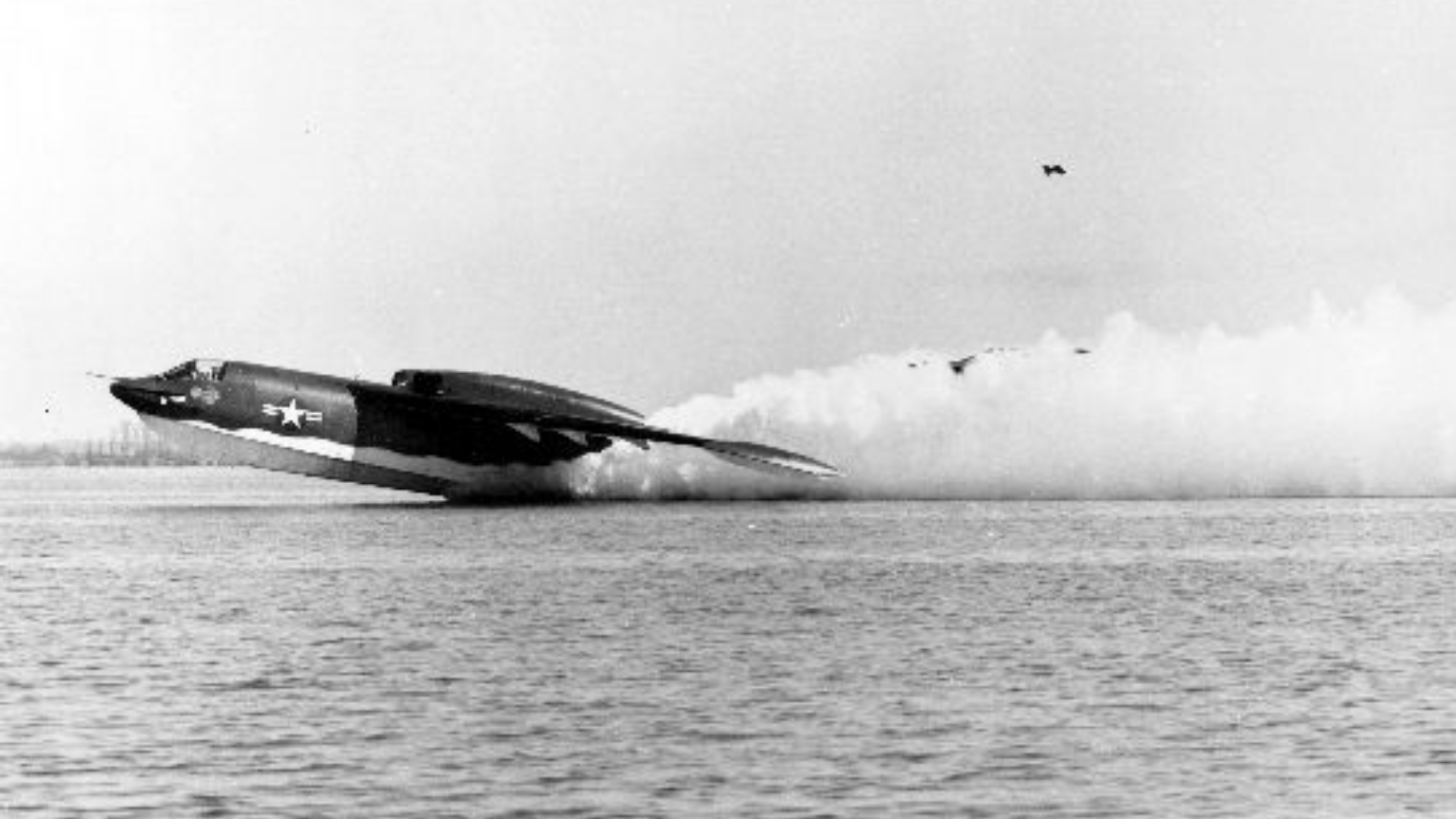
Naval aviators envisioned the SeaMaster as a versatile asset, capable of minelaying missions that could cripple Soviet naval movements or deliver a devastating nuclear strike if necessary.
However, the program wasn’t without its critics.
Development delays plagued the project, pushing back the expected deployment date and leading to cost overruns.
The initial order of 24 production P6M-2s was whittled down to a mere eight due to budgetary constraints.
Additionally, the emergence of submarine-launched ballistic missiles (SLBMs) like Polaris offered a more secure and cost-effective alternative for strategic nuclear strike missions.
This shift in priorities, coupled with the Navy’s dwindling budget due to the Vietnam War, sealed the SeaMaster’s fate.
P6M SeaMaster Cancellation and Legacy: A Lost Opportunity or a Cautionary Tale?
In 1959, after eight long years of development and expenditure of roughly $400 million (around $4.1 billion in 2024), the dream of the SeaMaster finally died.
Only four P6M-2s were ever built, and the program’s cancellation marked the end of US Navy flying boat development.
The remaining SeaMasters were scrapped, with only a few fragments preserved in museums, a testament to a project that never reached its full potential.
The legacy of the P6M SeaMaster remains a subject of debate. Some argue that it was a technological marvel ahead of its time, showcasing American ingenuity in a bygone era of aviation.
The SeaMaster’s impressive performance and innovative features, particularly the rotating bomb bay, were undoubtedly groundbreaking.
Others, however, view the program as a cautionary tale.
US Navy Surface Warfare & Flight Officer Andy Burns highlights the lack of expertise in US companies for designing jet seaplanes today, the high development costs associated with such a complex project, and the limited military applications in the face of more versatile land-based aircraft.
The P6M SeaMaster remains a fascinating footnote in aviation history. It stands as a testament to the audacity of Cold War ambitions and a reminder of the harsh realities of cost, competition, and technological challenges.
While jet seaplanes like the Russian Be-200 persist in niche roles, the dream of a dominant American jet flying boat seems destined to remain just that – a dream.








COMMENTS