

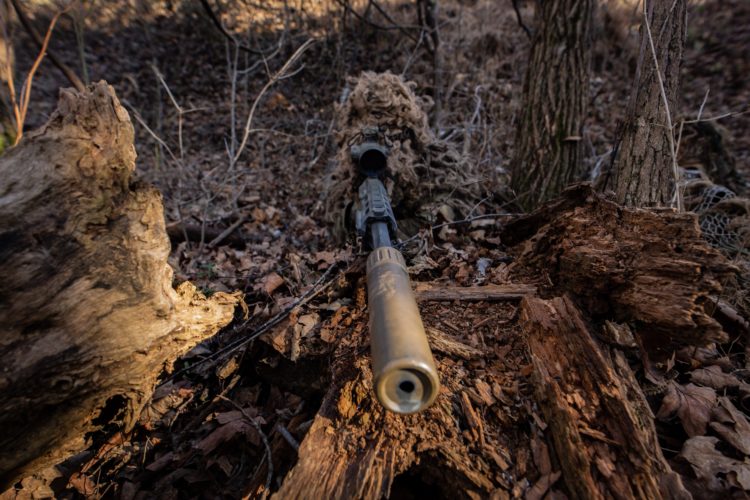
What kind of person is willing to crawl over the hot desert floor for hours, urinating in place, only to move a few meters to set up on a target, then wait more hours for that perfect shot? The answer is the well-trained sniper.
Three Phases of SEAL Sniper Training Program
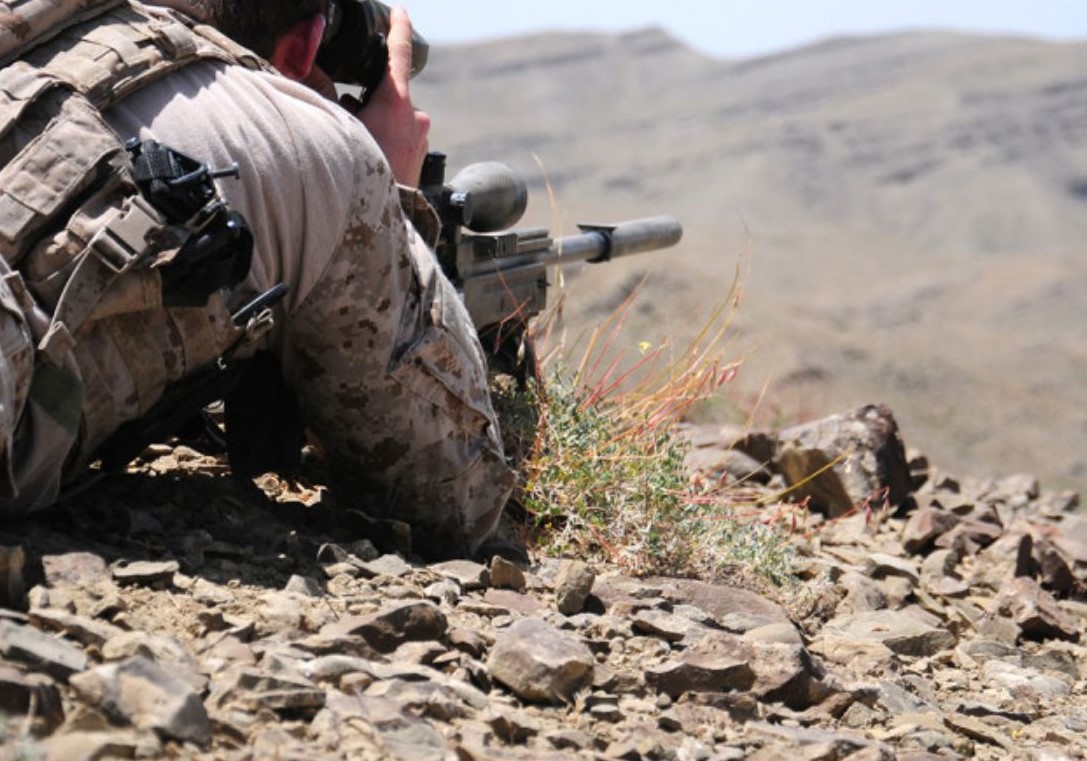
The Navy SEAL Sniper Training Program is divided into three phases and spans 90 days of grueling, 100-hour workweeks. It tests to the highest standards in the world.
Phase One: The Digital Eye
In phase one the candidate learns the latest in digital photography techniques, computer image manipulation/compression, and satellite radio communications. Historically, the sniper would sketch a target in detail and record notes with pencil and paper. In the 21st century, the sniper leverages technology to his advantage. He uses the most advanced camera systems, hardware, and software available to record target information and produce a firing solution.
Phase Two: The Art of Being a Ghost
Phase two is the scout portion of the training. The name of the game is stealth and concealment. In this phase, the sniper masters the art of camouflage, small unit tactics, patrolling techniques, and most importantly, learns to infiltrate and exfiltrate hostile enemy areas undetected, leaving no trace behind. We often fail candidates who leave behind the smallest trace, a bullet casing left behind will get you sent home. Toward the end of this phase, we introduce advanced marksmanship fundamentals and a system of mental management utilized by the top athletes in the world. Mental management gives the students the tools to cope with adversity (whether or not they use them is up to them). It also gives them a system to rehearse and practice their skills perfectly through mental visualization techniques.
To prove the value of mental management and rehearsal I would often relate a true story on the topic. A Navy fighter pilot was shot down in Vietnam, captured, and imprisoned for years in the famous prisoner of war camp the “Hanoi Hilton.” The pilot was an avid golfer back home and to get through the extremely demanding situation he would shoot rounds of golf in his head. For years he would play his favorite courses perfectly in his mind.
Eventually liberated and back on U.S. soil, the first thing this pilot did was jump out of the military ambulance and onto the golf course. After explaining away his ragged looks (he was a tall man and extremely skinny from malnutrition) he shot nine holes of golf at one under par. This was shocking to those that witnessed the event. When questioned about how this was possible, the pilot replied, “Gentlemen, I haven’t hit a bad shot in four years!”
Phase Three: The Science and Art of the Kill
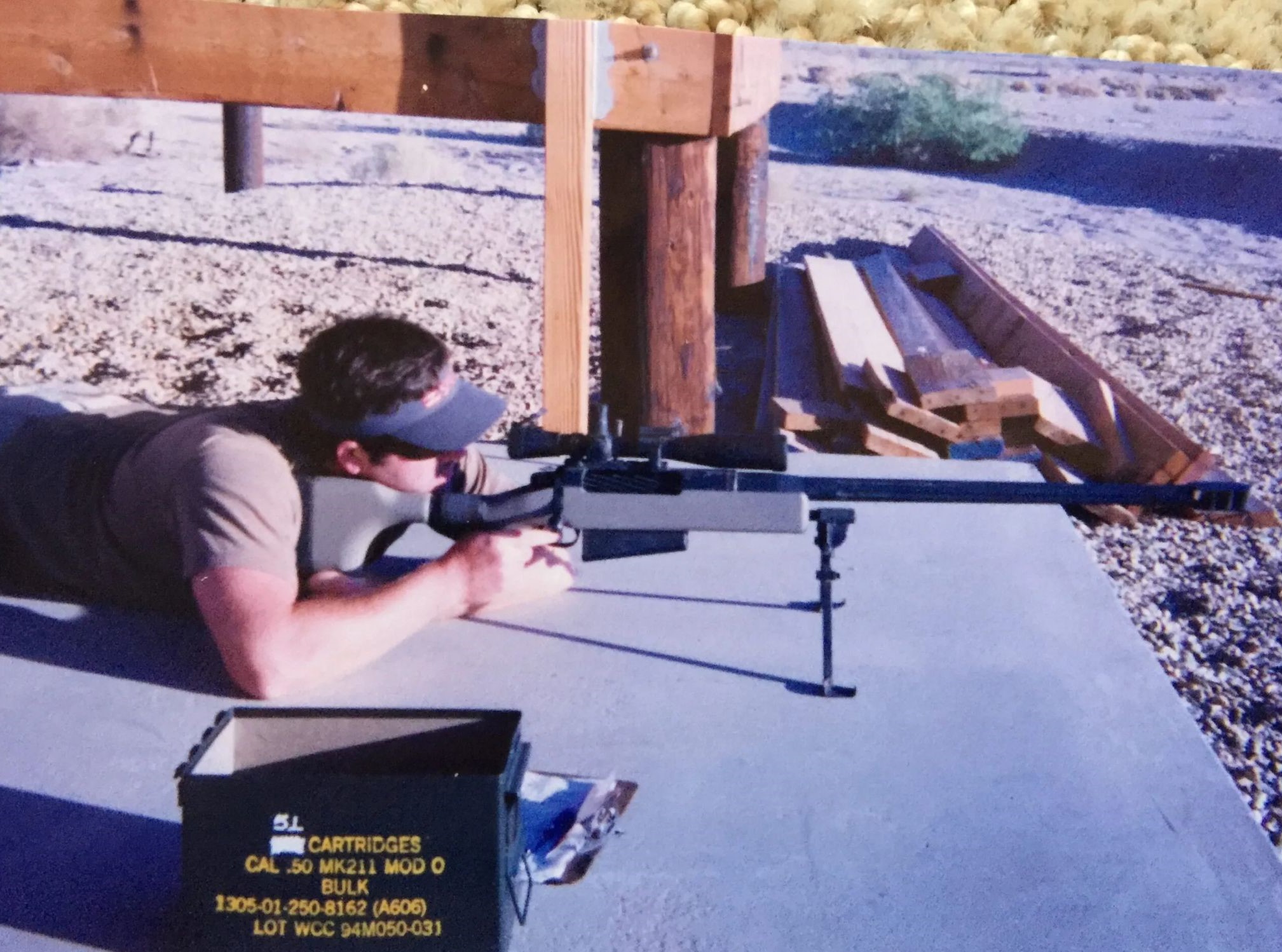
Phase three is the sniper portion. We spend hours in the classroom learning the science behind the shot, ballistics, environmental factors, human factors, and how to calculate for wind, distance, and target lead. Then we put the knowledge to practical application on the shooting range. The students train and test with moving and pop-up targets in high wind conditions and targets out to 1,000 meters. As part of the training, we put the shooters in the most stressful and challenging situations imaginable. We look for signs of high intelligence, patience, and mental maturity. Then we intentionally (often unbeknownst to the candidate) place the shooter in adverse and unfair situations to test their mettle.
The “edge” shot is an example of this. Individual trainees are lined up on the shooting range and are told that they have four minutes to run 600 meters, set up on the firing line, and wait for their targets to appear. The targets can appear immediately or take up to an hour to do so. We’d always send a target up right away, usually just when the shooters were getting set up on their lanes and were identifying their fields of fire.
Just to add to the drama. Oftentimes a shooter would take his eyes away for a split second to wipe sweat from his brow, then drop down on his scope again only to see his target disappear. Opportunity gone. The pressure is intense and shooters often break down in frustration at a missed shot or at all even firing at all. They eventually learn to control their feelings and keep their cool or they don’t graduate.
The Unseen Challenges of Sniper Training
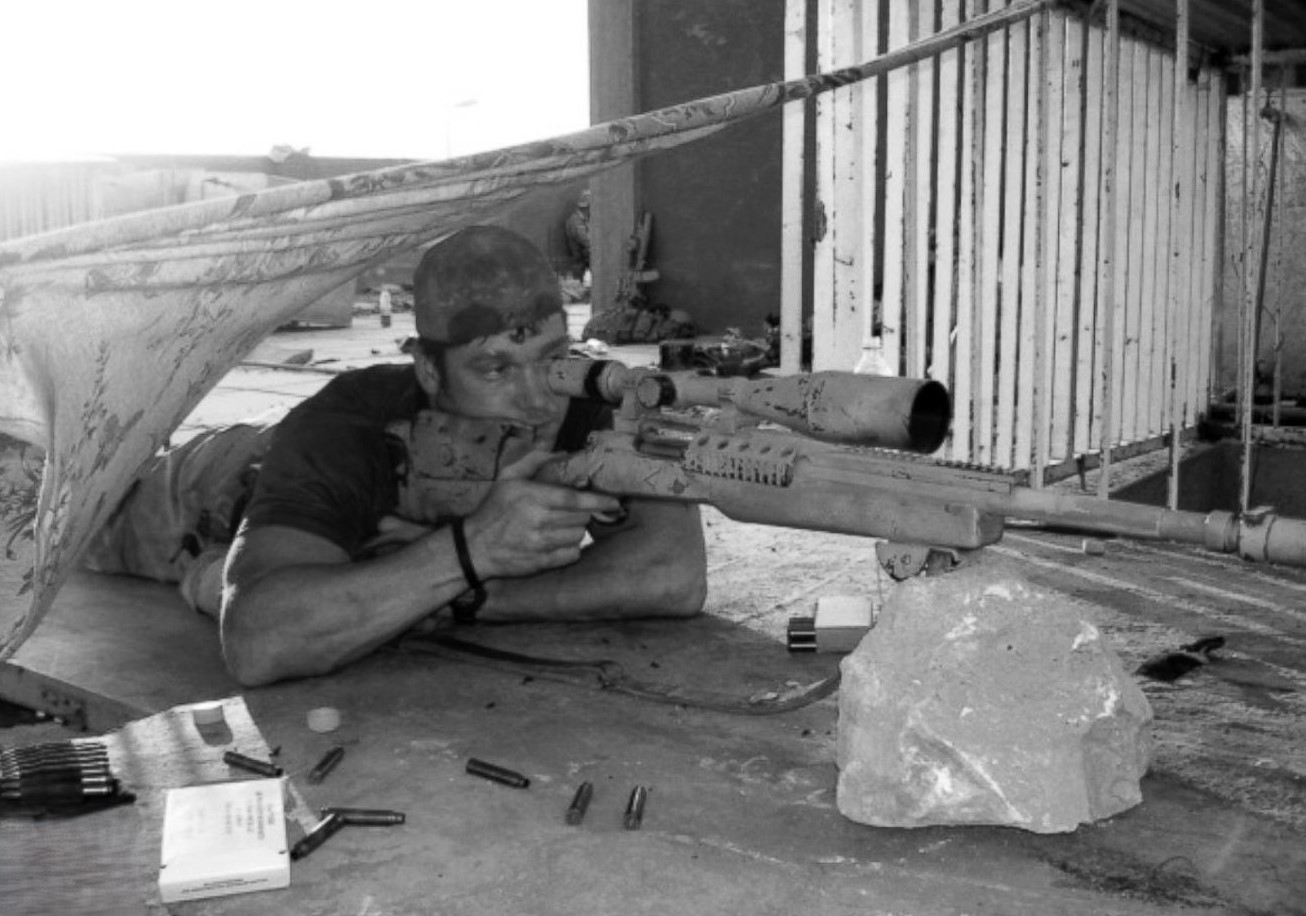
We grade and measure it all and keep detailed student records. We record everything and debrief daily. Not everyone makes it through, and just getting a billet is extremely competitive. No one wants to go back to their SEAL Team a loser having failed out of the program. However, this course is one of the few courses you can fail as a SEAL and not be looked down upon by your teammates, or worse, sent back to the regular navy. This happens sometimes with other courses.
The Navy SEAL sniper training program stands as one of the toughest and most challenging courses in the world. It takes extreme perseverance in order to graduate with the title of SEAL sniper. To this day it was one of the most stressful events of my life even when compared to my combat tours. I know a lot of graduates who say they’d rather do Hell Week all over than go through the stress of sniper school again!
Three months of Hell…
We have a saying in the SEAL Teams,
“The only easy day was yesterday.”
—
Disclaimer: SOFREP utilizes AI for image generation and article research. Occasionally, it’s like handing a chimpanzee the keys to your liquor cabinet. It’s not always perfect and if a mistake is made, we own up to it full stop. In a world where information comes at us in tidal waves, it is an important tool that helps us sift through the brass for live rounds.








COMMENTS