

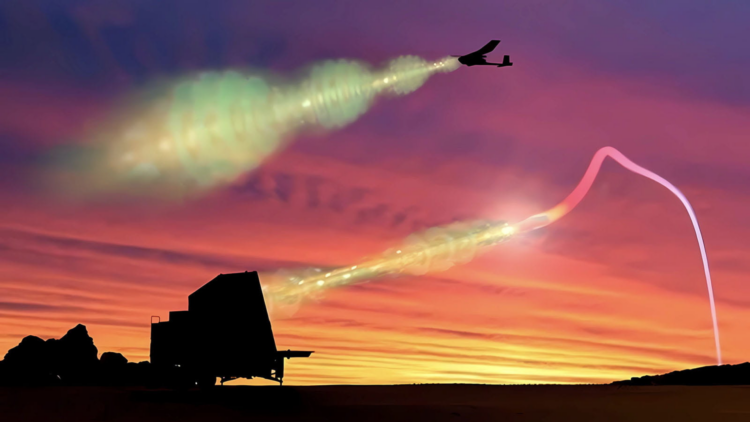
They must be rugged and transportable, ensuring they can withstand the rigors of combat and be swiftly deployed to wherever they are most needed.
This design philosophy underscores the military’s emphasis on reliability and rapid response, ensuring that these systems are ready to perform in any environment.
Collaborative Efforts and Delivery Timeline Expectations
The development and testing of these antennas are not solitary endeavors.
They represent a collaborative effort spearheaded in Tucson, Arizona, involving the US Undersecretary of Defense for Research and Engineering, the Air Force Research Laboratory (AFRL), and the Naval Surface Warfare Center Dahlgren Division.
The Naval Surface Warfare Center Dahlgren Division has awarded Raytheon a $31.3 million contract as part of the Directed Energy Front-line Electromagnetic Neutralization and Defeat (DEFEND) program. This 3-year agreement is a pivotal step in non-kinetic defense.
— Interesting Engineering (@IntEngineering) December 21, 2023
This partnership highlights the concerted effort between various defense entities to bring this project to fruition, ensuring a comprehensive approach to defense innovation.
Raytheon’s commitment is on a clear timeline, with one antenna scheduled for delivery in 2024 and the other in 2026.
This timeline is not just about delivering hardware; it’s about advancing a strategic capability that will be integral to America’s defense strategy.
The Strategic Importance of Non-Kinetic Defense
President of Raytheon Advanced Technology, Colin Whelan emphasized the strategic importance of non-kinetic defense systems, noting that the developed high-power microwave systems are cost-effective, reliable, and operate at the incredible speed of light.
“Non-kinetic defense systems are a key part of America’s national defense strategy,” said Whelan in a press statement.
This technology is not just about defense; it’s about providing the US military with the capability to counteract faster, more maneuverable threats.
Contextualizing DEFEND: The Broader Directed Energy Landscape
The DEFEND program is part of a broader push within the US military to integrate directed energy capabilities—a trend that has been apparent in recent projects across the US military branches.
For instance, last month, the US Marine Corps contracted BlueHalo to provide a high-energy laser weapon for its Joint Light Tactical Vehicle (JLTV) fleet.
Similarly, the US Army has been actively integrating short-range directed energy prototypes to bolster its land vehicles’ defenses since last year.
Significant contracts with industry giants like Lockheed Martin and Epirus further illustrate this momentum, with millions of dollars invested in developing capabilities to secure infrastructure and counteract drone operations.
The AFRL’s recent flight tests for aircraft-based directed energy laser systems also signify the military’s commitment to integrating these advanced technologies across different platforms.
Conclusion: A New Era of Defense
Raytheon’s participation in the DEFEND program is more than just a contract; it reflects the changing landscape of defense technology.
With the delivery of these high-powered microwave antennas, the US military is not just preparing for today’s threats but is also paving the way for future innovations that will redefine the nature of defense.
As these technologies become operational, they will likely play an important part in ensuring that the United States remains at the cutting edge of military power, prepared to meet the demands of the modern battlefield with speed, efficiency, and unmatched technological proficiency.








COMMENTS