Artemis II is not a sightseeing trip. It is the first crewed checkout of a system NASA intends to rely on well beyond low Earth orbit. Wiseman is there because this kind of mission demands a commander who understands complex machines, compressed timelines, and how quickly small problems can escalate when events start moving faster than the crew can respond
Same mindset, different machine
Victor Glover, Combat Aviator and Pilot
Victor Glover is the pilot, and his résumé reads like NASA went looking for pressure-tested experience and found it.
He is a U.S. Navy aviator and test pilot who flew F/A-18 Hornets, Super Hornets, and EA-18G Growlers, with 24 combat missions and more than 400 carrier arrested landings. He also attended Air Force Test Pilot School, a cross-service detail worth noting.
More importantly, Glover did not just ride along on SpaceX Crew-1.
He piloted it.
That distinction is important. He’s there because he knows how to fly when the margin for error disappears. He is there because NASA wants someone in the pilot’s seat who has already operated in environments where precision is everything, and mistakes compound fast.
Carrier decks, combat sorties, test envelopes, orbital flight.
Same family of stress, just a different address.
Christina Koch, The Civilian
Christina Koch is the only member of the crew without a military aviation background.
On paper, that makes her the outlier.
In reality, she may be one of the hardest operators on the mission.
Yes, she is an engineer. But that label undersells what she has done. Koch worked in some of the most remote and unforgiving environments on Earth before becoming an astronaut, including extended assignments at the South Pole Station, Antarctic research outposts, and isolated NOAA stations.
She also served on firefighting and search-and-rescue teams in those environments.
Then she went to space and stayed there for 328 consecutive days.
That is not a soft civilian contrast to the military men around her. That is a person who has already survived isolation, technical pressure, and harsh conditions where the weather starts acting like an enemy, and the margin for error shrinks.
Koch is not the exception to the rule.
She is proof of it.
Jeremy Hansen, Fighter Pilot and Coalition Signal
Jeremy Hansen brings another military aviator into the crew, but his role goes beyond that.
He is a Royal Canadian Air Force fighter pilot who flew the CF-18, and his presence reinforces that Artemis is not just an American effort. It is coalition work, built on shared standards, shared risk, and shared access to whatever comes next.
But there is another important detail.
Hansen will be the first non-American to fly beyond low Earth orbit.
That is not a footnote. That is a signal.
Space is starting to look less like a solo national achievement and more like coalition operations in a new domain. The structure is familiar to anyone who has watched how allied forces operate when the stakes are real.
Different theater. Same logic.
Three Aviators, Two Nationalities, One Engineer, and One Very Clear Message
Three aviators.
One engineer.
That ratio tells you exactly what NASA thought this mission required.
It wanted people trained in checklists, crew discipline, and systems thinking. People who understand emergency procedures not as theory, but as muscle memory. It also wanted someone who has already endured long-duration isolation in hostile environments and understands how humans and machines behave over time.
That is not a symbolic crew.
That is a deliberately built one.
This Is Not Just Exploration, It Is Positioning
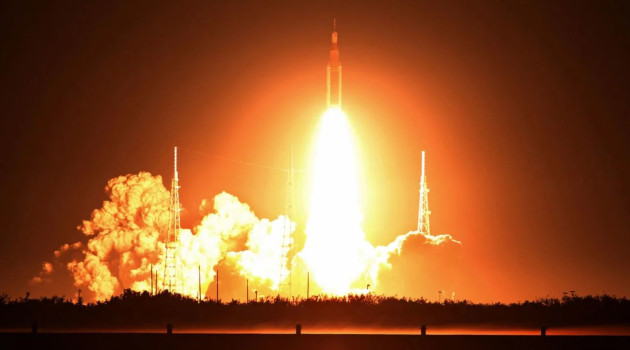
Tonight’s launch will be wrapped in the usual language about science, inspiration, and humanity pushing outward.
All of that is real.
But Artemis is also about positioning.
The United States is reestablishing a human presence beyond low Earth orbit at a time when China is advancing its own lunar ambitions. Presence becomes influence, and influence becomes power. That has been true in every domain of importance.
It will be true out there, too.
The Moon is no longer just a destination.
It is a position.
Risk Is Back, and So Is the Mindset That Handles It
For years, human spaceflight settled into a more predictable rhythm. Low Earth orbit. Station missions. A sense of controlled, managed risk.
Artemis II breaks that pattern.
Since this is the first crewed mission beyond low Earth orbit in more than half a century, it means increased radiation exposure, longer communication delays, and no realistic rapid rescue capability. The crew is operating in a regime where systems are less forgiving, and consequences escalate faster.
That is why the crew looks the way it does.
Because when the mission gets harder, the selection process gets less sentimental.
Not the swagger.
The habits.
The Quiet Backbone Behind the Mission
NASA owns the mission, but it does not operate alone.
Modern spaceflight depends on a broader support structure that includes tracking, communications stability, and space situational awareness provided in part by U.S. defense infrastructure.
That does not make Artemis II a military mission.
But it does mean this civilian launch rests on a backbone shaped by strategic realities.
The branding says exploration.
The foundation says something more.
What Artemis II Really Unlocks
Artemis II will not land on the Moon.
That is not a limitation. That is the point.
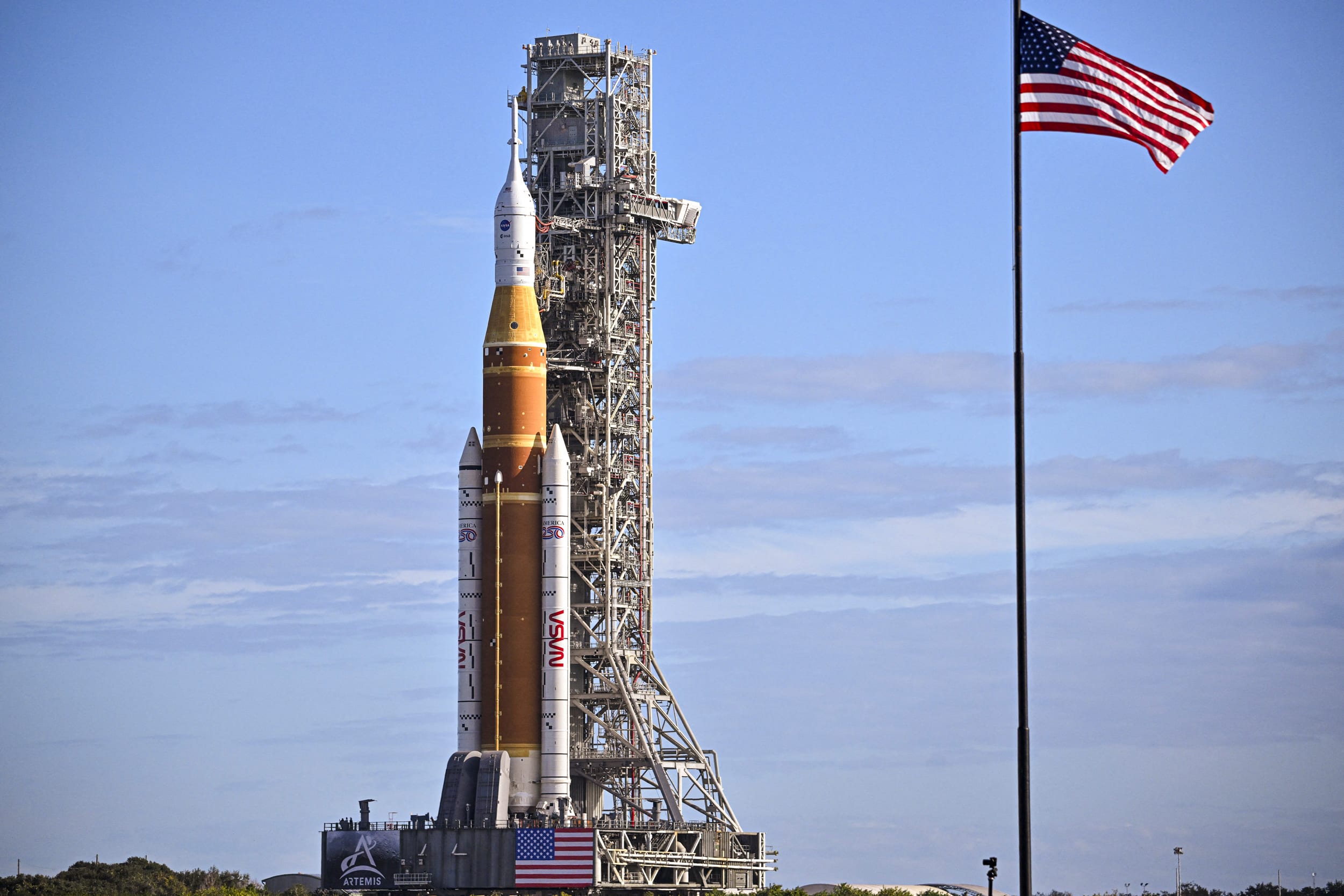
This is a proving mission, a 10-day lunar flyby designed to validate whether NASA and its partners can send humans beyond low Earth orbit again and trust both the crew and the hardware to perform to standard.
If it works, everything that follows becomes more real.
A return to the lunar surface.
A sustained presence.
Infrastructure.
Access, all real.
And eventually, control over how operations unfold beyond Earth.
That is why tonight is history-making.
Not because it looks good on television.
Because serious organizations reveal themselves by how they choose their people, and NASA just showed its hand.
Three military aviators and one extreme-environment engineer are headed toward the Moon.
That is not nostalgia.
That is a mission that won’t be forgotten.










COMMENTS