

The evidence was often contested, with witnesses contradicting one another. Some soldiers were subpoenaed to appear and did so reluctantly. Three refused to answer certain allegations, citing the risk of self-incrimination.
Journalists Nick McKenzie, Chris Masters, and David Wroe, who broke the original stories, called the case “the trial of the century.” It exposed not only the allegations against Roberts-Smith but also the broader culture and internal conflicts within Australia’s most secretive military unit.
BREAKING-High Court of Australia has thrown out Ben Roberts-Smith’s last ditch attempt to overturn previous findings of 4 judges that he is a war criminal, bully and liar. Truth wins again. Thanks to our solider truthtellers and legal team. Let’s never forget the Afghan victims.
— Nick McKenzie (@Ageinvestigates) September 4, 2025
The Findings, Appeals, and Final Verdict
In June 2023, Justice Anthony Besanko delivered his judgment. He ruled that four of six murder allegations were proven to the civil standard of balance of probabilities.
Among the findings was that Roberts-Smith had kicked a handcuffed farmer off a cliff, knocking out his teeth, before the man was shot dead. Another Taliban fighter, already captured, was shot at least ten times in the back. His prosthetic leg was later kept as a trophy and used by soldiers as a drinking vessel.
Besanko also found that Roberts-Smith had ordered or agreed to two murders to blood inexperienced soldiers. In addition to these killings, the court found that he had assaulted captives and bullied fellow soldiers.
Two other murder allegations were not proven, nor were claims that he had assaulted a woman with whom he was having an affair or threatened a junior colleague. Even so, the judge concluded the newspapers had largely succeeded in their defense of truth.
The judgment was historic. It was the first time an Australian court had assessed allegations of war crimes committed by the nation’s soldiers.
Roberts-Smith immediately appealed the ruling. In May 2024, three Federal Court judges unanimously rejected his challenge, upholding Justice Besanko’s findings. Then, in September 4, 2025, the High Court confirmed it would not hear a further appeal. That refusal locked in the outcome and left Roberts-Smith with no legal options.
Although he has never faced criminal charges, which require proof beyond reasonable doubt, the civil court findings now define his public legacy.
Wider Reckoning for Australia
The Roberts-Smith case is part of a broader examination of Australia’s military conduct in Afghanistan. A landmark 2020 report recommended 19 current and former soldiers face investigation for 39 unlawful killings between 2007 and 2013.
So far, only one former SAS soldier, Oliver Schulz, has been charged, accused of murdering an unarmed civilian in 2012. He has pleaded not guilty and awaits trial.
The only Australian veteran convicted in connection with the Afghanistan campaign is David McBride, a former army lawyer who leaked classified documents to the media. His disclosures formed the basis of the “Afghan Files” reports published by the ABC in 2017. In 2023, McBride was sentenced to more than five years in prison.
For some observers, Roberts-Smith’s downfall is a precursor to further war crimes prosecutions. War historian Peter Stanley described his case as a “litmus test” for how Australia confronts its military’s actions in Afghanistan.
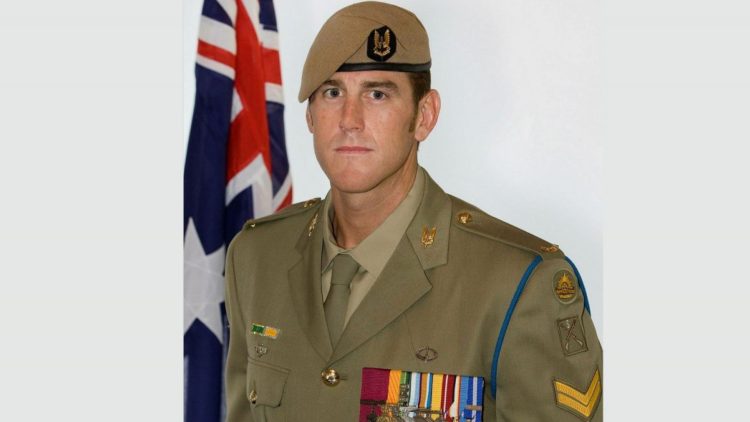
Once hailed as Australia’s greatest living soldier, Roberts-Smith now stands as the most prominent figure in the nation’s reckoning over its longest war.








COMMENTS