

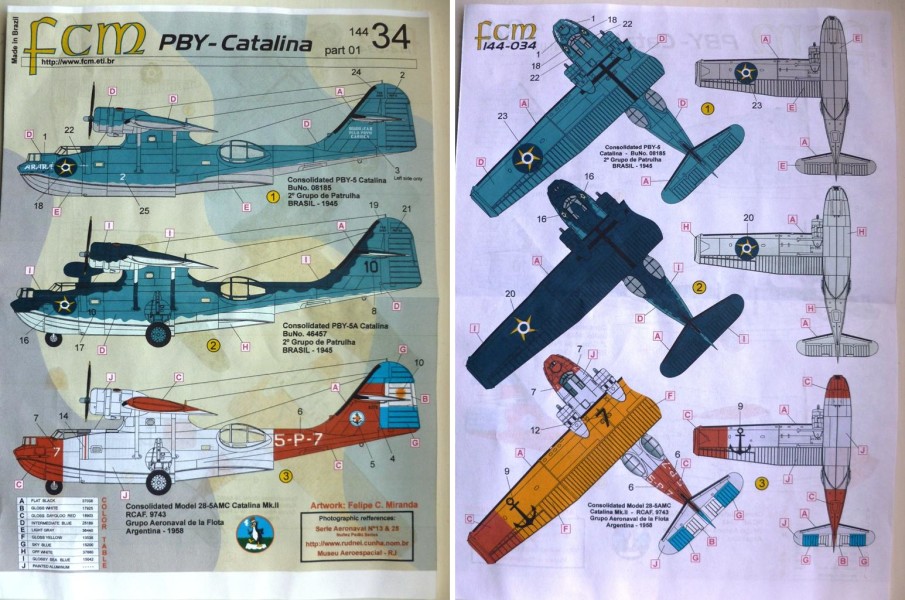
Not content, Black Cats also worked their magic against islands, terrorizing the enemy as America’s response to ‘Washing Machine Charlie. This was a nickname pinned on a lone Japanese night raider who had frequented Henderson field, dropping bombs, hitting nothing but keeping nerves on edge. The Black Cats felt obliged to return the favor, so they visited different airfields dropping bombs of all sizes, as well as beer bottles with razors in the neck to make them scream as they fell. One pilot even dropped hand grenades, door knobs, chains and even shrapnel from an exploded Japanese bomb to rattle the cages of those below.
In missions like these, they would make 4 successive runs in half hour intervals over the target before they got rid of everything carried. To say they deprived the enemy of sleep or work when doing this was an understatement.
The Black Cats knew, though, they had little defense should a fighter be nearby, so they developed tactics to keep their vulnerable planes from getting tracked by roaming patrols. The best moves, they found, was low over land and near wave top level over water. This latter technique was especially effective as it confused an enemy’s depth perception. Since the Cat was nearly invisible against a dark ocean it took an almost suicidal pilot to dive on it unaware of where the Cat’s silhouette ended and the water began.
Once fighting on Guadalcanal ended and moved up the Solomon’s and inexorably toward Japan, more Black Cat squadrons were added, while VP-12 was withdrawn after having flown over 300 missions.
The new groups continued the Black Cats legacy, plying their deadly trade sinking or damaging thousands of tons of shipping and harassing harbors and employing a new tactic: working hand in hand with PT boats off the coasts as double edged sword against shipping. This ploy helped them rack up even more nocturnal victories.
And crews were evolving the Catalina itself. Now, more machine guns were being added and even attempts to mount a tank gun were tried, but abandoned because such a beast wouldn’t fit. Nevertheless, this excess of automatic weaponry taught many a night fighter to keep its distance as their porcupine-like target lumbered over the waves at barely 115 miles per hour.
The Cats also made daylight appearances like their blue attired cousins when reconnaissance was needed or as standby’s for search and rescue. It was during one of these that an incredible feat occurred.
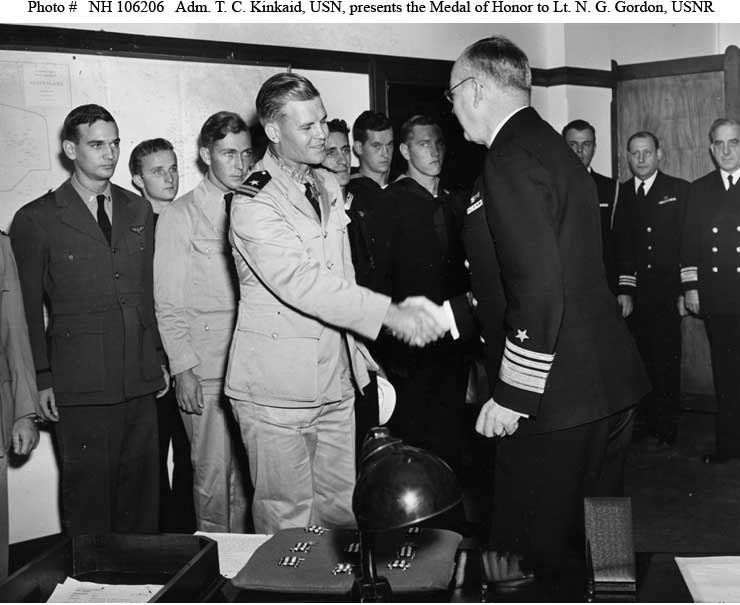
During a rescue patrol on February, 14th, 1943, a VP-34 PBY piloted by Lieutenant Nathan Gordon covered a massive daylight raid against Kavieng airfield on an island named New Ireland. Combat had been heavy and planes downed offshore, so he dipped his black bird low looking for rafts or heads bobbing in the waves which seemed heavier than usual.
He eased the Catalina toward the water, but the swells caused it to hit heavy, water spewing through the seams and bilges. He taxied the plane around an empty raft then satisfied there was no one around, lifted off again.
A radio call sent him to another location, nearby. Another raft spotted… Men aboard, drifting close to shore.
An enemy boat set out toward it. A bomber strafed its course sending it back to the beach as Gordon set down again, spray erupting around the raft as the Japanese zeroed in on it. He stopped engines, letting the raft float alongside, as bullets began puncturing the aircraft. Several men were hauled aboard and the Catalina lumbered over the waves.
Just as it lifted off, another call came. More men. 3 this time. Again, another hard landing, the Japanese greeting them with bursts of tracer and sea spray kicking up around the plane as the engines stopped and tired hands pulled them inside.
Bouncing into the air, he set course for home. Then it came again. More men sighted. Counting his crew, he realized there were now 19 men aboard with no room left. But it didn’t matter, he was going back.
Gordon thundered low down the beach toward the raft tossing in the waves near shore. The Japanese poured fire at the plane as Gordon slammed it down the black skin bleeding water and oil as he pulled alongside with still engines. The 6 stuffed themselves aboard as the throttles shoved forward and the wounded, water logged, and overloaded cat struggled with each hop of wave, until it rose perhaps by will alone, into the big blue, tracked the entire way by relentless fire. It was to no avail. Gordon had done it, and got them back home a few hours later with his courage and crew bailing water out the hatches.
Word quickly made its way up the chain of command and soon Admiral William Halsey took time from his busy schedule to send the following message:
“Please pass my admiration to that saga-writing Kavieng Cat crew. X-ray. Halsey.”
Nathan Gordon received the Medal of Honor.
Squadrons stayed active throughout 1943 and into ’44 and included Australian (RAAF) groups, this expanded the operational areas, but the Cats days were coming to an end. Better aircraft such as the 4 engine maritime B-24 Liberator, the PB4Y, was appearing in greater numbers and exceeding the Catalina’s attributes in most areas. And with their black paint flaking and unplugged bullet holes dotting their forms, the last of the Black Cat squadrons headed back to the U.S. in early 1945, to await the scrapyard. There, the outstanding success and sheer bravery of their crews remained unknown to the worker whose torch began to slice into that scarred and battered aluminum shape that once ruled the night.
U.S. Navy Black Cat Squadrons
- VP-11
- VP-12
- VP-23
- VP-24
- VP-33
- VP-34
- VP-44
- VP-52
- VP-53
- VP-54
- VP-71
- VP-81
- VP-91
- VP-101
PBY Catalina General Characteristics
- Crew: 8 – pilot, co-pilot, bow turret gunner, flight mechanic, radioman, navigator and two waist gunners
- Length: 63 ft 10 7/16 in (19.46 m)
- Wingspan: 104 ft 0 in (31.70 m)
- Height: 21 ft 1 in (6.15 m)
- Wing area: 1,400 ft² (130 m²)
- Empty weight: 20,910 lb (9,485 kg)
- Max. takeoff weight: 35,420 lb (16,066 kg)
- Powerplant: 2 × Pratt & Whitney R-1830-92 Twin Wasp radial engines, 1,200 hp (895 kW each) each
- Zero-lift drag coefficient: 0.0309
- Drag area: 43.26 ft² (4.02 m²)
- Aspect ratio: 7.73
PBY Catalina Performance
- Maximum speed: 196 mph (314 km/h)
- Cruise speed: 125 mph (201 km/h)
- Range: 2,520 mi (4,030 km)
- Service ceiling: 15,800 ft (4,000 m)
- Rate of climb: 1,000 ft/min (5.1 m/s)
- Wing loading: 25.3 lb/ft² (123.6 kg/m²)
- Power/mass: 0.034 hp/lb (0.056 kW/kg)
- Lift-to-drag ratio: 11.9
PBY Catalina Armament
- 3× .30 cal (7.62 mm) machine guns (two in nose turret, one in ventral hatch at tail)
- 2× .50 cal (12.7 mm) machine guns (one in each waist blister)
- 4,000 lb (1,814 kg) of bombs or depth charges; torpedo racks were also available








COMMENTS