The British RAF successfully shot down 14 Iranian-made kamikaze drones in a single night using the Rapid Sentry air defense system at the NATO base in Erbil, Iraq, marking a significant achievement in the ongoing Iran War. This incident highlights the effectiveness of the Rapid Sentry system, which employs advanced missile technology to counter drone threats, but also raises concerns about the high costs of such defense measures compared to cheaper drone attacks.
Key points from this article:
The British RAF shot down 14 Iranian-made Shahed-136 drones in Erbil, Iraq, on March 23, 2026, marking the largest number of drones intercepted in one night since the Iran War began.
How the successful interception of these drones demonstrates the effectiveness of the Rapid Sentry air defense system, which has been deployed to counter Iranian drone threats in the region.
Why this matters as it underscores the escalating drone warfare tactics employed by Iran and the financial challenges faced by nations like the U.K. in countering such threats, given the high cost of defense systems compared to the relatively low cost of the drones.
Updating summary...
British Rapid Sentry System Downs 14 Iranian Drones in One Night
Warren Gray
Speed
1x
Listen
COMMENTS
Fourteen drones fell out of the night sky over Erbil in a matter of minutes, but the real story isn’t the win, it’s the math, because every missile fired to stop them still costs more than the threat it’s trying to kill.
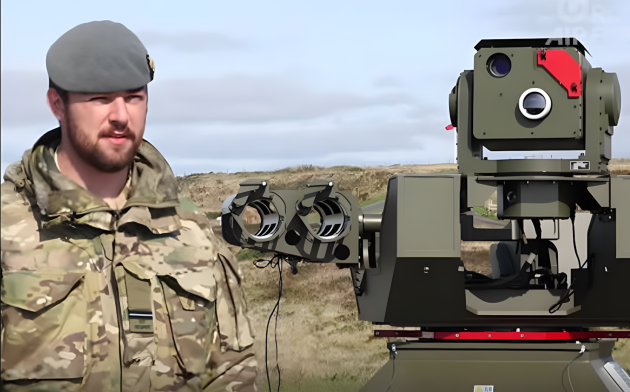
Royal Air Force (RAF) flying officer (2nd Lt.) with Rapid Sentry air defense system. Photo credit: U.K. Ministry of Defence.
In Erbil (Iraq)…the Rapid Sentry system…They shot down 14 one-way, attack drones just in one night, last night. It’s a hugely impressive action, and that is the largest number that they shot down in a single night since the (Iran) war began. – K. Ministry of Defence source, March 24, 2026.
On the evening of Monday, March 23, 2026, more than three weeks into the ongoing war in Iran, the NATO special operations coalition base at Erbil, Iraq, was pummeled by Iranian-made, Shahed-136 armed, kamikaze drones during an aerial blitz. But the British RAF (Royal Air Force) Regiment was ready for them, blasting 14 Shaheds out of the sky with their new, Rapid Sentry air defense system.
Advertisement
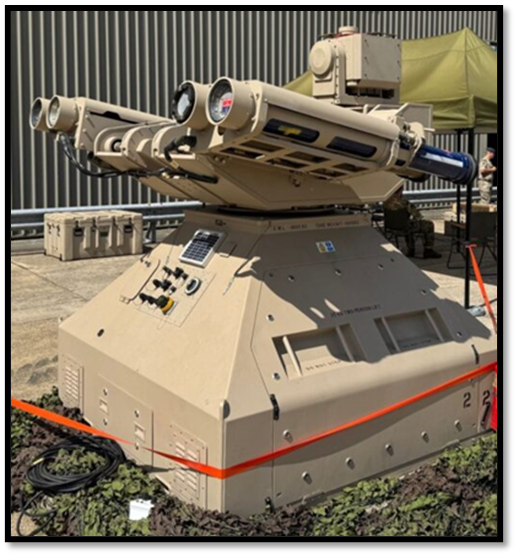
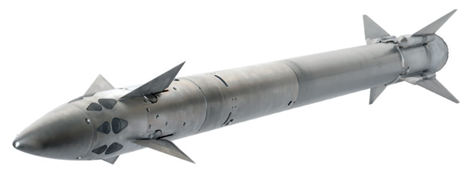
Rapid Sentry employs the laser-guided, Lightweight, Multirole Missile (LMM), or Martlet (a mythical, English bird that never roosts), produced by Thales Air Defence in Belfast, Northern Ireland. It entered military service in 2021, and became fully operational in October 2025, at a unit cost of $67,000 to $95,000, depending upon the estimate source.
The Martlet is a 29-pound missile, four feet, three inches long, with a 6.6-pound, high-explosive warhead. It has an effective range of 3.7 miles, and a supersonic speed of Mach 1.5, using high-precision, semi-active laser guidance, but alternate guidance modes have been proposed, including infrared, imaging-infrared, and GPS guidance.
The Rapid Sentry system utilizes the mobile, Saab (Swedish) Giraffe 1X short-range radar, with a detection range of 47 miles. It weighs only 150 pounds, and is readily portable in the back of any pickup truck or military utility vehicle. The United Kingdom ordered 11 of these radar systems in 2023.
Advertisement
Saab has stated that, “This new capability for the U.K. has been procured on the basis of Giraffe 1X being the fastest and most-effective solution available, with a proven capability that enjoys a high degree of confidence amongst Counter-Unmanned Air Systems (C-UAS) experts.” These portable radars, together with the Rapid Sentry missile system itself, are believed to have been forward-deployed to U.K. bases at Erbil, Iraq, and RAF Akrotiri, Cyprus, as a minimum.
Saab Giraffe 1X mobile radar. Photo credits: Saab.
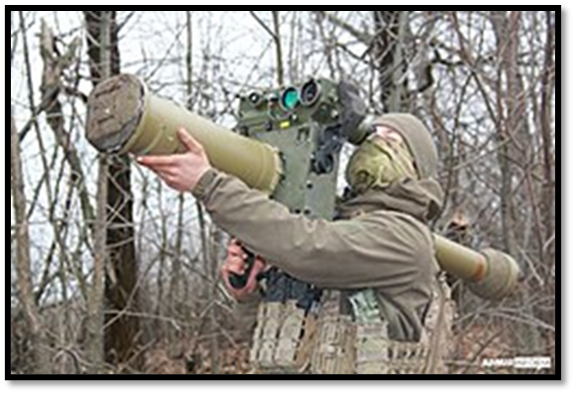
Britain donated at least 650 Martlet missiles, of the 1,000 they initially ordered for themselves, to Ukraine as a shoulder-fired, air defense weapon, but also fired from the Alvis Stormer armored vehicle. At least one deadly, Russian Ka-52 Alligator helicopter gunship was shot down by Ukraine’s 95th Air Assault Brigade using a Marlet/LMM missile.
Advertisement
Ukrainian soldier with a Marlet missile. Photo credit: Wikipedia.
In July 2024, the U.K. ordered $224 million worth of new Martlet missiles (about 2,800 units) to replace those that were given to Ukraine, and in September 2024, they pledged to send 650 new missiles to Ukraine, with deliveries already completed by now. In March 2026, Ukraine ordered a further 5,000 Martlet missiles, at a staggering cost of $310,000 per missile system (presumably meaning more than one missile per system).
Since the start of the current Iran War on February 28, 2026, the U.K has deployed Rapid Sentry air defense systems, as well as AW159 Wildcat HMA2 naval helicopters armed with multirole Martlet missiles, to Cyprus, following drone strikes on the British Akrotiri and Dhekelia bases, to improve drone defenses.
In March 2026, the RAF Regiment deployed to Erbil, Iraq, with the Rapid Sentry system, Saab Giraffe 1X radars, and electronic warfare equipment, rapidly engaging and shooting down at least 50 Iranian-made drones in just a few weeks, launched either by Iran or its proxy forces in the region.
Advertisement
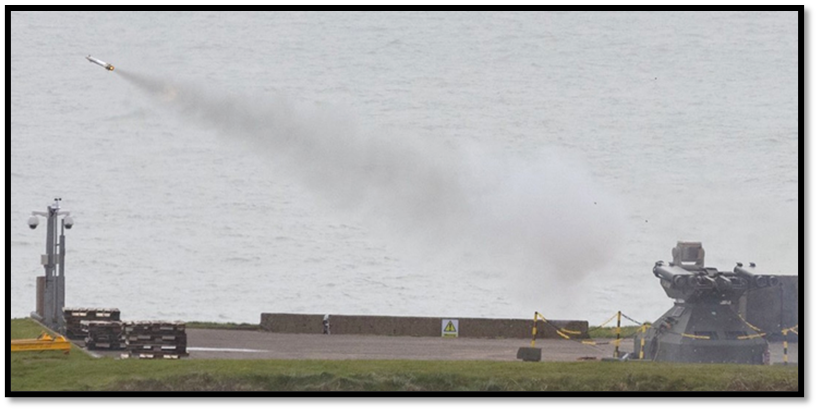
Rapid Sentry missile system tested in England. Photo credit: U.K. Ministry of Defence.
On Friday, March 20th, Iran fired two long-range, Khorramshahr-4 ballistic missiles from the southern Chah Bahar region at the British air base (with American B-52H and B-1B bombers) on Diego Garcia island in the Indian Ocean. One broke apart short of the island, while the other was intercepted by a U.S. Navy RIM-161A Standard Missile-3 (SM-3 Block-IIA) interceptor missile from a U.S. Arleigh Burke-class destroyer. This event came as a huge wake-up call to the rest of the world, since Iran was believed to possess missiles with a range of only 1,300 miles, as opposed to the 2,450 miles from southern Iran to Diego Garcia.
British defense officials initially dismissed the incident as “new and experimental capabilities” on the part of Iran, but the long-range attack stunned the world, and the Brits are acutely aware that the missile flight distance from northwestern Iran to London is also 2,450 miles! If the Iranians had ballistic missiles with literally twice the range that we estimated in the past, what else do they have that we don’t know about?
It’s interesting to note that the U.K. Prime Minister Sir Kier Starmer didn’t want to become involved in the Iran War at all, until Iranian drones or missiles attacked British forces in Iraq, Cyprus, and Diego Garcia, and until the Iranians closed the Strait of Hormuz. Now, suddenly, the Royal Navy is on its way to the embattled region, promising to lead the minesweeping and naval defenses necessary to reopen the vital strait.
Then, on March 23rd, 2026, alert British RAF gunners intercepted and destroyed 14 Iranian-made kamikaze drones over a short period of time. This was the largest number of drones to be shot down by U.K. forces in a single night since the Iran war began. There were no British casualties at Erbil that night.
The bold, Rapid Sentry missile response to the Iranian drone attack on Erbil raises the total drone kills by the RAF in the Middle East region to at least 70 since March 1st, which is certainly good news. But, while the Martlet is often dubbed a “low-cost” missile, its estimated price tag of almost $95,000 still far exceeds the humble, $20k to $50k cost of a Shahed-136 killer drone.
Martlet/LMM missile. Photo credit: NavalNews.com.
That’s the real problem with countering modern drone warfare. So far, the best defense systems, either surface-launched or air-launched, well exceed the unit cost of cheap, foreign drones, which can be launched in virtual swarms, to overwhelm U.S., British, or Ukrainian defenses. The Rapid Sentry system performed superbly at Erbil recently, but even lower-cost, effective measures are needed to offset the huge expenses of drone warfare.
Advertisement
What readers are saying
Generating a quick summary of the conversation...
This summary is AI-generated. AI can make mistakes and this summary is not a replacement for reading the comments.











COMMENTS