

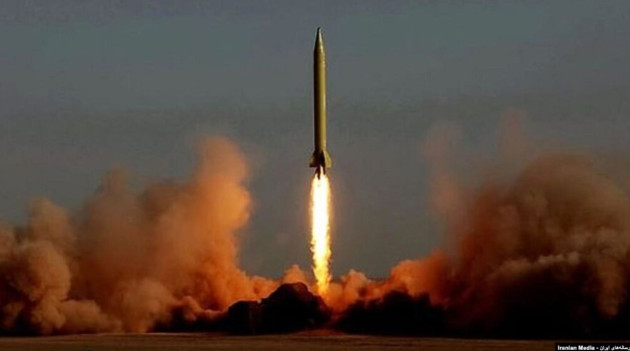
So, the nuclear material existed, yes. But the intelligence community’s own people were saying the threat wasn’t imminent. The cover story kept shifting… first nukes, then ballistic missiles, then nukes again, then freeing the Iranian people, then all four at once. When the stated reason for a war shifts four times in a week, ask fundamental questions. The threat was real enough to be the cover story. Whether it was real enough to be the reason is an entirely different question.
War Two: The One Nobody Wants to Say Out Loud
The Stimson Center, one of the more respected foreign policy think tanks in Washington, published a cold analysis. They pointed out that the administration insisted on zero enrichment from Iran without offering any sanctions relief in return. Negotiations ended with the US launching attacks intended to eliminate not just Iran’s nuclear program, but its government. In hindsight, they wrote, the talks look less like negotiation and more like pretext for undertaking regime change.
That’s from a DC think tank reading the same documents we have access to and arriving at a conclusion the administration would rather you ignore.
Now layer this on top. The current administration is running a $2 trillion annual deficit. Midterm elections are approaching. If the opposing party takes the House, the political and potentially legal exposure is significant. A decisive foreign policy win, combined with massive economic growth fueled by Middle Eastern investment, is the kind of thing that changes a political trajectory.
I’m not saying that’s why bombs are falling. But the incentive structure is solid. Documented. And pretending it’s not a factor requires you to believe that domestic politics has never influenced a wartime decision. History says otherwise. Every time.
War Three: The One Iran Is Actually Fighting
This is the one that rewired my thinking, and it came from entrepreneur and media analyst Tom Bilyeu, who laid out a framework that I haven’t been able to poke a hole in.
We constantly hear about places the US and Israel destroyed… at least when they are advantageous. But when Iran retaliated, look what they hit. Not just military bases or Israeli targets, but oil infrastructure across every single GCC nation that had recently pledged investment to the United States. Saudi Arabia. Kuwait. Qatar. Bahrain. UAE.
Every country that had written a check to American AI infrastructure got hit.
Then they hit something that crystallized the picture. Iranian drones struck two Amazon Web Services data centers in the UAE and damaged a third in Bahrain. All three went offline. Digital services across the UAE collapsed. AWS told its customers to migrate workloads out of the Middle East immediately.
They were explicit about the targeting. Those data centers are the physical backbone of the AI economy that the entire $2 trillion Gulf investment pipeline was designed to scale.
Think about the chain reaction. Every dollar a GCC nation spends on intercepting drones is a dollar that doesn’t flow to an American tech company. Destroyed facilities are rebuilt with funds earmarked for US AI infrastructure. And 54 percent of the funding for the largest private equity and venture capital firms in the US comes from the Middle East. That’s no peripheral detail. That’s the engine.
Then they closed the Strait of Hormuz. Twenty percent of the world’s oil flows through that bottleneck every day. Tanker traffic dropped to near zero. Oil surged, feeding inflation, which keeps interest rates high, which crushes profit margins for every company that borrowed money to build AI infrastructure. And they all borrowed money.
Iran doesn’t need to defeat the US military to win. It just needs to make the Gulf too expensive and unpredictable to invest in. Force the GCC nations to choose between funding American AI chips and funding their own survival. That’s the play. If you’re not seeing it reported that way, ask yourself why.
Three wars. One operation. One news cycle holding one narrative at a time. And the narratives support one another.
Iran is fighting with a different scorekeeper. The US says the nuclear threat justifies regime change. The regime change secures the investment pipeline. And the investment pipeline funds the economy. But Iran is pulling one thread and watching the whole thing unravel.
- Scott Fitzgerald once wrote, “The test of a first-rate intelligence is the ability to hold two opposed ideas in the mind at the same time and still retain the ability to function.”
And if two things can be true at once… so can three.
The question is whether you’re willing to sit with that.
About the Author
“I don’t try to change minds… just deepen them.” – Tegan Broadwater
Tegan spent 13 years with the Fort Worth Police Department, including two years assigned to the FBI working deep undercover inside a violent Crip organization. That operation, detailed in his book Life in the Fishbowl, resulted in 51 convictions. He has since founded Tactical Systems Network, an armed security & protection firm primarily staffed by veterans, and is a creative writer, musician, and hosts The Tegan Broadwater Podcast. All book profits benefit children of incarcerated parents. Learn more at TeganBroadwater.com








COMMENTS