The declassification of U.S. military operations reveals the transformation of cargo aircraft into gunships during the Vietnam War, particularly over the Ho Chi Minh Trail in Laos. This innovation, driven by projects like Gunship I and II, significantly impacted air warfare tactics and strategies.
Key points from this article:
The U.S. Air Force's Project Gunship I converted C-47 cargo planes into AC-47 gunships, which were deployed in Laos by 1969 to target enemy supply lines.
How the AC-130 gunship, developed under Project Gunship II, enhanced U.S. military capabilities by providing sustained, accurate fire during night operations over Laos.
Why the evolution of these gunships marked a significant shift in airpower tactics, demonstrating the U.S. military's ability to adapt and innovate in covert operations during the Vietnam War.
Updating summary...
Declassified: Turning Cargo Planes into Gunships
Galen Fries
Speed
1x
Listen
COMMENTS
A declassified look at how U.S. airmen turned ordinary cargo aircraft into deadly gunships, reshaping modern airpower through wartime improvisation.
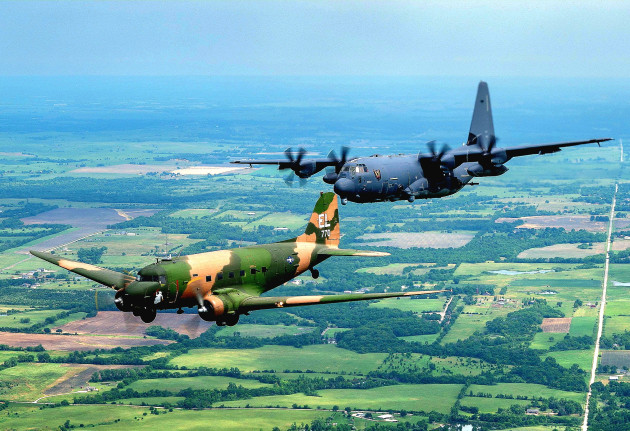
Iconic AC-47 Spooky and AC-130J Ghostrider Rule the Sky. Image Credit: Autoevolution
Advertisement
This material was formerly classified and restricted to authorized personnel on a strict need-to-know basis. Its contents were withheld due to operational sensitivity. Following formal declassification and review, it is now released for public record.
For years, much of what happened over the Ho Chi Minh Trail in Laos remained hidden from public view. The United States was officially not at war in Laos, and operations there were conducted under layers of classification tied to what later became known as the “Secret War.” Details of gunship operations, basing in Thailand, mission results, and even the existence of certain aircraft variants were restricted at the time and discussed only within narrow operational channels. It was not until years later, through declassification, official Air Force histories, and the accounts of participants, that the full scope of these cargo aircraft turned gunships and their role over Laos became public.
Advertisement
In the late 1960s, over the jungled spine of the Ho Chi Minh Trail in southern Laos, U.S. airmen did something that sounded like science fiction at the time. They turned lumbering cargo aircraft into lethal night-firing gunships. The effort, formally organized under Project Gunship I and Project Gunship II, became one of the most audacious improvisations of the Vietnam War and left a permanent mark on modern airpower.
Advertisement
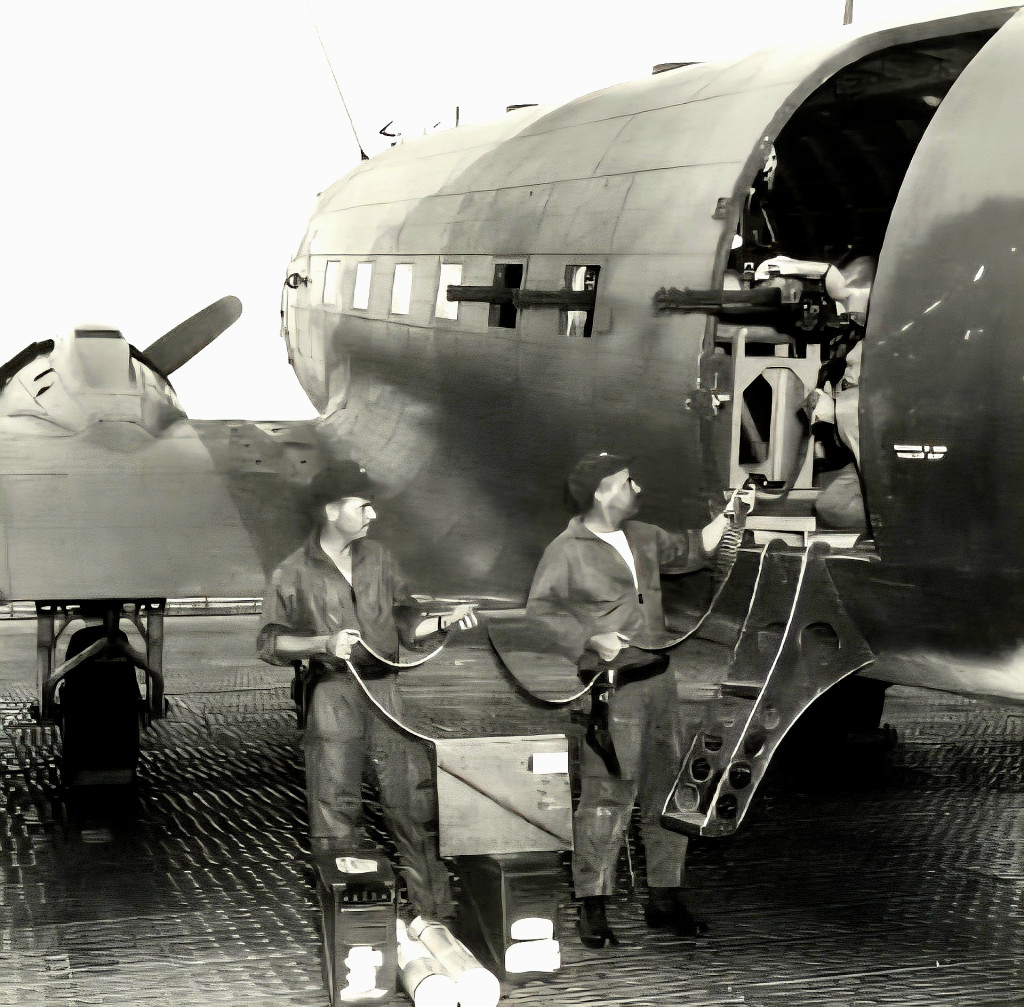
The AC-47 had a 7 men crew and carried up to 24.000 rounds on board. Image Credit: War History Online
The story begins with the C-47 “Gooney Bird,” a World War II-era transport aircraft that had already served as a paratrooper carrier, medevac platform, and flare-dropper. In Vietnam, Air Force officers realized that if a C-47 could be held in a steady, banked turn over a target, its weapons could be fired sideways in a continuous stream. Under Project Gunship I, engineers mounted three 7.62 mm miniguns along the left side of the aircraft, creating the AC-47, nicknamed “Spooky” and later “Puff the Magic Dragon.”
By 1969, four AC-47s were deployed to Laos, where they proved devastating against truck convoys and ground forces moving along the Ho Chi Minh Trail. Their success prompted a follow-on effort to expand gunship operations in Laos. An initial plan to convert Laotian-owned C-47s proved logistically difficult, so the United States instead supplied modified South Vietnamese C-47s for use by the Royal Laotian Air Force.
These AC-47-type aircraft flew night interdiction and close air support missions, adding another layer to the already complex and largely covert air war over Laos.
Advertisement
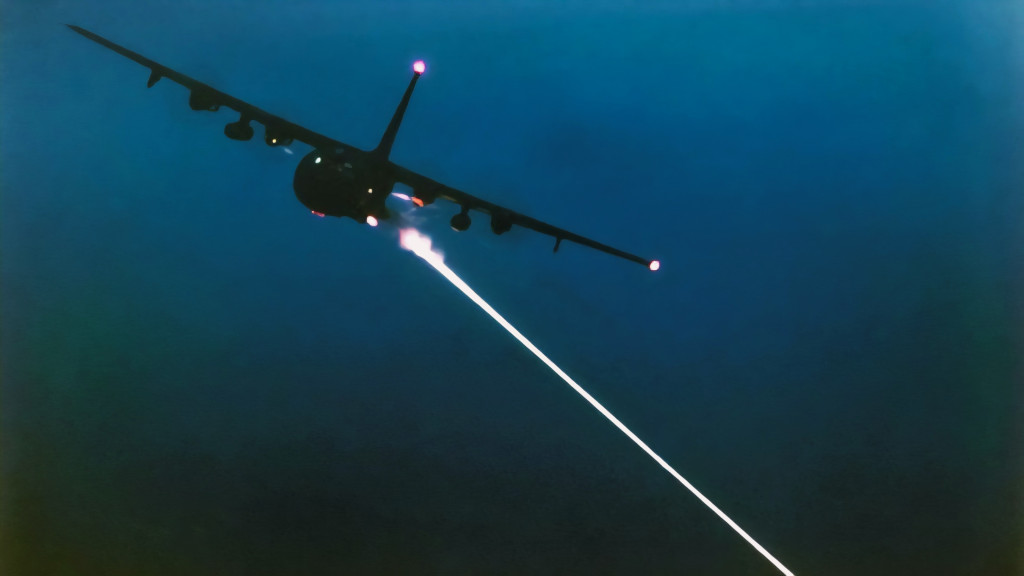
The real leap came with Project Gunship II, which transformed the larger C-130 Hercules into the AC-130 gunship. At Wright-Patterson Air Force Base, engineers cut weapon ports into the fuselage and installed 20 mm and 40 mm cannons. Later versions added a 105 mm howitzer, turning the aircraft into a flying artillery platform capable of delivering sustained, accurate fire.
The Lockheed AC-130 Spectre Gunship in its natural habitat. There’s nothing on earth that can make you feel so loved as an AC-130 overhead. Image Credit: National Museum of the U.S. Air Force
The first AC-130A aircraft arrived in Southeast Asia in late 1968 and were quickly committed to combat from Ubon Royal Thai Air Base. Flying night missions over southern Laos, they operated as part of Operation Steel Tiger and Operation Commando Hunt, the major interdiction campaigns aimed at North Vietnamese logistics along the Ho Chi Minh Trail. In this role, the AC-130s destroyed hundreds of trucks and disrupted enemy supply lines in ways conventional strike aircraft could not consistently achieve.
Several figures stand out in the development of the gunship program. Captain John Simons, an Air Force officer involved in early side-firing experiments, helped lay the conceptual groundwork for Project Gunship I and the AC-47. Later, Ron Terry, who became chief of the AC-130 program, drove key upgrades that improved survivability and sensor integration as North Vietnamese air defenses in Laos grew more sophisticated.
Operationally, crews from units such as the 4th Air Commando Squadron and later the 16th Special Operations Squadron flew these aircraft over Laos, often at night and under heavy antiaircraft fire. Their missions blurred the line between special operations and conventional airpower, turning what began as an improvised experiment into a core component of the so-called Secret War in Laos.
By the early 1970s, the original AC-47s were phased out, but the AC-130 lineage endured.
The concept evolved through multiple variants and continues today with platforms such as the AC-130J Ghostrider. What began as a wartime necessity over Laos became one of the most enduring innovations of the Vietnam-era air war.
In Laos, these conversions were never just about hardware. They reflected a willingness to repurpose the mundane into the lethal, and to fight a hidden war with aircraft that, at first glance, looked like nothing more than transport planes.
Advertisement
What readers are saying
Generating a quick summary of the conversation...
This summary is AI-generated. AI can make mistakes and this summary is not a replacement for reading the comments.











COMMENTS