

That distinction matters. Planning is not execution. But the range of options under discussion signals how seriously Washington is taking the standoff.
Earlier reporting from Reuters indicated the Pentagon has prepared for operations that could last weeks, not just a one-night exchange of missiles. Iran’s layered air defenses, ballistic missile inventory, and regional proxy network mean any strike would carry escalation risk from the opening salvo.
The diplomatic clock is ticking. Iranian Foreign Minister Abbas Araqchi said Tehran is preparing a counterproposal within days and suggested talks could resume within about a week. President Trump, for his part, has publicly referenced a roughly 10 to 15 day window for a decision and warned of “really bad things” if no agreement is reached. That combination, ongoing negotiations paired with visible military readiness, creates a compressed timeline with little room for miscalculation.
Other outlets have filled in the contours. The Wall Street Journal described discussion of a limited initial strike concept designed to pressure Iran without triggering full-scale war, while also noting broader options exist should retaliation follow. Meanwhile, visible U.S. force posture shifts in the region, naval assets and airpower repositioning, are sending a signal even as diplomats keep talking.
Analysts at CSIS have flagged the second-order effects if shots are fired, especially around energy flows through the Strait of Hormuz. Even a temporary disruption would ripple through global oil markets almost immediately.
There is no clean version of this scenario. Targeting senior leaders may sound precise, but it demands real-time intelligence, careful legal framing, and an assumption that escalation can be controlled. History suggests that assumption deserves scrutiny.
Tonight’s bottom line is simple: Washington is negotiating with one hand while keeping the other on the trigger. If talks break down, the menu of options is already written.
U.S. and Chinese Jets Briefly Confront Each Other Near Korea in ADIZ Encounter
A U.S. training flight over the Yellow Sea this week turned into a short, sharp reminder that in Northeast Asia, proximity is policy.
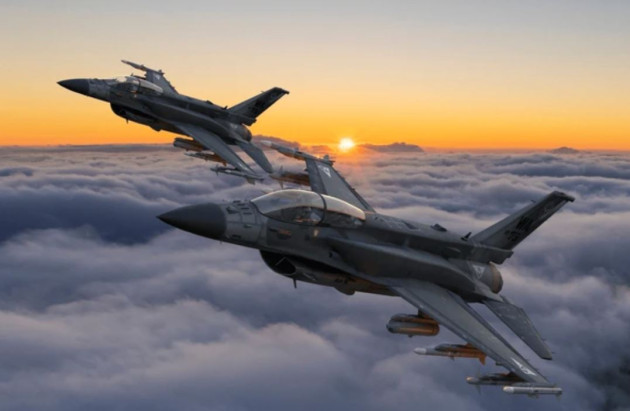
South Korea’s Yonhap News Agency reported that about 10 U.S. F-16s based at Osan Air Base flew a training mission over international waters off South Korea’s west coast on Feb. 18. As the formation approached the edge of China’s Air Defense Identification Zone, Chinese fighters scrambled, resulting in what local media described as a brief aerial face-off in the airspace between South Korea’s and China’s overlapping ADIZ claims.
No shots were fired. No airspace was violated. The U.S. aircraft did not enter China’s ADIZ, and the encounter remained contained.
South Korean reporting indicates Seoul was informed of the U.S. flight, though not necessarily involved in the execution of the drill. That detail matters. The Yellow Sea is crowded airspace, politically sensitive, and layered with overlapping identification zones that are not sovereign territory but act as early warning buffers. Aircraft operating legally in international airspace can still trigger scrambles simply by getting close enough to the line.
An ADIZ is not territorial airspace. It is a declared zone where a country asks approaching aircraft to identify themselves. The problem is that these zones overlap and are contested. When rival powers fly near those seams, interception becomes routine, and routine can become risky at jet speed.
This incident appears to have been professional and brief. But it fits a broader pattern. The Western Pacific has become an arena of signaling flights, visible force posture adjustments, and rapid intercepts designed to test response times and assert presence. Washington calls it lawful training in international airspace. Beijing calls it pressure at its doorstep. Both believe they are operating within their rights.
The math is unforgiving. High-performance aircraft, compressed decision timelines, national pride, and political tension do not leave much margin for error. It only takes one misjudged turn or one overaggressive maneuver to convert a controlled intercept into a crisis.
For now, this was a contained encounter over open water. But the geography is tight, the airspace is contested, and neither side is backing away from forward operations. In that environment, even a routine sortie becomes a strategic message.
Tonight’s takeaway: nothing exploded, nothing escalated, and that is precisely why this matters. The region is settling into a rhythm of near-contacts that are normal, legal, and increasingly tense.








COMMENTS