

It is technical, deliberate, and unforgiving.
Modern militaries build layered air defense networks. Long-range surface-to-air missile systems. Medium-range batteries. Short-range point defenses. Radar arrays tied into integrated command networks. Fly straight into that on day one and you lose aircraft.
SEAD exists to fracture that system.
Before and after photos released on March 1 show extensive damage to missile bases, radar installations, and aircraft facilities in Iran after a barrage of US and Israeli air strikes. One set of images shows the Tehran compound of Ayatollah Ali Khamenei, Iran’s supreme leader,… pic.twitter.com/QfKtOkvsHU
— Radio Free Europe/Radio Liberty (@RFERL) March 2, 2026
In practical terms, that means hunting radars, command nodes, and missile launchers before they can effectively engage strike aircraft. Electronic warfare platforms jam targeting signals. Intelligence assets map emissions. Anti-radiation missiles home in on active radar beams.
Sometimes the objective is destruction. Sometimes it is a temporary disruption, just long enough to open a corridor.
The United States has refined this craft over decades, from hard lessons in North Vietnam to the opening nights of the 1991 Gulf War and the 2003 invasion of Iraq. The pattern is consistent.
Blind the system. Dislocate command and control. Force operators to shut down their radars or risk losing them.
Against a country like Iran, geography complicates the problem. Mountainous terrain creates radar shadows and dead space. Mobile launchers can relocate quickly. Russian-designed systems and indigenous platforms are layered together. You are not dismantling a single battery. You are unweaving a network.
Early strike reporting often sounds vague. “Air defense sites engaged.” “Targets suppressed.” That usually signals a deliberate effort to peel back protective layers before higher-value targets are struck in volume.
If SEAD is effective, the rest of the campaign carries a lower risk. If it is not, aircraft losses can increase, and political tolerance shrinks quickly.
When analysts talk about escalation, this is a quiet indicator to watch. A limited punitive strike requires minimal suppression. A sustained air war demands the systematic dismantling of the enemy’s eyes and teeth.
That fight happens first. Almost always.
The Strait of Hormuz: Leverage, Risk, and the World’s Most Dangerous Chokepoint
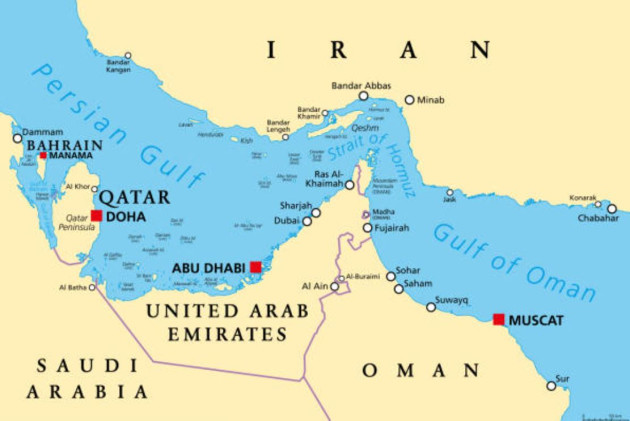
The question always comes back to the same narrow strip of water.
If tensions spike between Washington and Tehran, attention turns almost immediately to the Strait of Hormuz. It is not dramatic geography. It is not wide, not majestic. It is a chokepoint, and chokepoints have a way of dragging the world into the conversation.
Roughly 20 percent of the world’s petroleum liquids pass through that corridor. That fact alone gives Iran leverage. It does not need to sink a fleet to create consequences. It only needs to create uncertainty.
There is a difference between “closing” the strait and making it dangerous.
A true closure would require sustained mining operations, coordinated missile coverage, naval harassment, and the willingness to absorb immediate military retaliation. That is a major escalation. It would likely invite a multinational naval response and place Iran’s coastal and naval assets directly at risk.
More likely is calibrated disruption.
❗️🇮🇱🇺🇸⚔️🇮🇷 – What Happens When the Strait of Hormuz Closes
Maritime traffic through the Strait of Hormuz has plummeted amid escalating tensions following joint U.S. and Israeli military strikes on Iran on February 28, 2026. The strikes targeted Iranian military facilities,… pic.twitter.com/yI1OeDMzrS
— 🔥🗞The Informant (@theinformant_x) March 2, 2026
Fast attack craft can swarm commercial vessels, naval mines can be placed selectively to rattle insurers, anti-ship missiles can be demonstrated along the coastline, and drone surveillance can pressure shipping companies to reroute or pause transit. Even a handful of such incidents can spike global energy prices overnight.
Markets react faster than warships.
Iran has invested for years in asymmetric maritime capability. Small boats, coastal missile batteries, sea mines, and drones are not designed to defeat the U.S. Navy in open battle. They are designed to create friction, hesitation, and political cost.
And that is the key.
Tehran does not have to win at sea. It only has to make the water feel unstable long enough to shift diplomatic pressure onto Washington and its Gulf partners. Energy prices rise. Insurance premiums climb. Shipping slows. Allies start asking how long this will last.
But there is a ceiling to this strategy.
Sustained disruption would likely trigger coordinated naval operations to clear mines, escort tankers, and dismantle coastal launch sites.
The U.S. Fifth Fleet is positioned in the region for precisely this kind of contingency. The longer the disruption lasts, the more predictable the response becomes.
So if Hormuz enters the picture, watch the scale and duration. A brief flare-up signals messaging. A prolonged campaign signals a willingness to absorb real damage.
That narrow stretch of water is less about dominance and more about leverage.








COMMENTS