

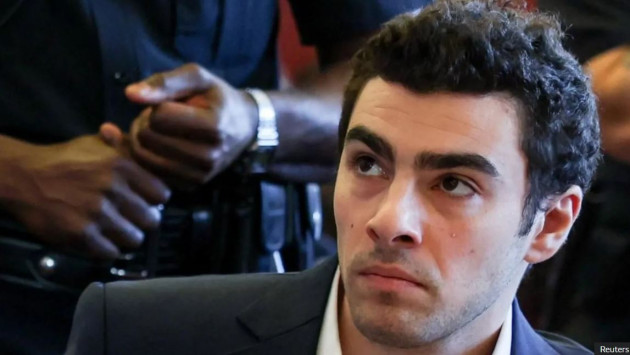
Justice Department Launches Federal Civil Rights Investigation in Alex Pretti Shooting
The U.S Department of Justice has opened a federal civil rights investigation into the shooting death of Alex Pretti, signaling a deeper level of scrutiny than seen in many police use-of-force cases. The announcement, made this week by senior Justice Department officials, moves the matter beyond a routine internal or local review into a federal inquiry that could carry significant legal consequences.
Justice Department attorneys in the Civil Rights Division, working with the Federal Bureau of Investigation, are now gathering evidence and reviewing the circumstances surrounding the encounter that led to Pretti being shot. Federal civil rights probes are not opened lightly, and officials say the decision reflects questions about whether Pretti’s constitutional rights were violated under color of law, a legal standard that applies when government agents use their authority to deprive someone of federally protected rights.
At the core of the Justice Department investigation is whether the use of deadly force was justified under the facts as they unfolded, or whether it was excessive, unreasonable, or otherwise a violation of Pretti’s rights. Federal investigators have broad authority to collect video footage from body cameras, patrol car cameras, surveillance systems, private recordings, and other sources that capture relevant moments. They will also review official reports, dispatch logs, and use-of-force documentation as part of the inquiry.
The Justice Department has opened a federal civil rights investigation into the fatal shooting of Alex Pretti by federal Border Patrol agents in Minneapolis last weekend, shifting the primary responsibility for the probe from the Department of Homeland… https://t.co/4cUpxkUIHG
— The Washington Times (@WashTimes) January 30, 2026
Justice Department agents typically interview witnesses, law enforcement personnel who were on scene, medical responders, and others who have information about the sequence of events. These interviews are measured against physical evidence and recorded accounts, with prosecutors looking for inconsistencies, omissions, or statements that could illuminate what actually happened.
A central question in the investigation is whether officers acted reasonably and within legal standards when force was used. Federal civil rights statutes make it a crime for someone acting under color of law to willfully deprive a person of constitutional protections, including the right to be free from unreasonable force. Such cases are complex, and successful prosecution requires proof that actions were not just mistaken or bad judgment, but willful violations of law.
The Justice Department’s involvement also places attention on how local agencies have conducted their own investigations. Federal authorities often seek cooperation from local law enforcement and prosecutors. If local efforts are seen as incomplete or lacking transparency, the federal inquiry may intensify.
Officials stress that opening a federal investigation does not equate to charges, but it does reflect serious questions about the shooting. The Civil Rights Division and FBI will continue to collect evidence and evaluate whether federal charges are warranted, keeping the focus on accountability and adherence to constitutional protections.
ISIS Claims Bold Assault on Niger Airport as Security Situation Deteriorates
In the early hours of January 29, security forces in Niger’s capital battled a brazen assault on Diori Hamani International Airport that authorities say was launched by fighters claiming allegiance to the Islamic State. Gunfire and explosions echoed across Niamey shortly after midnight with firefights continuing until around 2 a.m, according to government statements and multiple news agencies.
Nigerien security forces moved swiftly. Officials reported they killed 20 attackers and arrested 11 others. Four Nigerien soldiers were wounded in the engagement. There are no independently verified reports of civilian deaths as of this update. Several civilian aircraft sustained damage on the tarmac. An Air Côte d’Ivoire passenger jet was struck on its fuselage and wing during the attack.
Niger’s government said the enemy fighters arrived on motorcycles in what the group’s propaganda arm, Amaq, described as a “surprise and coordinated attack.” The Islamic State’s claim of responsibility has been widely reported, but independent verification by neutral observers is still pending.
🇳🇪The evilness of imperialism in using locals to destroy their own future:
Niamey airport attack
20 assailants killed, 11 more severely injured arrested and 4 wounded soldiers (official report). pic.twitter.com/YK7eKkZPJX— Sahel Revolutionary Soldier (@cecild84) January 30, 2026
The choice of target was not accidental. The airport complex is home to both the civilian terminal and Military Base 101, a key installation for the Nigerien Air Force. In recent years, it has also hosted foreign military personnel and drone operations. Until July 2024, American forces operated drones from the site, but the junta expelled Western forces last year as it realigned its foreign partnerships.
Officials in Niamey say the attackers may have intended to strike at the military side of the airport, where new Turkish‑made drones and logistics facilities for a combined force of Niger, Burkina Faso, and Mali are housed. Reports of militant drones being used during the assault are circulating, but details remain unverified at this time.
The broader context is one of growing insecurity. Terrorism related deaths in Niger climbed dramatically in recent years. The Global Terrorism Index reported that Niger recorded the largest increase in recorded terrorism fatalities globally in 2024, with a near doubling compared with the previous year. Violence continued into 2025, with thousands killed across the country.
The Niamey attack underscores how fragile Niger’s security environment has become since the military coup of July 2023 and the subsequent withdrawal of French and American counterterrorism support. The current junta under General Abdourahamane Tiani has been openly critical of Western nations and has deepened ties with Russia. Tiani publicly accused the governments of France, Benin, and Ivory Coast of sponsoring the airport assault, but no evidence has been provided for these claims.
For now, what is clear is that militants were able to strike deep within the capital and that government forces fought them off. What remains unclear is who exactly was behind the operation and what their precise objectives were. Further independent reporting is expected in the coming days.








COMMENTS