
U.S. Casualties Confirmed, Drones Over Kuwait, Riots in Pakistan
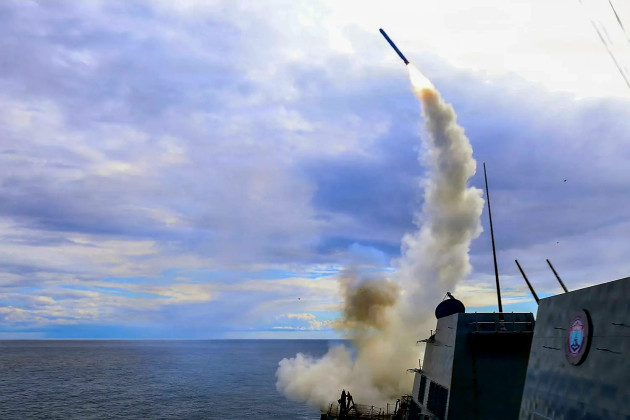
Operation Epic Fury entered a new phase Sunday as U.S. Central Command confirmed three American service members were killed in action and five others seriously wounded during combat operations against Iran.
The announcement marks the first confirmed U.S. combat fatalities in the campaign that began early Saturday with coordinated U.S.–Israeli strikes across Iranian military and regime targets. Several additional troops sustained minor shrapnel injuries and concussions and are returning to duty. Identities of the fallen are being withheld pending next-of-kin notification.
Initial reporting Saturday indicated no U.S. casualties following Iran’s retaliatory missile barrage. That picture has changed.
CENTCOM described the battlespace as fluid and confirmed major combat operations remain ongoing.
Carrier Rumors, Regional Fire
Social media claims over the weekend alleged that Iran struck the aircraft carrier USS Abraham Lincoln. CENTCOM dismissed the reports.
“The Lincoln was not hit. The missiles launched didn’t even come close,” officials stated, adding that the carrier continues flight operations in support of the campaign.
Iran’s retaliatory wave included ballistic missiles and one-way attack drones launched toward U.S. positions and regional partners. While early exchanges were largely intercepted, the sustained tempo is testing regional air defense capacity.
This morning, a Shahed 136 attack drone was reportedly shot down over Kuwait, expanding the active battlespace. Kuwait hosts U.S. military facilities, and the interception underscores that Iranian proxy-style cost-exchange tactics remain in play even as direct state-on-state exchanges continue.
Every drone launch forces a defensive response. Every interception consumes inventory.
President Trump stated Sunday that U.S. forces have sunk nine Iranian naval vessels as part of the expanding operation. In a post on X, he said several of the ships were “relatively large and important” and added that Iran’s naval headquarters had been “largely destroyed” in a separate strike. U.S. Central Command earlier confirmed that an Iranian Jamaran-class corvette was struck at the outset of Operation Epic Fury and was sinking at a pier in Chabahar along the Gulf of Oman.
The naval fight significantly broadens the scope of the campaign. What began as air and missile strikes on regime infrastructure now includes direct maritime engagements. The Lincoln carrier strike group continues flight operations in the region, joined by the Gerald R. Ford carrier strike group as part of what officials describe as the largest U.S. force posture in the Middle East in a generation.
This is no longer a single strike cycle. It is a sustained exchange.
Iran’s Warning: “A Very Dangerous Red Line”
In an exclusive CNN interview, Iranian Deputy Foreign Minister Saeed Khatibzadeh said President Trump crossed a “very dangerous red line” with the killing of Ayatollah Ali Khamenei. He warned that Shiite populations across the region would respond.
That language signals Tehran views the strike as more than military escalation. It frames the killing as religious and ideological provocation with regional consequences.
Iran has already demonstrated retaliatory intent through missile and drone launches toward Israel and U.S.-linked sites across the Gulf.
The messaging now suggests a broader mobilization narrative.
Embassy Violence in Pakistan
The regional reaction extended beyond the Middle East.
In Karachi, Pakistan, protesters angered by Khamenei’s killing attacked the U.S. Consulate. Windows were smashed and fires were set outside the compound perimeter. Security forces responded with tear gas and live fire. At least several demonstrators were killed and multiple injuries reported during clashes.
U.S. diplomatic personnel were not reported harmed, and the compound was not breached internally. Security around American facilities in Pakistan has since been heightened.
The violence reflects how quickly the strike has reverberated across Shiite populations beyond Iran’s borders.
Inside Iran: Celebration and Consolidation
Within Iran itself, reactions remain split.
Videos show some citizens celebrating Khamenei’s death, particularly in urban centers that have experienced recent protest waves driven by economic collapse and political repression. Simultaneously, pro-regime rallies formed rapidly, with organized gatherings framing Khamenei as a martyr and calling for resistance.
No successor has been formally announced.
The Islamic Revolutionary Guard Corps remains the most cohesive power center in the country. The speed and nature of succession will determine whether the regime consolidates control or faces renewed internal unrest.
The Operational Reality
Operation Epic Fury began at 1:15 a.m. Saturday targeting Iranian regime security infrastructure, missile systems, air defense networks, and senior leadership nodes.
Khamenei was killed in the opening wave.
Iran responded. The United States absorbed the first waves without catastrophic damage.
Now American service members have been killed.
The conflict has shifted from decapitation strike to sustained regional combat.
CENTCOM also confirmed that U.S. B-2 stealth bombers conducted strikes Saturday night against hardened Iranian ballistic missile infrastructure using 2,000-pound precision-guided munitions. The use of B-2 platforms signals an intent to degrade deeply buried launch capability rather than simply disrupt mobile assets. Iranian casualty figures remain contested, though the Iranian Red Crescent has reported more than 200 killed and over 700 wounded across multiple provinces since the opening phase of the campaign.
How many missiles remain. How many interceptors are left. Who stays aligned. Who pulls the trigger next.
Those are the variables now.
The region is no longer watching escalation.
It is inside it.
Three Dead, Fourteen Injured in Downtown Austin Shooting; FBI Probing Terror Nexus
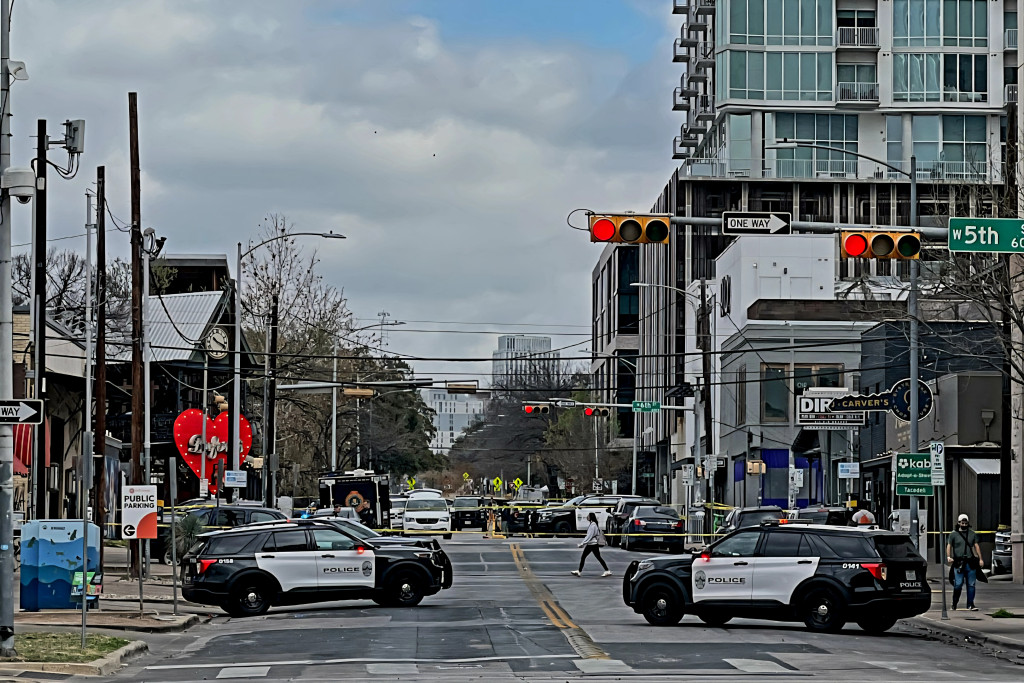
At least three people, including the suspected gunman, are dead and fourteen others were injured following an early Sunday morning shooting in downtown Austin, Texas. Federal authorities say the attack is being investigated as a potential act of terrorism.
The first 911 calls came in just before 2 a.m. from Buford’s, a popular bar on West Sixth Street in the heart of Austin’s entertainment district. According to Austin Police Chief Lisa Davis, a large SUV circled the block multiple times before the suspect rolled down his windows and opened fire with a pistol into the crowd. After parking and exiting the vehicle, the shooter reportedly transitioned to a rifle.
Police officers already deployed nearby responded within approximately one minute. Officers fatally shot the suspect at the scene. Authorities have not yet released the identities of the deceased.
Austin-Travis County EMS transported fourteen victims to local hospitals. Three were reported in critical condition. Several others sustained serious injuries.
Alex Doran, acting special agent in charge of the FBI’s San Antonio field office, said investigators have identified “indicators” of a potential nexus to terrorism. He did not specify whether the suspected motive points toward domestic extremism, foreign-inspired ideology, or another category.
“At this point, we’re prepared to say that it was potentially an act of terrorism,” Doran told reporters. The FBI’s Joint Terrorism Task Force is now involved alongside local and state agencies.
Texas Gov. Greg Abbott directed the Department of Public Safety to increase patrol presence in the downtown corridor during weekends. The move comes amid heightened global tensions and ongoing military operations overseas, though authorities have not publicly linked the Austin shooting to international events.
City leaders praised the rapid response by law enforcement and emergency medical personnel, crediting the quick engagement with preventing further casualties.
The investigation remains active.
Authorities are reviewing surveillance footage, digital evidence, and witness statements as they work to determine motive and any broader affiliations tied to the suspect.
Austin’s entertainment district reopened later in the day under increased police presence.
Pakistan Launches Airstrikes Across Afghanistan as Border War Escalates
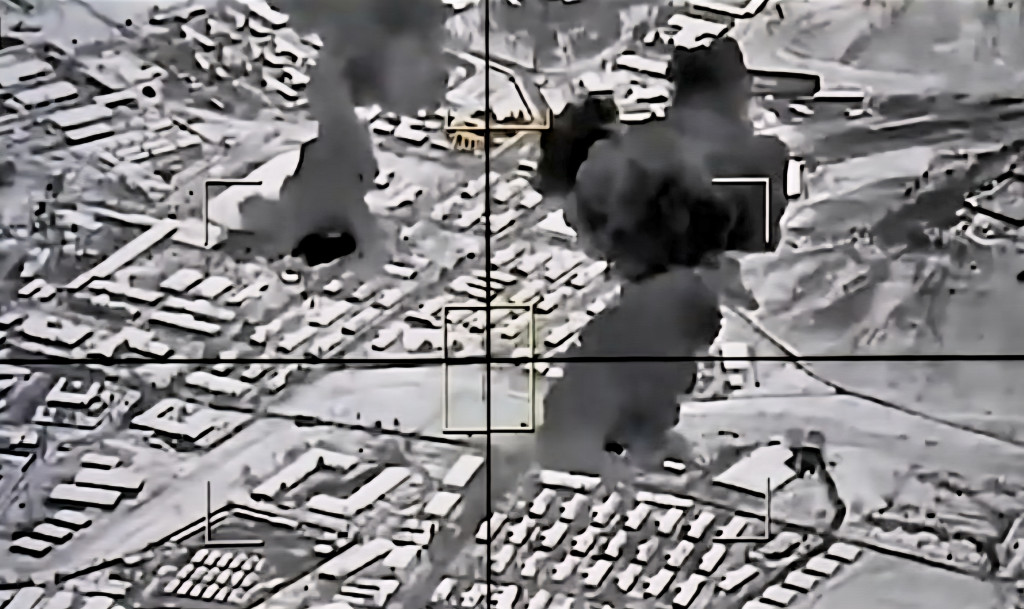
Pakistan has launched coordinated airstrikes against Taliban targets in Kabul, Kandahar, Paktia, and multiple other Afghan provinces, marking a sharp escalation in what is rapidly becoming the 2026 Afghanistan–Pakistan war.
The strikes began late February 26 and continued into the early hours of February 27, under the codename Operation Ghazab lil Haq, translated as “Righteous Fury.” Pakistani officials state the campaign targeted Taliban brigade headquarters, ammunition depots, and forward operating posts.
The escalation follows a series of cross-border attacks on February 26 in which Afghan Taliban forces allegedly struck more than 50 Pakistani border positions.
Pakistan’s Defense Minister Khawaja Asif declared “open war” after the attacks reportedly killed 12 Pakistani soldiers and wounded 27.
Islamabad claims its initial strike wave killed 274 Taliban fighters, wounded more than 400, destroyed 83 Taliban posts, and captured 17 positions across 22 locations.
Kabul disputes those figures, asserting that only eight Taliban fighters were killed and 11 wounded. Afghan officials counter that 55 Pakistani soldiers were killed in subsequent clashes and claim to have seized or destroyed 19 Pakistani posts and two bases.
Taliban air defense units reportedly downed at least one Pakistani aircraft near Bagram Airfield. Islamabad has not formally confirmed the loss. Afghan forces also launched retaliatory drone strikes toward Pakistani targets, though Pakistani officials state those were intercepted with no reported damage.
Both governments accuse the other of causing civilian casualties. Afghan authorities allege Pakistani strikes hit agricultural workers near Jalalabad and a religious school in Paktika province. Pakistan denies deliberately targeting civilian infrastructure.
The conflict’s roots trace back to Islamabad’s longstanding accusation that the Afghan Taliban shelters Tehrik-i-Taliban Pakistan fighters responsible for recent attacks in Islamabad and Bannu. A fragile ceasefire brokered in October 2025 collapsed amid renewed cross-border violence.
Regional analysts warn that sustained air operations could trigger a broader ground incursion if retaliation continues.
Diplomatic channels remain active, but rhetoric from both capitals signals a shift from border skirmishes to overt interstate conflict.
The Durand Line has once again become an active war front.








COMMENTS