

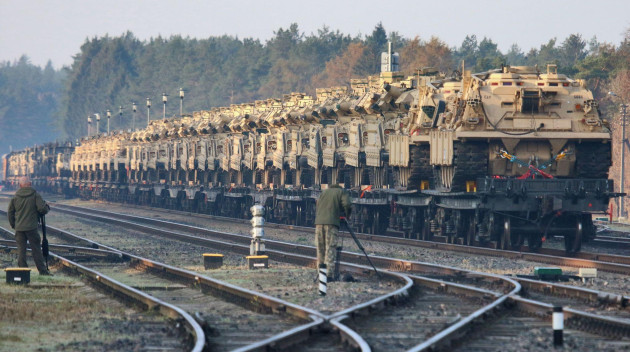
Moving a heavy armored brigade from the United States to Europe the traditional way can take 30 to 45 days by sea under ideal conditions. Prepositioning cuts that timeline down to days.
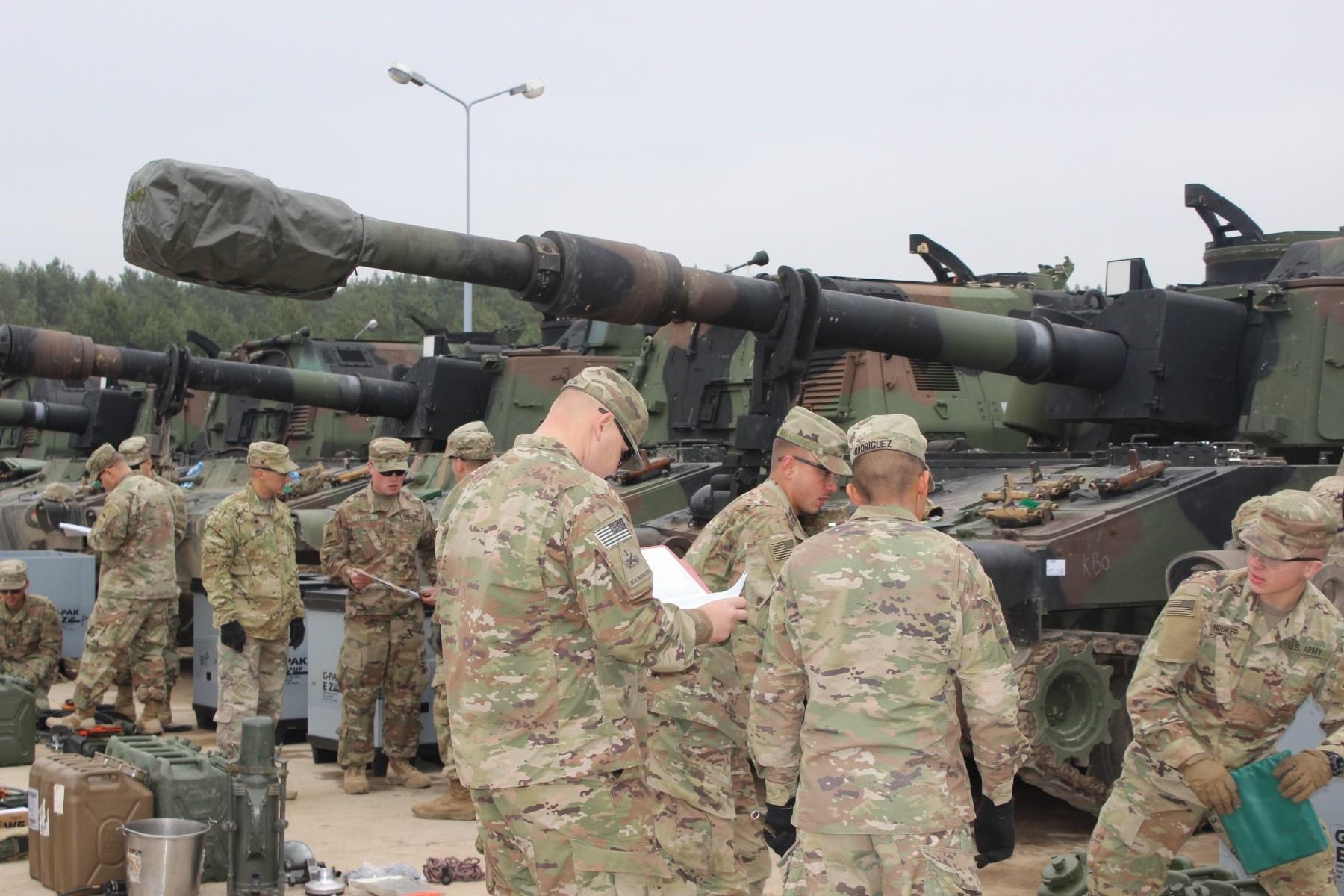
In some cases, units can go from wheels up to combat-ready in as little as one to two weeks by drawing equipment already staged in theater.
That process has a name: Reception, Staging, Onward Movement, and Integration, or RSOI.
It’s not just troops grabbing keys and driving off. Units fly into theater, link up with prepositioned equipment, conduct maintenance checks, upload communications systems, draw ammunition, and begin coordinated movement forward. When it works, it compresses what used to be a month-long deployment problem into a rapid combat-ready posture.
And this isn’t theoretical.
The Army’s DEFENDER-Europe exercise series exists largely to rehearse this exact process. Year after year, units deploy from the U.S., fall in on APS-2 equipment, and execute large-scale RSOI under realistic conditions. The goal is simple: remove friction before it matters.
Maintained, Fueled, and Ready
None of this works if the equipment isn’t ready the moment it’s needed.
That responsibility falls largely on the 405th Army Field Support Brigade, the unit tasked with maintaining APS-2 stocks across Europe. Their job is to keep thousands of vehicles and systems in operational condition, not stored, but ready to fight.
And it’s not just tanks and vehicles sitting in warehouses.
Prepositioned stocks include the full logistics tail: fuel systems, ammunition, medical supplies, maintenance packages, and the support equipment required to sustain operations once they begin. This is what turns APS-2 from a storage concept into a combat-ready capability.
We’ve Done This Before
The model isn’t new. It’s been refined.
Before the invasion of Iraq, the United States relied heavily on APS-5 stockpiles in Kuwait. Units flew in, drew equipment, and moved north with minimal delay.
The difference now is geography and intent.
Back then, it was preparation for a known operation. Today, it’s preparation for uncertainty, building a standing capability that can activate without warning.
A Forward Signal Without Saying It Out Loud
What makes this important isn’t just what’s being stored. It’s where.
These stockpiles are increasingly positioned in Eastern Europe, closer to NATO’s front line. Poland, in particular, has emerged as the central hub, investing heavily in infrastructure and positioning itself as the alliance’s most forward-leaning logistics partner.
That positioning reduces reaction time, but it also sends a signal.
You don’t build out armored brigade sets, artillery, and sustainment packages forward unless you believe there’s a real possibility they’ll be used.
And not just once.
The scale of APS-2 points to planning for sustained operations, not a short-term crisis.
And the timing here is important. With U.S. forces increasingly committed to operations against Iran, the European theater doesn’t get quieter. It gets more exposed. The fewer resources available to flex between theaters, the more critical it becomes to have combat power already in place.
The Iran war doesn’t replace the Russia problem. It makes it more dangerous.
What This Really Means
This isn’t about a war starting tomorrow.
It’s about making sure that if something does start, the United States doesn’t spend the first month trying to get there.
The equipment is already in place. Maintained. Fueled. Ready.
All that’s missing is the order.








COMMENTS