

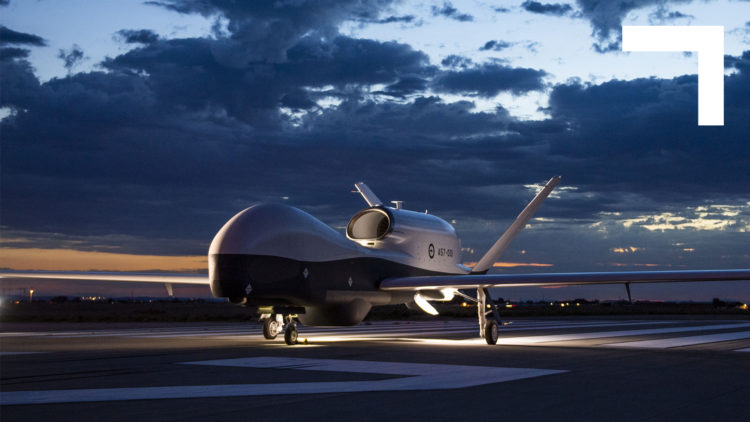
RAAF’s New Wingman
MQ-4C builds on the proven RQ-4 Global Hawk elements, upgrading the latter’s reinforced airframe and wing, de-icing systems, and lightning protection systems, which enables the aircraft to descend through cloud layers and gain a closer view during ISR missions. Triton also has a unique and robust mission sensor suite that provides 360-degree coverage across all sensors, allowing all-out maritime awareness.
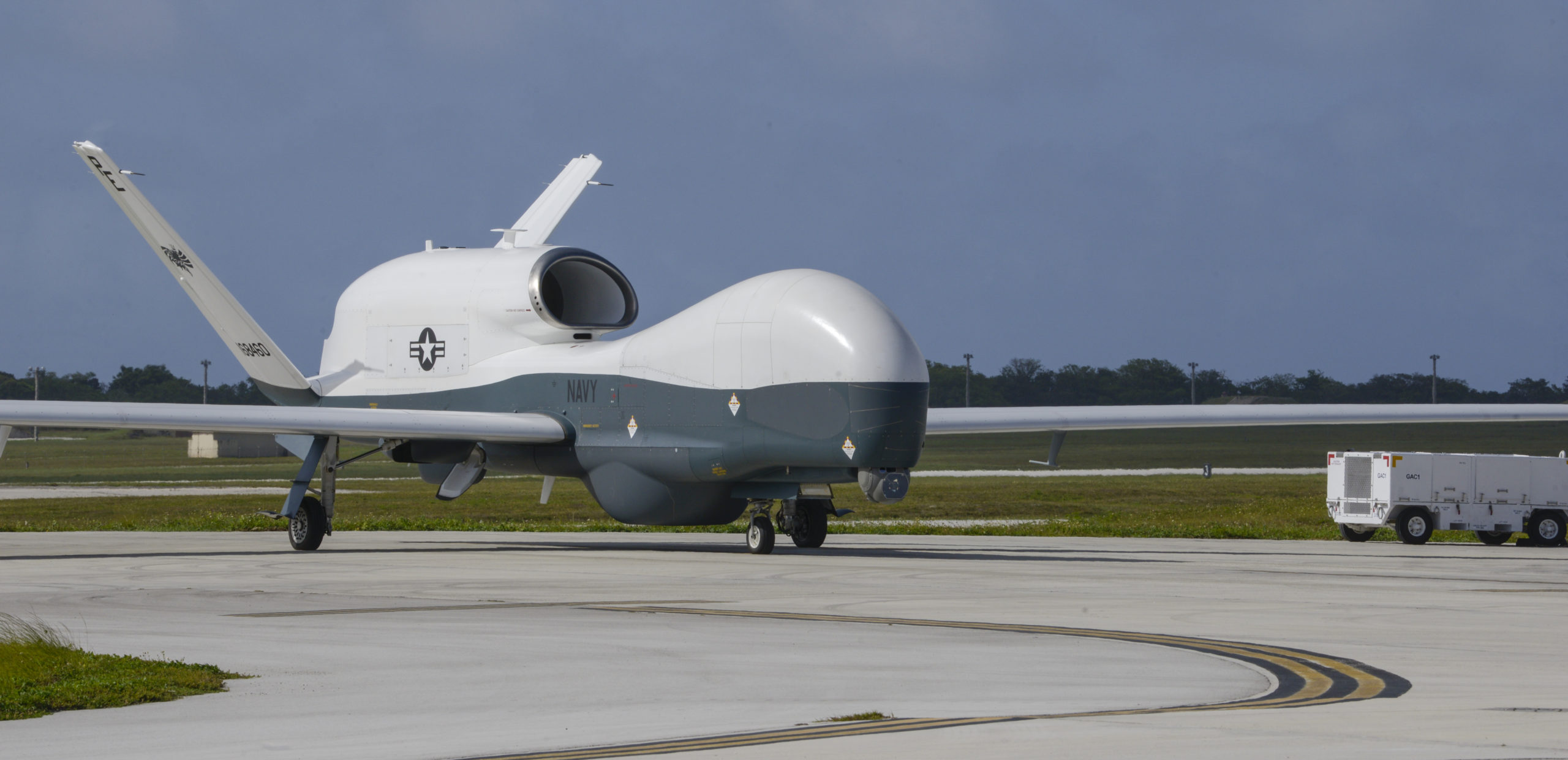
The unmanned aircraft has a wingspan measurement of more than 130 feet, an overall length of over 47 feet, and a height of about 15.5-inch. It is outfitted with a single Rolls-Royce AE 3007 turbofan engine generating a maximum speed of 357 mph (320 km) within 9,400 miles. It can operate up to 30 hours, providing more than 55,000 annual flight hours to the fleet. Aside from maritime ISR missions, Triton can also be used in search and rescue operations, signals intelligence, and communication relays.
Australian Forces Boost Defense Spending
Following the unveiling event, the RAAF announced that it would look thoroughly at its strategic defense review next year to decide whether to order up to four more Tritons or not. With the addition of the UAS, it will allow RAAF’s P-8 pilots “to focus on anti-submarine warfare (ASW) rather than splitting their attention between that and intelligence, surveillance and reconnaissance (ISR),” Reuters reported.
Aside from the maritime surveillance drones, RAAF previously made a deal to buy nuclear submarines from the US and Britain. It also ramped up its defense spending to about 38 billion AUD and expanded its active defense personnel by up to 80,000—a number that hasn’t been around since the Vietnam War.
As part of this initiative, Australia entered a wide-range security agreement with the US and the United Kingdom, known as the AUKUS, in September last year. Under the deal, the countries will collaborate on constructing and maintaining a fleet of nuclear submarines, subsequently growing the Australian military force in the Asia-Pacific region.
However, the deal has received heavy criticism from its neighbors, particularly China, arguing that the agreement has given Canberra nuclear submarine technology that breaches international non-proliferation treaties (NPT), SCMP reported.
While the International Atomic Energy Agency’s director general has since clarified that the engagement under the AUKUS agreement has been satisfactory thus far, the Chinese Foreign Ministry, through its spokesperson Mao Ning, has accused the agency of turning a blind eye to international concerns.
“This report lopsidedly cited the account given by the US, the UK, and Australia to explain away what they have done, but made no mention of the international community’s major concerns over the risk of nuclear proliferation that may arise from the AUKUS nuclear submarine cooperation. The report turns a blind eye to many countries’ solemn position that the AUKUS cooperation violates the purpose and object of the NPT, and drew ultra vires, misleading conclusions on matters that should have been decided by member states through discussion.”
In addition, Ning stressed that the agreement “can impact the integrity, efficacy, and authority of the NPT.”








COMMENTS