
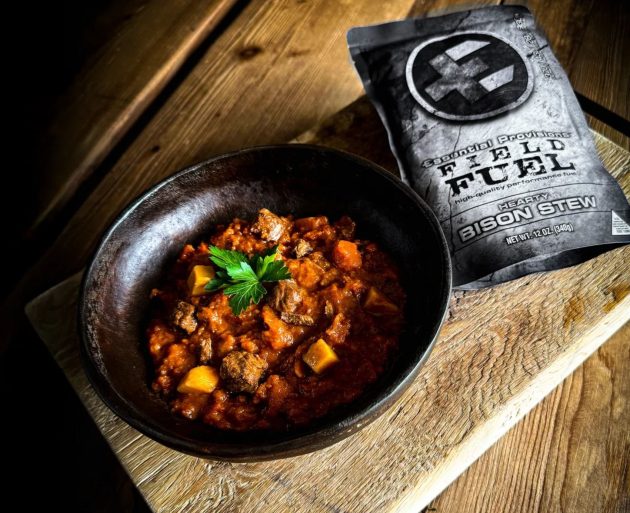
Elite units can do everything right in training, from ruck speeds to marksmanship, then refuel with food that feels like it was designed for a school cafeteria in the early nineties. The “Base to Bellies” initiative is a direct shot at that problem, built on a simple idea: if you want high-end performance out of warfighters, you start with the land their food is grown on, not the wrapper it comes in.
What Base to Bellies Actually Is
In October 2025, the Hinterland Institute announced a formal partnership with Essential Provisions to launch Base to Bellies, described as a “groundbreaking research and demonstration project.” The plan is to bring regeneratively raised livestock from Hinterland training lands straight to the plates of U.S. troops, while measuring how nutrition from healthy, “living” soils affects endurance, recovery, and performance in elite units.
The project is framed as a full chain, from the land to the producer to the soldier, with a specific goal of showing how regenerative agriculture and clean rations can strengthen both warfighters and national resilience.
Hinterland Institute: Veterans As Land Operators
Hinterland sits on the land side of this equation. The nonprofit trains veterans in regenerative grazing, holistic management, and what they describe as “field-ready stewardship skills,” using hands-on programs across ranches, military lands, and conservation properties.
Their mission is unapologetically strategic. Hinterland talks about reclaiming degraded landscapes, restoring soil, and rebuilding rural economies while putting veterans in charge of that work. The institute explicitly links veteran-led land stewardship to food sovereignty and national security, pointing to foreign purchases of American farmland, including near critical bases, as a growing risk.
Hinterland prepares vets to manage Department of Defense training lands through regenerative agriculture and sustainable ranching, positioning them as a backbone land workforce rather than a feel-good side project.
Essential Provisions: Field Fuel Built For Real Work
On the nutrition side, Essential Provisions supplies the “bellies” component. Founded by functional-food pioneer Robin Gentry McGee, the company produces Field Fuel MRE entrées and Sustain high-performance blends built around a “food is medicine” philosophy. The first MRE launch targeted U.S. Special Forces with four shelf-stable entrées using organic and regenerative ingredients.
Essential Provisions markets Field Fuel as chef-developed meals for military troops, first responders, outdoor enthusiasts, and families who want real food that can live in a ruck or go-bag. Their white paper on military nutrition draws a clear comparison between the current ration system and the general American diet: MREs have historically focused on calories and familiar flavors, mirroring civilian macronutrient patterns, with predictable outcomes in the field. Analyses of training cycles show common energy deficits, loss of lean body mass, and related drops in strength, power, reaction time, and psychological resilience when troops rely heavily on standard rations.
Their solution is whole-food formulations that lean on higher protein, natural fats, and low-glycemic plant carbohydrates to support metabolic flexibility and better cardiometabolic health. All ingredients are sourced from regenerative and organic producers, and the products are tested for PFAS/PFOS chemicals, heavy metals, mold, glyphosate, and other contaminants at a level that exceeds typical medically tailored meals.

Closing The Loop: From Range To Rations
Base to Bellies is where these two worlds intersect. Hinterland’s own description of the initiative states that regeneratively raised livestock from veteran training lands will become food for U.S. troops, while the project tracks the impact of that food on physical and mental performance in elite military units.
Imagine a training area where the same ground that sees live-fire and maneuver is managed by veteran graziers as high-performance grassland. Cattle convert that forage into nutrient-dense meat, building soil carbon and reducing wildfire risk through well-planned grazing. That meat then feeds back through Essential Provisions, where it becomes part of MRE menus already engineered for endurance, cognitive function, and recovery, instead of generic bulk calories.
The result is a closed loop: local land, veteran stewards, regenerative supply chains, and troops eating from the same system they train on. It is more than a branding exercise. It is logistics, human performance, and land management tied together in a way that can be quantified.
Combat Power, Culture Change, And National Resilience
On the performance side, the metrics are straightforward. If a unit on Base to Bellies rations shows fewer musculoskeletal injuries, less lean mass loss, steadier reaction times, and better mood profiles over a training cycle than the same unit on standard MREs, that is a combat enhancer you can point to in a briefing. Essential Provisions cites research that links more nutrient-dense, lower-glycemic, higher-protein diets to improved endurance, immune function, cognitive performance, and cardiometabolic risk profiles, all directly relevant to warfighters.
On the strategic side, Hinterland’s framing is equally direct. They see veteran-led regenerative agriculture as a way to restore degraded Department of Defense lands, rebuild rural economies around bases, and claw back food security from centralized and foreign-owned systems. That is the national security context, Base to Bellies sits inside, even if the average rifleman only sees the end result as a pouch of bison stew that does not taste like punishment.
There is a culture shift hiding here. For generations, troops have been told to accept whatever is in the brown bag as part of the job. Base to Bellies treats the MRE as part of the warfighter’s kit, on the same checklist as armor or optics. If you ask people to operate in extreme conditions, this model says you feed them like those conditions matter.
For readers tracking the larger story of veteran-led land stewardship and performance-driven rations, this project is a clean bridge between the two worlds. It turns “soil health” and “clean label” from marketing language into operational variables. That is where the quiet revolution is likely to happen, one training area, one supply chain, and one clean field meal at a time.
Hot Off the Press
This just in: the USDA unveiled a transformative, unified Regenerative Agriculture Program—a major shift toward farmer-first, outcomes-driven conservation that strengthens soil health, improves water management, and enhances long-term productivity.
Key highlights:
 $700M in EQIP + CSP funding (FY26 Pilot) with a single application for whole-farm regenerative planning.
 Producer-led, outcome-based conservation where improvements are measured and credited back to the farmer.
 SUSTAINS Act Integration enabling corporate and supply-chain partners to co-invest in regenerative projects, expanding capital and accelerating adoption.
 Chief’s Advisory Council giving regenerative farmers, supply-chain leaders, and consumer voices a direct role in shaping implementation.
 Research & Resilience Hubs aligning USDA science with field-ready regenerative tools and data.
 Urban agriculture integration strengthening local food systems and community resilience.








COMMENTS