In December 1944, Hitler’s last gamble slammed into a “quiet” Ardennes sector, forcing green grunts and hard paratroopers to share frozen holes, man-handle 57s into ambush lanes, outlast Skorzeny’s chaos, and bleed the German offensive dry in the snow.
Read the full article for more on:
Important insights and detailed analysis
Expert commentary on current events
Breaking developments and updates
Updating summary...
Frozen in the Ardennes: How the Bulge Turned Quiet Foxholes into a Meat Grinder
Galen Fries
Speed
1x
Listen
COMMENTS
In December 1944, Hitler’s last gamble slammed into a “quiet” Ardennes sector, forcing green grunts and hard paratroopers to share frozen holes, man-handle 57s into ambush lanes, outlast Skorzeny’s chaos, and bleed the German offensive dry in the snow.
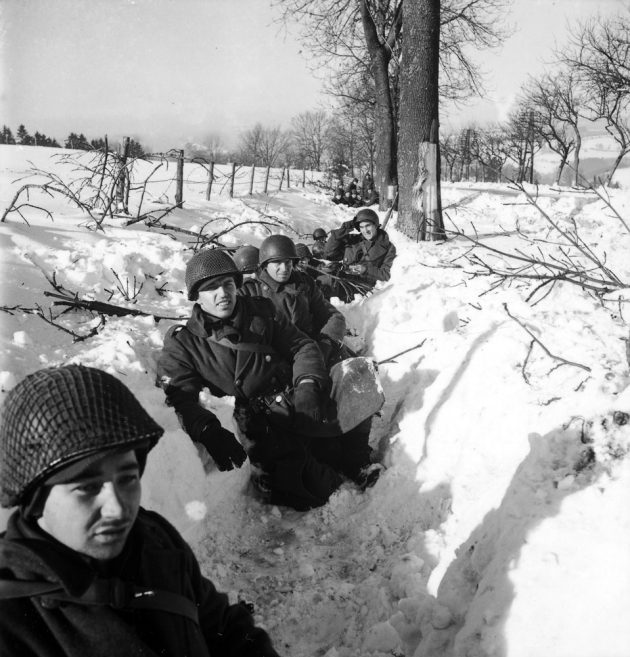
American troops in a snow-filled trench during the Battle of the Bulge. Image Credit: John Florea The LIFE Picture Collection/Shutterstock
December 1944
Ardennes Forest. Belgium and Luxembourg. The kind of cold that makes your bones feel like they are made out of glass. The kind that turns snot into shrapnel and your fingers into dead fish. The front had been quiet, so quiet that green units were sent in to “rest.”
Advertisement
At 0530 on 16 December, the quiet ended. The Germans dropped a thunderclap across the line and rolled armor through the trees with one goal: split the Allied front, grab Antwerp, and force a political collapse in the West before the Soviets finishedchewing on their rearfrom the east. This was Hitler’s last big casino shove, and he pushed most of the chips he had left into the Ardennes.
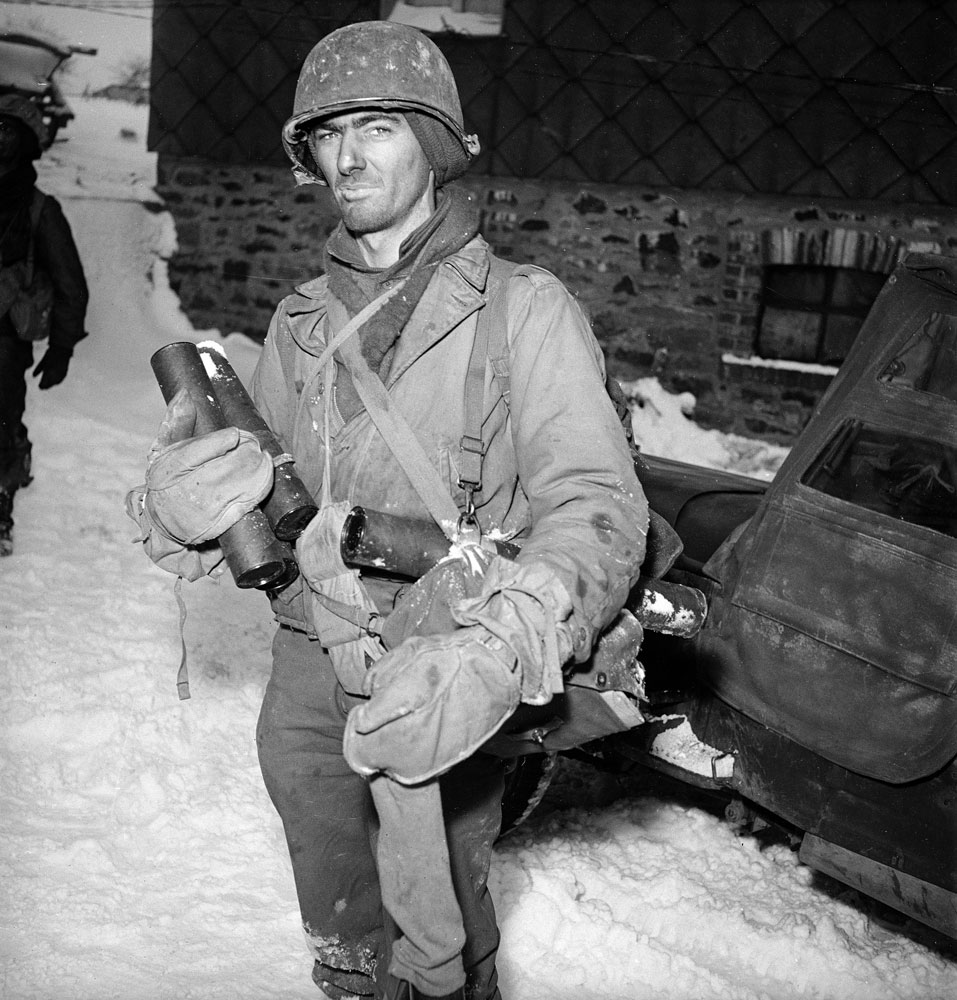
American GI, Battle of the Bulge. Image Credit: George Silk The LIFE Picture Collection/Shutterstock
You can feel the moment
It is just frigid. You are half awake. Some guy is warming coffee he should not have for multiple reasons: light, smell, and noise discipline. Not to mention, he did not bring enough for everybody. To hell with it. You let it slide.
Advertisement
The radio is doing radio things. Then the world turns into noise and fire. Artillery comes in so thick it sounds like a freight train falling out of the sky. Trees explode into splinters that hunt any body part above the lip of a foxhole, mostly faces. The snow around your hole jumps like it is alive. It is utterly surreal. There is zero warning, and now your only mission is survival.
In those first hours, U.S. infantry units in the Ardennes were thin, tired, and in some places brand new. A lot of them were not wearing proper winter gear yet because supply and planning lagged behind reality. They were told it was a quiet sector. Then the forest filled up with Volksgrenadiers, panzers, and SS formations pushing west through narrow roads and frozen ravines.
Advertisement
The foxholes are not Hollywood pits like the engineers build back on the qual range in garrison. They are shallow, half frozen, dug with an E-tool. The walls crumble because all you hit are rocks and roots. You line them with pine boughs, ponchos, whatever you have. Your breath makes little clouds and then crusts on your scarf. The bottom is a soup of slush and ice, so you rotate who stands and who squats like it is some miserable ritual. The only heat is a cigarette cupped in two shaking hands.
Then the paratroopers show up
The 82nd and 101st Airborne were thrown in as fire brigades. Trucks dumped them into crossroads and woodlines, and the men piled out with whatever ammo they could hump. No ISR. No warm-up. Just “get in there and hold.” They shared foxholes with line infantry, tank destroyer crews, engineers, whoever was nearest and still breathing. The airborne guys had their reputation, but in subzero hell, your Screaming Eagle patch does not matter. Your buddy does. You are shoulder to shoulder in the hole, cross-loading warmth like it is ammo.
Bastogne becomes the word everyone remembers, but it is not the only place where men were welded together by cold and violence. St. Vith. Elsenborn Ridge. A hundred little villages with names your GPS would butcher. Every road junction was important because the Ardennes road net is a spiderweb in winter. If you lose the hub, you lose everything. So riflemen with bazookas and 57mm M1 anti-tank guns waited in tree lines, praying for side shots on Panthers and Tigers.
Advertisement
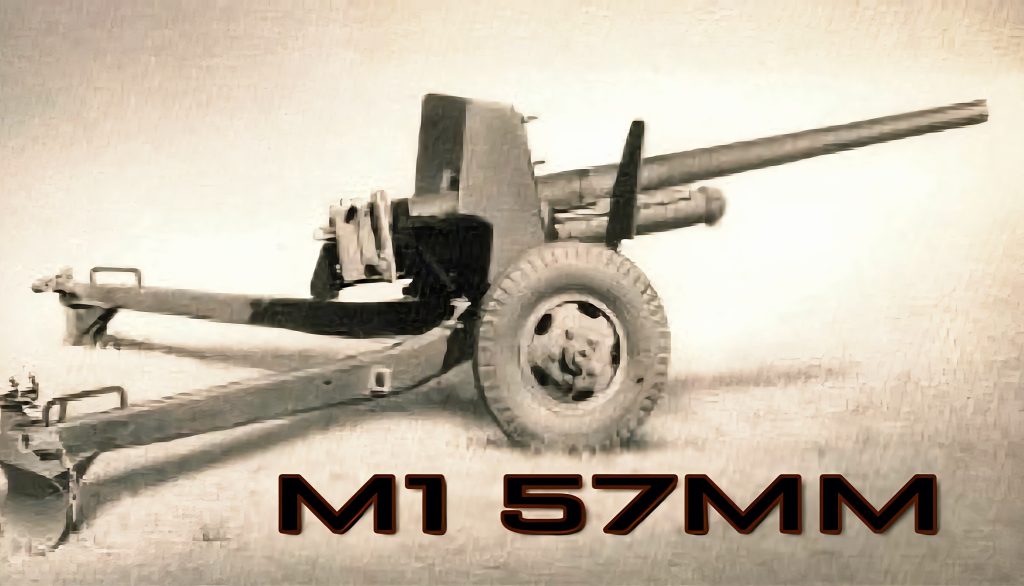
M1 57mm anti-tank gun, WWII. Light, mobile, and nasty up close. Image Credit: The Reform Report
Quick pause to explain the “57.” That thing weighed about 2,700 pounds. In snow up to the hubs, six to ten guys had to muscle it into position by hand. Boots slipping. Shoulders under steel. Grunting like they were pushing a dead truck uphill. Back problems later? “Not service connected.” Thanks, VA.
Tank crews crawled their Shermans along icy lanes like they were driving on grease. And the grunts did grunt work. Dig. Freeze. Shoot. Haul wounded. Dig again.
Here it is. Burnt powder. Wet wool. Diesel exhaust hanging low in the fog. Latrine pits that froze shut, so you stop going far from the hole. Blood in snow looks black after a while. Dead men freeze in the shapes they fell. You do not get to clean up. You just step around them until the line moves again.
The Germans had their own misery. Fuel was their leash. Their armor needed gas they did not have, so they depended on capturing Allied dumps as they advanced. When roads jammed and strongpoints held, panzers died at idle. Artillery shells got hauled forward by horses to save fuel. The Wehrmacht still leaned hard on horses and mules for transport, especially when terrain and fuel shortages made trucks worthless.
Those animals suffered like any soldier, except nobody pinned a Purple Heart on a dead mare. There is no reliable animal casualty rate in the records I could find. Armies tracked tanks and men. Horses were treated as equipment and disappeared into the accounting fog. What we do know is that German horse transport stayed widespread in late 1944, and the Ardennes winter punished them hard. Horses slipped on ice, starved when fodder could not keep up, and died under artillery the same way men did. Some froze on their feet. Some got blown apart hauling guns they never volunteered to pull. If we are not exactly crying over dead Nazis, we can still take a moment for their dead animals.
Operation Greif. Otto Skorzeny’s boys dressed in captured U.S. uniforms, drove stolen or disguised American vehicles, and slipped into the rear to flip signs, misdirect convoys, and try to seize Meuse bridges. They did not have enough English speakers or gear to make it the nightmare Hitler wanted. Still, even a small dose of poison hits hard when units are already half blind with fatigue.
So MPs started popping roadblocks everywhere. Passwords changed daily. You got challenged by a scared private with his booger hook on the bang switch. Guys got hauled off because they pronounced “Louisville” wrong or could not name the Cubs’ shortstop. For a week or two, half the U.S. Army was convinced Skorzeny was hiding in every hedge. That kind of fear does not just slow traffic. It rots trust from the inside.
Then the weather broke on 23 December. The sky cleared like God finally remembered the air force existed. Allied fighter-bombers came in low and mean, shredding German columns trapped on narrow roads. C-47s dropped supplies into Bastogne, bundles thumping into snow like early Christmas presents from a violent Santa. The cold stayed. The Germans ran out of gas, time, and luck. Patton’s Third Army punched north. The bulge got flattened.
By late January, it was over. The U.S. Army suffered roughly 77,000 to 83,000 casualties in the battle, and more across the broader Ardennes-Alsace campaign. German losses were similar in scale. The offensive burned through tanks and equipment Germany could never rebuild.
If there is a modern lesson, it is not some feel-good poster line. It is this: quiet sectors are where wars ambush you. Cold is a weapon. Logistics wins fights. Morale is not a speech. It is the man next to you in a frozen hole, sharing a can of peaches, cracking a joke about how you are going to need a medic just to thaw out your personality after this mess.
The men in the Ardennes did not win because they were warm, well supplied, or certain. They won because they stayed in the hole when every sane part of the body said run. They held intersections in white-out hell, fought tanks with shoulder-fired weapons and bad attitudes, and watched horses die dragging shells forward for an enemy already bleeding out. That is what stopped the last Nazi gamble in the West. Not grace. Not comfort. Just stubborn soldiers doing stubborn soldier things until the other side broke.
—
** Editor’s Note: Thinking about subscribing to SOFREP? You can support Veteran Journalism & do it now for only $1 for your first year. Pull the trigger on this amazing offer HERE. – GDM
Advertisement
What readers are saying
Generating a quick summary of the conversation...
This summary is AI-generated. AI can make mistakes and this summary is not a replacement for reading the comments.









COMMENTS