

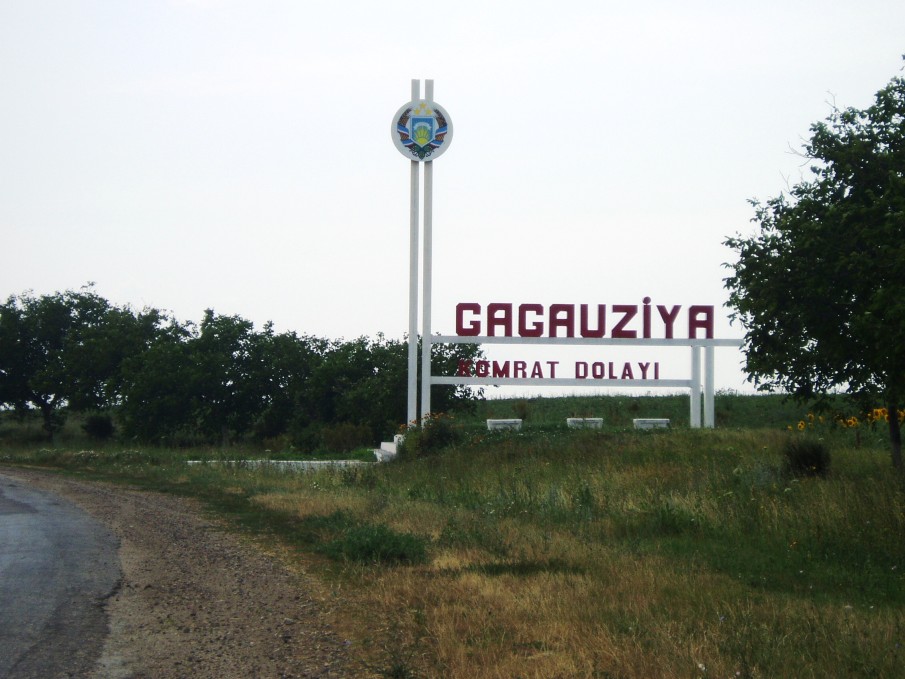
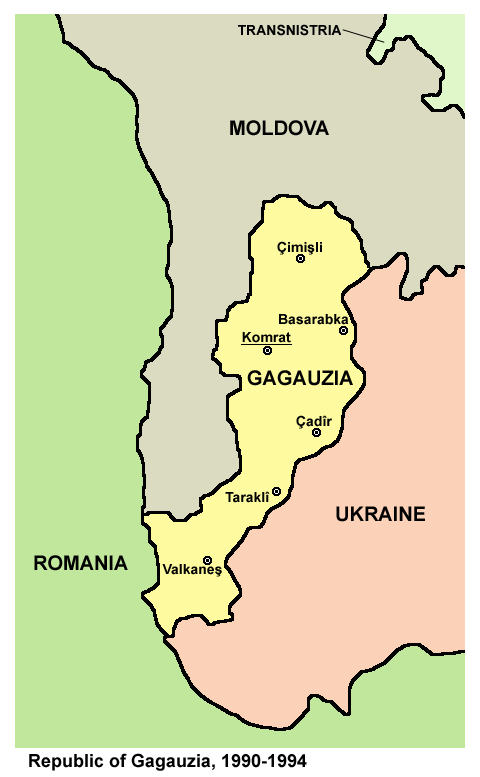
Gagauzia has problems with the Moldovan central government due to the region’s pro-Russian stance, which clashes with Moldova’s EU aspirations. (Anadolu Agency, May 8, 2014)
Going back to 1995, accusations have been levied at Turkey for conducting influence campaigns in Gagauzia, often assessed as being an effort to reduce Russian domination of a comparatively small population in an area of significant strategic value to Kremlin Black Sea strategists. Complicating the matter is the Moldovan population in Turkey (estimated at about 50,000) that are majority Gagauz. The influence efforts of Ankara have led to fears (shared by both government officials in Chisinau as well as older Gagauz) that Turkish influence has grown at the expense of historical Russian sympathies in Gagauzia:
Consequently, despite the historical sympathies of the Gagauz for Russia and Russians, the current leadership of Gagauzia in Moldova “does not hide its sympathies for Ankara.” That does not mean it is opposed to Russia, but over time, Turkey is certainly gaining the upper hand with its various “soft power” programs including highway building.
Indeed, “an entire generation of young people has grown up [in Gagauzia] who recognize perfectly well who is providing real help to the autonomy and its population,” Turkey but not Russia. And that sets the stage at a minimum for conflicts between Russia and Turkey and in the longer term for a fundamental shift in the geopolitical balance of the region. (Paul Goble, Moldova.org, December 23, 2014)
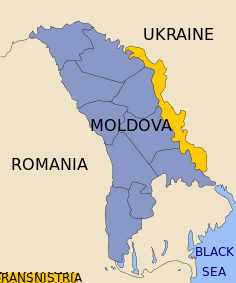
In 2014, as Moldovan government officials outwardly pursued a path toward EU integration, Gagauzia held a referendum and voted for closer ties with the Russian Federation. Many characterized this referendum as a warning shot over the bow of Chisinau and a clear declaration of Gagauzia’s opposition to integration with the EU. The same referendum elicited almost total support for continued ties to and support for relations with Russia:
During a recent referendum, voters in Gagauzia overwhelmingly voted against Moldovan integration with the EU. In it, 98.4 per cent of voters supported closer integration with the CIS-led customs union, while 97.2 per cent voted against closer ties with Europe. In addition to voting against EU integration, a referendum was held on independence for Gagauzia, in the case that Moldova should decide to continue its European path and possibly even unite with its larger ethno-linguistic counterpart, Romania. Mihail Formuzal, the leader of Gagauzia (known by the title of başkan) previously described the referendum as the beginning of true democratization in Moldova and highlighted grievances that he felt the central government in Chişinau was ignoring the desires of the Gagauz. (Tony Rinna, The Economist, February 14, 2014)
On November 30, parliamentary elections were held in Moldova with a very slim margin of victory for the pro-EU integration faction of Chisinau’s government. Earlier in 2014, two important referendums were held in Gagauzia, each of which highlighted Chisinau’s weakened authority over the autonomous region and foretold of great consequence for the pursuit of EU integration by the Moldovan central government.
Further complicating the tug of the Gagauz between Russia and the West is the matter of economics. Gagauzia is inextricably linked to Russia through trade, the majority of which is wine and agricultural products that are sold on the Russian market. President Mihail Formuzal, the leader of Gagauzia, underlined the autonomous region’s commitment to remaining part of the Moldovan state last June. However, in his language is an inescapable allusion to the power of Russian policy and influence in the Moldovan region:
“In fact, we want to stay within Moldova’s borders with our current autonomous status. But the central government has adopted a course that could divide the country. They want Moldova to join NATO and the EU. We and the people of Transdniester are against it. If Moldova signs a partnership agreement with EU and implements it, our economy will collapse. Our population is 160,000. Of this, 33,000 work abroad, 25,000 of them in Russia. The wine we make and our agricultural products are all sold to Russia. We cannot sell them to the EU. If Russia stops supporting us, we will be ruined. This is why, should the Moldovan government reach an agreement with EU, we will secede and declare our independence.” (Sami Kohen, Al Monitor, June 5, 2014)
Russian remains the “state language” in Gagauzia, underlining the nature of its links and commitment to Russia. Gaugazia’s ethno-linguistic ties to Russia creates an inescapable intertwining of interests based on cultural lineage:
He highlighted the fact that Russian remains a “state language” in Gagauzia (unlike in Moldova itself, where Russian is still widely spoken but holds no official status) and that Russian culture continues to exert profound influence on Gagauzia. In 2008, the Chairman of Russia’s Federation Council Sergei Mironov visited Gagauzia to meet with Mikhail Formuzal. During the meeting, Formuzal highlighted the “centuries-long” relationship the Gagauz had with Russia. “Gagauzia’s special relationship with the Russians has become deeper in the economic and trade sphere. Gagauzia is ready to become its very own oasis for Russian business,” he said during the 2008 visit. Other issues discussed during the meeting included Gagauzia and Russia’s strategic bilateral relationship. Indeed, many Western experts, such as the Jamestown Foundation’s Vladimir Socor, consider that Russia has traditionally used the Gagauz to its own geopolitical advantage even during the days of the Russian Empire and the Soviet Union. (Tony Rinna, The Economist, February 14, 2014)
Cultural and linguistic ties are among the most intense, binding, and sustaining relationships that groups of people have with one another. The confluence of Russian and Turkish influence-peddling in particular makes Gagauzia an important region in the ongoing battle between Russia and the West.
Geopolitical consequences
Vlakh’s victory is a clear and timely boost to Moscow and its strategic depth. With the election of the pro-Russian leader to the governorship, Moscow’s leverage over the stability of states aspiring to EU membership has increased. The implied influence that the Kremlin (theoretically) sustains over the government in Gagauzia potentially elicits great gains for Moscow’s geostrategic goals. The historical and ethnic ties of the Gagauz to Turkey constitutes an interesting geopolitical intersection in the present security landscape of Eastern Europe.
While concerted campaign efforts have been waged by Turkish governments over the past few decades, sympathies for Russian government and policy remain strong in Gagauzia. This issue is complicated by Turkey’s high profile membership status in NATO. While the Ankara government under Erdogan has often been at significant odds with NATO policy goals in the Levant and Iraq, Turkey remains an invaluable member of the Atlantic Alliance largely due to its geographic location. Moldova’s pursuit of EU membership and the signing of the Association Agreement last June signifies a clear path towards integration with the European community. While not entirely related, EU membership is often witnessed by European community leaders as a vital first step in integration to NATO as well.
As the protracted conflict in Eastern Ukraine festers and fallout from the unsolved murder of Russian dissident and opposition leader Boris Nemtsov continues to damage Russia’s image in Europe, the assertive Russian sympathies of Gagauzia’s population provide the Kremlin with another strategic point of pressure against the EU. In both Transnistria and Gagauzia, fears of eventual accession of Moldova to Romania are real. These fears are so fresh that they were a main component of the referendums held by Gagauzia in 2014. As John Haines wrote in a piece for the Foreign Policy Research Institute last summer, apprehension at the possibility of Moldovan accession to Romania is a concern for most Gagauz in the region:
“Găgăuzian separatism is in substantial part animated by fear of the unification of Moldova and Romania, something purposefully fuelled by local officials and compounded by statements from Bucharest.” (Haines, FPRI, July 2014)
On June 27, 2014, Moldova codified its pursuit of EU integration by signing on to a path to membership through an EU association agreement. The same day, Ukraine and Georgia (two other key and geo-strategically valuable former Soviet republics) also signed association agreements. This was a remarkable shift of long-term strategic trajectory for the post-Soviet space. As the EU ensured the Western path of these three former Soviet republics, strategists in Moscow became increasingly concerned about the strategic balance of power in Europe. Given previous iterations of enlargement in both the EU and the North Atlantic Treaty Organization (NATO), the Kremlin’s policy of freezing conflicts in aspirant NATO member former Soviet republics intensified.
Russia’s unacknowledged support of anti-Kiev rebels in Eastern Ukraine represents a bulwark of instability and an impediment to Ukraine’s economic reformation and security stabilization. If the instability is left to fester, the conflicts would inhibit its accession to both the EU as well as NATO. Taking advantage of the economic opportunity provided by EU membership and the security umbrella of the Atlantic Alliance is viewed as a vital component of economic and defense modernization by each aspirant state, especially in Georgia.
Both the economic opportunity of EU membership and the security umbrella of NATO are essential parts of the continued modernization of the three former Soviet republics. The economic incentives of the Eurozone, while not altogether as attractive given the current European economic crisis, and the security assurances of membership in NATO are seen as important bulwarks against reinvigorated Russian influence in the three countries. Haines writes convincingly of the reasons for concern in assessing security landscape shifts as Russia and the West are bound tighter and tighter by the present conflict:
It is self-evident that Russian interests would be served by conflict sown by NATO member-states pursuing their own national interests in Găgăuzia (and as mentioned parenthetically, in Tărăclia). The fissiparous tendencies already threatening the integrity of Moldova as a state are exacerbated by the pursuit of competing interests, real or claimed, among NATO members. Romania, in particular, has been singled for criticism over the better part of two decades for “veiled striving to revise the borders,” [71] something recent comments about “one nation, two states” in Moldova serve to reinforce. (Haines, FPRI, July 2014)
Conclusion and the way ahead
As Moscow has exacerbated the conflict in Donbas and continued to garrison Russian military personnel in Transnistria, Russia has also codified treaties with both Georgian separatist regions: Abkhazia and South Ossetia. In freezing territorial conflicts in all three countries, Russian security strategists seek to ensure that each of the three countries remains unable to meet the basic requirements for membership in NATO, the most notable of which is sowing internal instability in all three countries, impeding military modernization, and assuring each capital’s inability to secure its own borders to eliminate ethnic and political conflict.
Given the codification of recent integration treaties with the Georgian breakaways and the ostensible (if not effective) annexation that those agreements represent for Russian influence inside Georgia, the next year will prove vital in assessing the likelihood of destabilization and violence spreading throughout the rest of the post-Soviet space in Eastern Europe and the Caucasus. Gagauzia is an important, if not very well known, point of pressure in the ongoing tug-of-war between the West and Russia. Influence campaigns and unforeseen events have the potential for great impact upon the future of security and stability in post-Soviet Eastern Europe. Gagauzia sits on the front line of any potential war for dominance of the Black Sea region. Gagauzia’s geographic location, its ethnic makeup, and its cultural, political, and economic ties to Russia make this unknown region a potential spark in the tinderbox of Eastern Europe.
(Featured photo courtesy of Panonian and Wikimedia Commons)








COMMENTS