

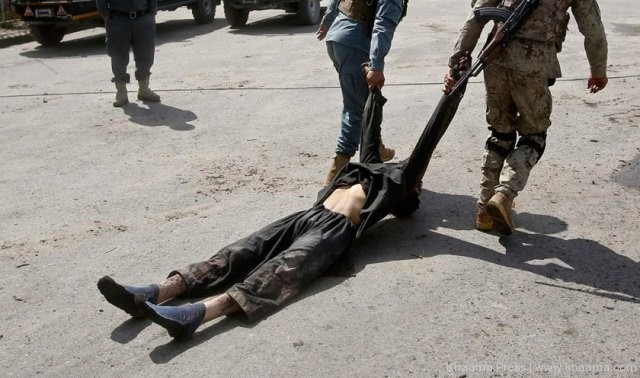
The attack by an estimated 700 Taliban fighters began about five days ago and early reports were that more than 100 people had been killed, including 15 who were beheaded by the militants, said provincial deputy governor Ahmadullah Ahmadi.
Safi said a suicide car bomber attacked a police checkpoint early on Friday before provincial authorities lost contact with the district.
By late Friday afternoon, officials had contacted an army unit that reported that fighting was still going on, Ahmadi said. Afghan army commandos from outside the province had arrived to reinforce police and soldiers, he said. (Mustafa Andalib, Reuters, September 26)
The attack has begun garnering attention even from non-American media outlets, including Al Arabiya and BBC. Among the reporting is a palpable sense of a rollback of gains by International Security Assistance Force (ISAF) personnel in the province:
A spokesman for the provincial governor said 15 people suspected of collaborating with authorities were beheaded, including women.
The Taliban is active in many parts of Ghazni, an important gateway to the capital, Kabul, from the south-east.
Fighting is continuing as security forces try to regain the district but officials fear surrounding districts are now vulnerable to attack. (BBC News, September 26)
Al Arabiya, via Reuters, reported similar stories:
The Ghazni provincial government has lost contact with police in Ghazni’s western Ajrestan district, said Asadullah Safi, deputy police chief of the area. Ghazni is strategically located southwest of the capital, Kabul.
The attacks began about five days ago and early reports were that more than 100 people had been killed, including 15 who were beheaded by militants, provincial deputy governor Ahmadullah Ahmadi said on Friday. (Al Arabiya, September 26)
The overall assessment for security in Ghazni, at least for the near-term, remains grim. While provincial authorities and local police are seemingly unwilling or unable to effectively marginalize the insurgent groups that have begun occupying the province in greater numbers during the drawdown, the national government also appears incapable of effectively committing national security forces to its provincial areas in response to mass attacks such as the one last week in Ghazni. This concurrently reflects that the current capabilities of the national government in Kabul remain constrained to the “Kabul bubble.” Legitimacy of the national government is rightfully questioned when local security, rather than reaching out for the support of security forces in Kabul, instead tacitly support the onslaught by egressing from the battlefield and allowing the insurgents to target and kill local politicians, administrators, and civilians.
The government in Kabul is at great risk for extended exposure to massive attacks targeting important offices, infrastructure, politicians, and bureaucrats. Highway 1, bisecting Ghazni and connecting southern Afghanistan with the capital in Kabul, facilitates this, reflecting the duality of improving quality of life for citizens and the problems that often arise from improvement of infrastructure predating the long-term establishment of security and the organically-derived legitimacy of both local governments and the security forces sworn to protect them.
A likely assessment of significant danger to Kabul pouring in from Waziristan on the other side of the Durand Line in Pakistan will follow a logical line of progression. Insurgent groups within the network, supported by infrastructural improvements such as highways and other roads, will effectively wage deadlier and deadlier attacks on both provincial capitals and the national government in Kabul as lines of communication (ostensibly guarded by Afghan National Security Forces but often left to linger) remain open to their use with little impediment or obstruction.
For many provinces in eastern Afghanistan, the future appears grimmer and grimmer with each passing day.
(Featured Image Courtesy: Khaama.com)








COMMENTS