

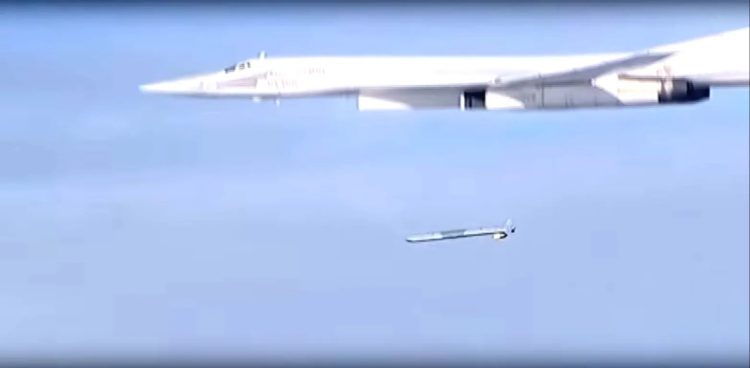


Video reportedly showing a Russian Iskander-M strike on a Ukrainian position near Petrovskoye, Kharkiv Oblast. https://t.co/mHLWRBiqK6 pic.twitter.com/ww3aqXgakQ
— Rob Lee (@RALee85) May 20, 2022
SOFREP previously reported that the nuclear-capable Iskander-M were also equipped with countermeasures and PENAIDs such as small decoys to evade air defense systems and trick heat-seeking missiles that could possibly shoot them down. These help them penetrate targets well-beyond enemy lines and help them to be more precise.
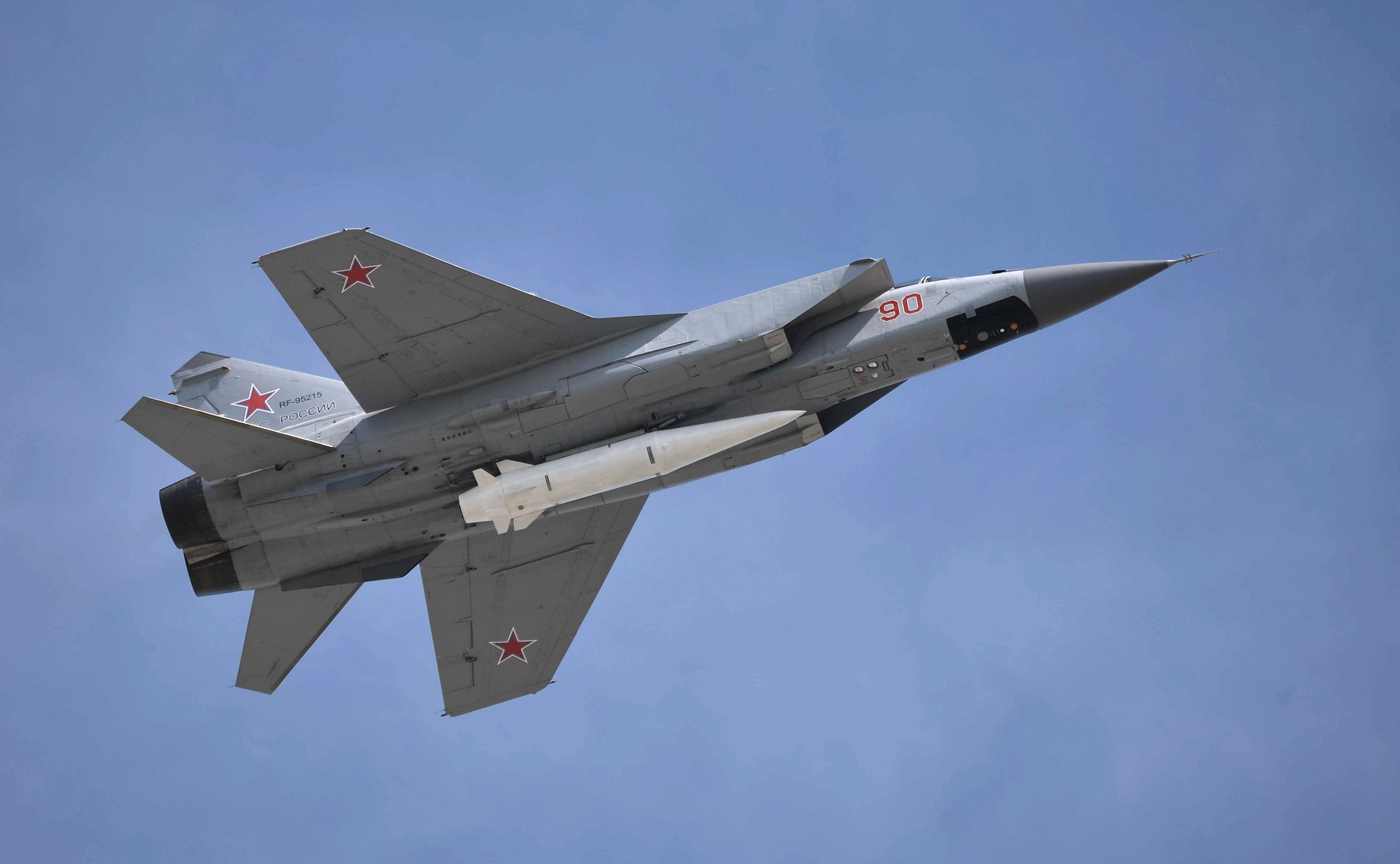
Kalibr cruise missiles, launched from ships or submarines, were also used by the Russian forces to destroy targets, notably destroying military factories in Ukraine in March. Along with this, Kinzhal hypersonic missiles were also used to destroy munitions depots and fuel depots in the Ivano-Frankivsk region in Ukraine. It was claimed by various military experts that the usage of the Kinzhal was a way for Russia to show off its supposed “military might” and that they had been running out of missiles to throw at Ukraine.
This would seem like the case as the usage of these precision-guided munitions is becoming less seen on the battlefield in Ukraine. During the earlier portions of the war, Russians could be seen firing precision-guided missiles at Ukrainian targets for days, continuously trying to hit military factories, depots, and even civilians to hurt the Ukrainian war effort and morale. However, nowadays, they have been more conservative with their precision-guided missiles.
“There are no volleys of long-range cruise missiles anymore, and there are almost no Iskander strikes,” military analyst Pavel Luzhin said.
A senior defense official also weighed in on the subject, stating that the Russians would not need a hypersonic missile to hit not-so-far-away buildings in Ukraine, stating that it was a “head-scratcher.”
“Why would you need a hypersonic missile fired from not that far away to hit a building? It could be that they’re running low on precision-guided munitions and feel like they need to tap into that resource,” he said last March.
“It could be that they’re trying to send a message to the West, but also to Ukraine, and trying to gain some leverage at the negotiating table. But it’s a — from a military perspective, if it was a hypersonic missile, there’s not a whole lot of practicality about it.”
“We do think that they are beginning to face some inventory issues with precision-guided munitions, which is one reason why you’re seeing the increasing use of what we would call dumb bombs, and we’ve also seen them suffer failures of some of their precision-guided munitions,” the defense official continued.
This is not to say that they have completely run out of their missiles. However, they are using them with more care as evidence points to the fact that they cannot produce more of their precision-guided munitions due to sanctions.
There is also evidence to prove this point. SOFREP previously reported that the Russians have shut down a surface-to-air production plant, the Ulyanovsk Mechanical Plant, known to produce various types of missiles due to a lack of foreign components. While this factory produces the 9K37 Buk (SA-11 Gadfly) and the 2K22 Tunguska (SA-19 Grison), it can be surmised that this phenomenon can be spreading to the entire military industry as they have been reported to be suffering from massive layoffs.
In fact, military expert and analyst Vladislav Seleznev stated in an interview with OBOZREVATEL that the Russians have been using “outdated” missiles with “significant accuracy problems. According to him, a Russian attack on the morning of May 16 in Yuzhny revealed that the Russians had trouble with the trajectory of the missile, hitting a recreational complex instead of a railway bridge. According to him, they were using X-22 class missiles which were very powerful but had tremendous accuracy problems.
With mounting losses in Ukraine as well as a non-functioning military-industrial complex, it’s unknown whether the Russians can keep up with the Ukrainians and their Western-supplied weapons. As fighting rages on in Donbas, with the Russians failing to gain any significant ground (in fact, losing ground), the absence of precision-guided missiles in the future in their arsenal may prove to be a significant factor in their performance in Ukraine.









COMMENTS