

Institutional Significance
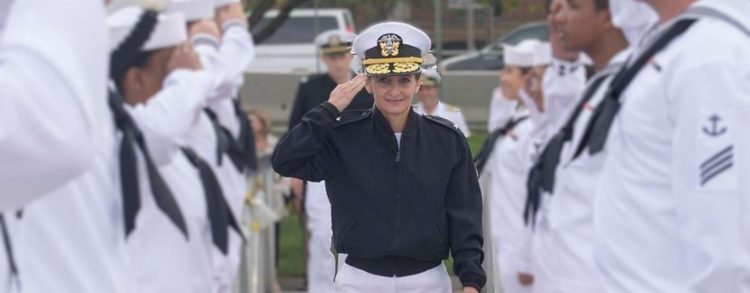
This transition is more than gender or service swap. It underlines Hegseth’s strategy: redefine academy culture, emphasize combat readiness over social policy, and shift ownership toward military orthodoxy over inclusivity. Placing a Marine general—a combat-hardened, institutionally toughened figure—on the Yard reads as a deliberate message: “Expect harder, leaner, mission-first leadership.”
Navy Secretary John Phelan framed the swap as strength under tradition, while praise from Adm. Kilby for Davids’s future warfighting role signals that she remains a valued asset—just not the public face of Annapolis anymore.
The Broader Narrative
Defense Secretary Hegseth is cutting a path through the Pentagon like a bulldozer with no rearview mirror, and the ones getting flattened are mostly women in uniform. Since taking office, Hegseth has removed several of the military’s top female leaders—an unmistakable trend that critics are now calling a purge.
Vice Adm. Shoshana Chatfield was the U.S. military’s representative to the NATO Military Committee and the only woman among its 32 members. She’s a decorated Navy helicopter pilot and commanded in Afghanistan. Didn’t matter. She was fired for “loss of confidence,” according to the Pentagon’s boilerplate response. No details, no clarity—just gone.
Next came Adm. Lisa Franchetti, the Navy’s first female four-star and the service’s highest-ranking officer. Her removal stunned the ranks. Then it was Adm. Linda Fagan, the first woman ever to lead the U.S. Coast Guard. Two historic figures—both out the door without much ceremony and with no real explanation from the top brass.
These aren’t routine moves. Lawmakers and defense officials are raising alarms, arguing that the shake-ups erode trust, disrupt continuity, and seem rooted in ideology rather than readiness. Hegseth’s well-documented disdain for women in combat roles and his crusade to rip what he calls “woke” ideology out of the armed forces give the whole thing a political stink.
Adding fuel to the fire, Hegseth recently scrapped the military’s seven-year-old Women, Peace & Security initiative—a program designed to strengthen women’s leadership and integration in national security strategy. He called it divisive and unnecessary, a liberal pet project that distracted from the mission of preparing to win wars.
In the span of a few months, some of the most accomplished women in the military have been shown the door. Whether you call it a cultural reset or a political purge, the message is loud and clear: there’s a new sheriff in town, and he’s not interested in keeping the old order around.
At Annapolis, the effect is clear. The first female leader is gone; the first Marine takes over. It’s a cultural reset.
Midshipmen, Marine-Style
Lt. Gen. Michael J. Borgschulte will be the first from his service to lead the U.S. Naval Academy, a historic shift after nearly 180 years of exclusively Navy leadership. As a Naval Academy graduate and a highly decorated Marine aviator with combat deployments in Iraq and Afghanistan, Borgschulte brings a strong operational background and deep ties to both the Navy and Marine Corps. He most recently served as the Marine Corps’ deputy commandant for manpower and reserve affairs, managing personnel policy for the force.
What to expect at Annapolis under Borgschulte:
- Increased Marine Corps influence: Traditionally, about a quarter of Naval Academy graduates commission as Marine officers, but this is the first time a Marine will shape academy culture and priorities at the highest level.
- Operational and combat experience focus: Borgschulte’s combat aviation background and leadership in major Marine operations (such as the Battle of Marjah in Afghanistan) suggest an emphasis on combat readiness, operational leadership, and warfighting skills.
- Continued Hegseth-era reforms: His appointment follows the controversial tenure of outgoing superintendent Davids, who implemented and enforced military-wide directives from Secretary Hegseth—such as tighter restrictions on academic content, bans on certain books (especially those perceived as “woke” or focused on race and gender), and the cancellation of events deemed objectionable by the current Defense leadership.
- Potential for curtailed academic and cultural diversity efforts: Given ongoing policies under Defense Secretary Hegseth to roll back diversity and inclusion initiatives, and the context of Borgschulte’s appointment as part of broader senior leadership restructuring, it is likely the academy will reflect a greater focus on traditional military values and warfighting.
Borgschulte’s leadership represents a significant inflection point: expect Annapolis to highlight Marine ethos, operational preparedness, and possibly enforce even stricter adherence to Defense Department directives on curriculum and institutional culture.
Bottom Line
Yvette Davids isn’t fired—she’s repositioned into a Pentagon warfighting role. But her removal from Annapolis, less than halfway through her expected term, reflects a strategic repositioning: erase traces of woke, eliminate symbolic firsts, and restore institutional rigidity.
In her place, Borgschulte arrives: a proven leader, Marine combat veteran, and Annapolis insider—exactly the sort of culture-war antidote Hegseth is selling. The Academy now stands on a new axis: Marine command in the House of Navy—a statement with ripple effects far beyond the Yard.








COMMENTS