The U.S. Army Special Operations Forces (ARSOF) are undergoing a significant transformation to prepare for future conflicts against multi-domain competitors like China and Russia, emphasizing integration with cyber and space capabilities. This shift is driven by a surge in operational demand and the need for adaptability in a rapidly changing battlefield environment.
Key points from this article:
The Army's Multi Domain Operations concept aims for a fully multi-domain capable ARSOF formation by 2028, integrating special operations with space and cyber units.
How the Pacific Testbed for Information Warfare, particularly the Theater Information Advantage Detachment in Hawaii, is designed to counter adversary narratives and support regional stability against China.
Why the overhaul matters as great power competition intensifies, requiring ARSOF operators to be skilled in navigating complex environments with advanced technologies like AI and drones.
Updating summary...
How Army Special Operations Forces Are Rewiring Green Berets and Rangers for the Next Great Power Struggle
Guy D. McCardle
Speed
1x
Listen
COMMENTS
The next Army special operations fight will unfold in the shadows of a digital battlespace, where dispersed teams use drones, data, and deception to stay alive inside a peer adversary’s sensor net.
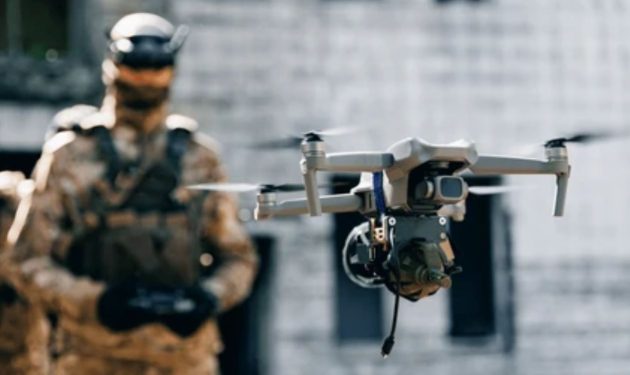
An operator guides an FPV-style reconnaissance drone through a mock urban battlespace, training for the sensor-saturated fights that define modern special operations. Image Credit: Shutterstock
The next U.S. special operations fight will not resemble the last twenty years of counterterrorism. Imagine a knife fight under a digital sky. Picture a Green Beret detachment scattered across Baltic woodland while a Russian style sensor grid hunts for a whisper of electronic life. Picture a Ranger platoon practicing how to disrupt an armored column with FPV drones, anti-armor fire, and real-time cues from space and cyber units. That is the world Army Special Operations Forces are tuning themselves for, and the overhaul is accelerating.
Advertisement
From Counterterrorism To Multi-Domain Competitors
The Army’s Multi Domain Operations concept lays out the challenge. A future conflict with China or Russia will unfold across land, sea, air, space, cyberspace, and the information environment. ARSOF leadership has been blunt about the need to shift. Official strategy calls for a fully multi-domain capable ARSOF formation by 2028, tightly integrated with the joint force and positioned forward in key regions.
This is not theory. Operational demand on U.S. Army Special Operations Command has surged by roughly 180 percent over the past three years. That spike includes global crisis response missions, which means ARSOF must evolve while sustaining heavy commitments.
The answer is a tighter bond among special operations, space forces, and cyber units. Senior leaders describe this as a SOF–Space–Cyber triad that blends global access, cyber tools, electronic warfare, and precision effects into a single menu for commanders.
For operators, that means access to space-derived situational awareness, cyber-enabled shaping operations, and precision fires once reserved for larger formations.
The Pacific Testbed For Information Warfare
Nowhere is this transformation clearer than in the Indo-Pacific. The Army has reorganized its information forces by activating Theater Information Advantage Detachments. The first unit, stationed in Hawaii, is built to help commanders contest adversary narratives, counter disinformation, and shape public perception across the region. It includes specialists in cyber, intelligence, civil affairs, electronic warfare, PSYOP, and information operations.
That places Army PSYOP units at the center of a theater-wide influence architecture. Regional battalions aligned with Pacific commands support efforts to detect, counter, and exploit information trends long before a crisis ignites.
This framework is designed for friction with China. A Special Forces unit working with island partners is now linked to an information advantage network that can pair local messaging with cyber activity, electronic warfare, and space-based tracking. The mission is simple but delicate: complicate Beijing’s planning cycle without tipping into open conflict.
AI, Kill Webs, And The New Operator Toolkit
Artificial intelligence is rapidly shifting from a lab experiment to a battlefield requirement. The Maven Smart System, an outgrowth of Project Maven, has shown in exercise conditions that it can help small teams process vast amounts of sensor data. Some trials demonstrated the ability to manage volumes near a thousand target indicators per hour, turning what once required a full operations center into something a small team can exploit.
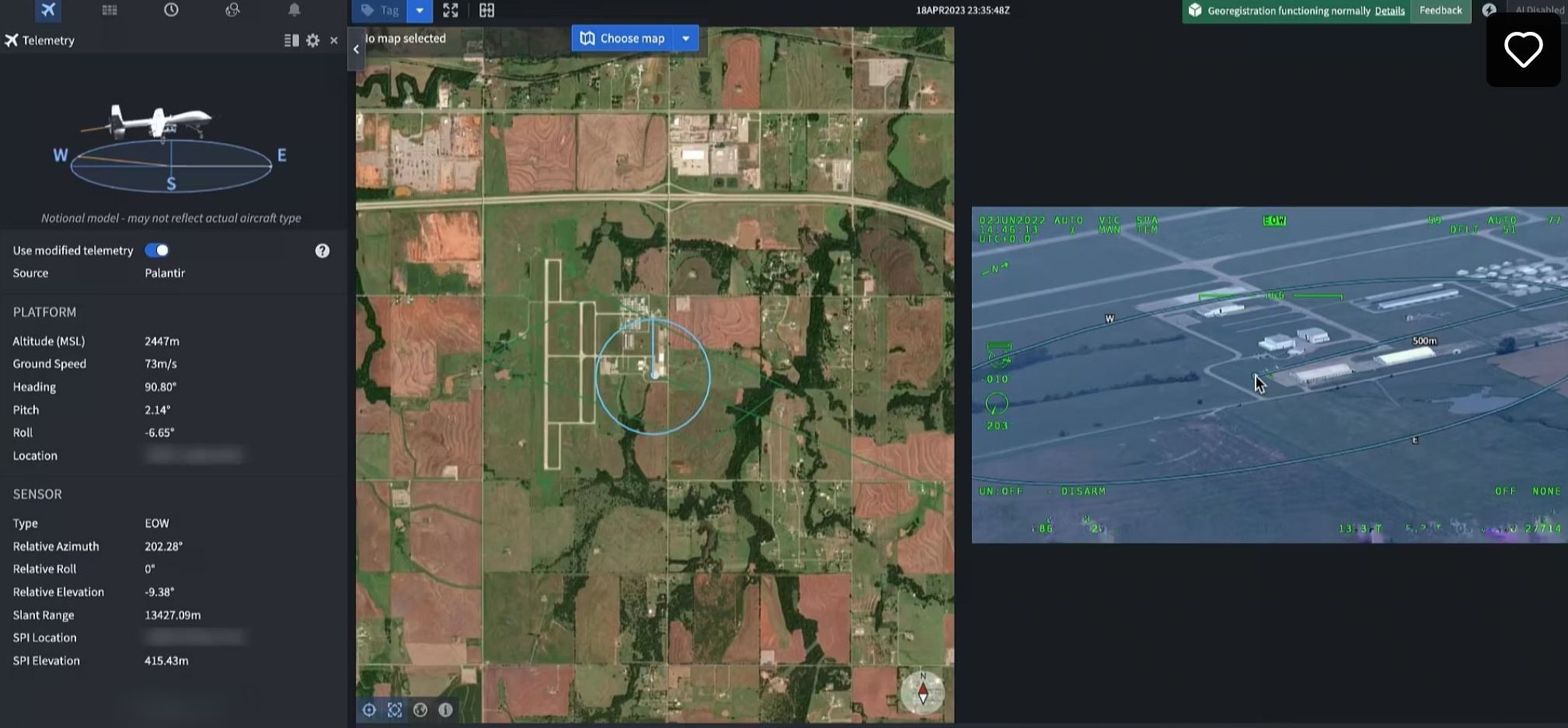
Drone obtained telemetry lets targeting experts overlay key operational markings for a more comprehensive targeting package. Image Credit: Palantir
On the tactical edge, Rangers have been experimenting with human-machine teaming through events like Project Convergence. In these scenarios, Ranger elements controlled drone swarms linked into a joint kill web that combined land, air, and maritime sensors. The regiment has also adopted FPV strike drones modeled after Ukraine’s battlefield innovations.
The future operator must be fluent in this environment. AI-enabled sensors are becoming as fundamental as radios. The expectation is that a team can pull from an intelligent sensor grid, fuse inputs, and guide partner forces while staying hidden from adversary surveillance.
Ukraine’s battlefield is shaping U.S.combat doctrine in real time. The dominance of drones, the violence in the electromagnetic spectrum, and the rapid destruction of large headquarters all point to a battlefield where SOF cannot readily survive without dispersion, mobility, and tight coupling to conventional fires.
Special Forces units are adjusting their irregular warfare toolkit accordingly. Training emphasizes signature control, redundant communications, and the ability to shift between guiding long-range fires, supporting resistance networks, and conducting sabotage and reconnaissance inside contested terrain. The old model of a stable team house with reliable air superiority is gone forever.
Modern irregular warfare means living inside a target box without being detected, while enabling local partners to apply constant pressure against a peer adversary.
Rangers And The Hunter Killer Mesh
The 75th Ranger Regiment’s dedicated intelligence battalion gives Rangers their own analytical and digital targeting capability. Combine that with FPV drones, small autonomous systems, and the joint kill web architecture, and the regiment looks less like a pure raid force and more like a mobile hunter-killer mesh built for contested environments.
A Ranger strike package might dismantle an enemy air defense node one night and open a corridor for joint fires the next. Precision raids remain part of the job, but the regiment is now expected to blind, disrupt, and fracture enemy formations for larger forces.
Why This Overhaul Matters
Great Power competition is already underway. Its front line is an irregular contest fought in the shadows, in the information space, and inside the electromagnetic spectrum. When open conflict erupts, it will erupt fast.
ARSOF is preparing for that moment by grooming operators who can navigate this chaos with speed and good judgment. Green Berets and Rangers will enter the next fight as multi-domain integrators, information warriors, and AI-literate tacticians who can still lead a partner force through a more conventional battle space.
If the last two decades built America’s counterterror experts, the next decade will forge the specialists required for a digital battlefield shaped by missiles, drones, data, and resistance networks working beneath a hostile sky.
—
** Editor’s Note: Thinking about subscribing to SOFREP? You can do it now for only $1 for your first year. Pull the trigger on this amazing offer HERE. – GDM
Advertisement
What readers are saying
Generating a quick summary of the conversation...
This summary is AI-generated. AI can make mistakes and this summary is not a replacement for reading the comments.










COMMENTS