
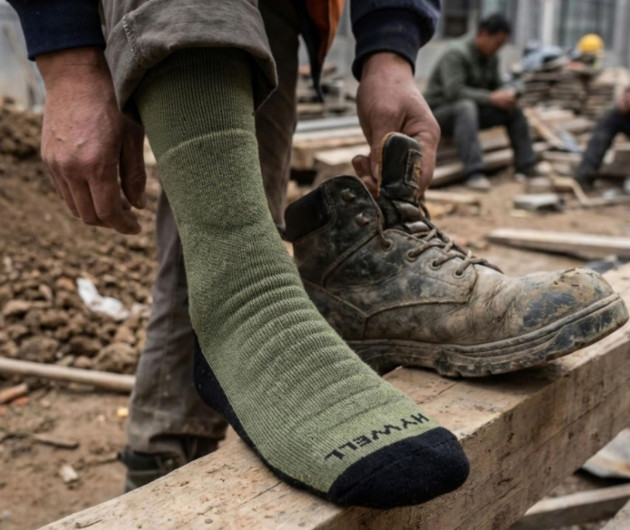
Every soldier eventually learns the same painful truth.
Your feet run the whole operation.
You can have the best rifle in the platoon, the lightest ruck, and a plan drawn up by Napoleon himself. None of it means much if your feet turn into hamburger halfway through the day. Blisters will wreck your pace. Hot spots become open sores. Moisture trapped inside boots can lead to infections that will sideline you faster than enemy contact.
The military figured this out generations ago. Foot care becomes a ritual. Change your socks when you can. Air out your feet whenever the opportunity appears. Tape trouble spots early.
And most important of all, wear socks that can survive the job.
It sounds like a small thing until you’ve walked ten miles with fifty pounds on your back and the skin on your heels feels like it’s sliding around inside your boots.
That is when socks stop being an afterthought.
Rucking Is the Great Equipment Test
Rucking exposes weak gear faster than almost anything else.
A casual hike through the woods is one thing. Throw a heavy pack on your back, and suddenly every flaw in your equipment starts making itself known. Shoulder straps dig in. Cheap pack frames twist. And the wrong socks will grind your feet down mile by mile.
I remember one long ruck years ago when a guy showed up wearing thin athletic socks from a discount store. Somewhere around mile six he started walking funny. By mile eight he was limping like a wounded pirate. When we finally stopped, the damage on his feet looked like a training slide from a medic course.
That problem didn’t come from the terrain.
It came from friction, heat, and moisture trapped inside boots.
Good socks prevent that spiral before it starts.
The Engineering Behind a Better Boot Sock
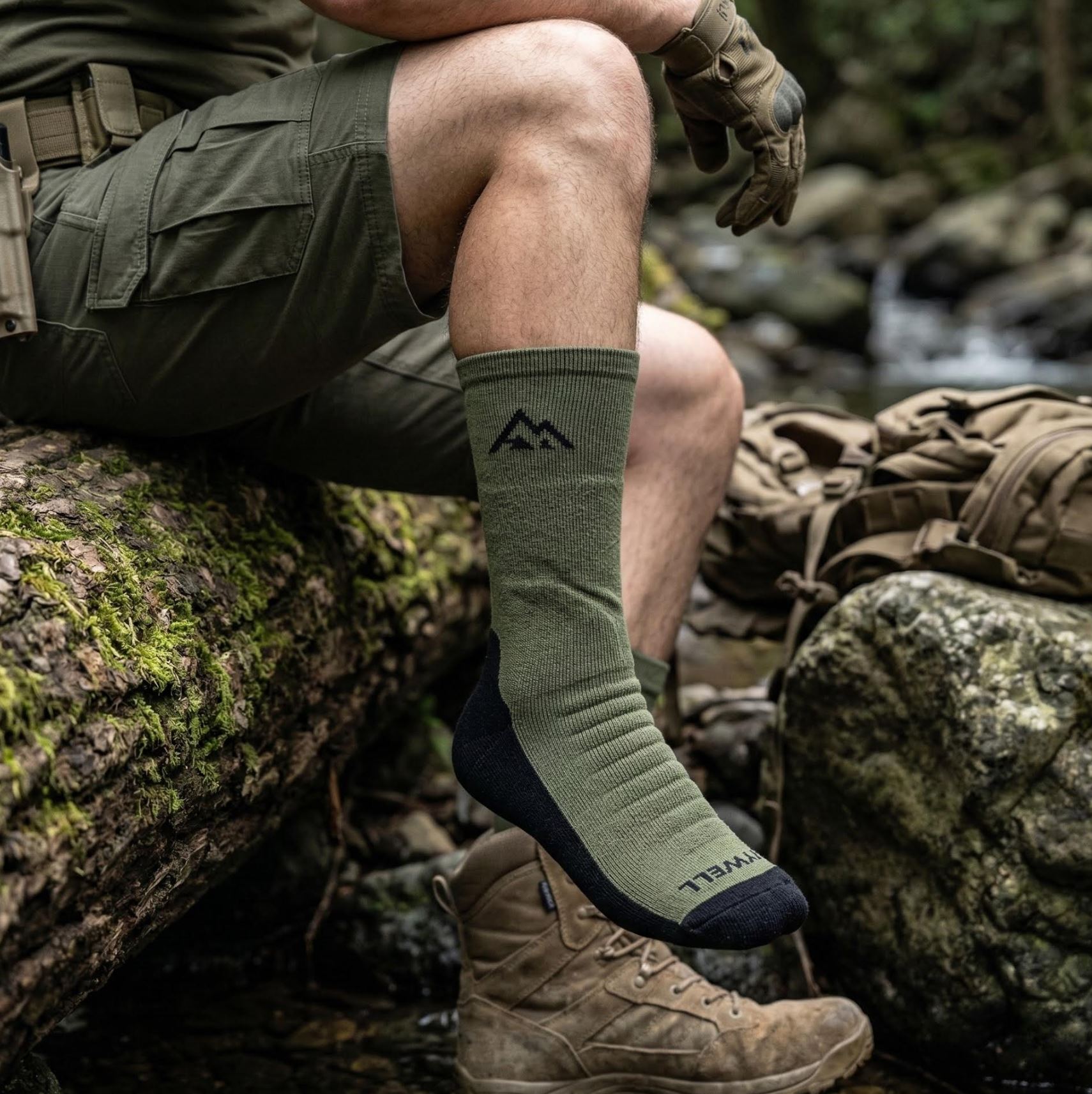
Hywell merino wool boot socks are built around a specific idea: people who live in boots need more than a thin layer of fabric between their feet and the inside of a boot.
Their socks use a high-density merino wool terry loop structure. That might sound technical, but the effect is easy to understand. Thousands of tiny loops inside the sock create a dense cushioning layer that compresses with every step. Think of it like a field of miniature shock absorbers built directly into the fabric.
That structure spreads impact across your foot instead of concentrating it on pressure points like your heel and forefoot. Over the course of a long day, that impact absorption adds up. When you’re covering miles under a ruck or standing on concrete in steel-toe boots for twelve hours, the difference becomes obvious.
Merino wool also brings its own advantages to the fight. It naturally wicks moisture away from your skin, regulates temperature, and stays comfortable even when conditions get damp. Anyone who has spent a hot day in boots knows how quickly trapped sweat can turn into friction, and friction turns into blisters.
Move that moisture away from your skin, and you’ve already won half the battle.
Built for the Long Shift
Not everyone is rucking through the mountains with a rifle and a radio. Plenty of people live in boots for a different reason.
Construction crews. Mechanics. Firefighters. Linemen. Ranch hands.
Anyone pulling twelve-hour shifts in heavy boots knows the quiet misery of bad socks. Heat builds up, sweat collects, and by the end of the day, your feet feel like they’ve been through a wood chipper.
Hywell designed their boot socks, also called work socks, specifically for that environment. The cushioning targets the areas that take the most punishment, and merino cushion boot socks manage moisture, and the overall construction is built to hold up under serious wear.
They even back the socks with an ironclad 10-year warranty.
That’s not a typo. A decade.
When a company is willing to stand behind something as brutally abused as a boot sock for ten years, it tells you they’re confident about what they built.
Take Care of Your Feet
Boots get all the glory. People obsess over leather quality, tread patterns, waterproof liners, and fancy lacing systems.
But the sock is the interface between your foot and the boot. If that layer fails, everything else starts falling apart.
The right tool for the job is always the best option. That includes the gear you wear on your feet.
Because when your feet stay comfortable, you move faster, work longer, and finish the day ready to go again tomorrow.
Ignore them, and you will learn the lesson the hard way.
Blisters do not care about your plans.








COMMENTS