

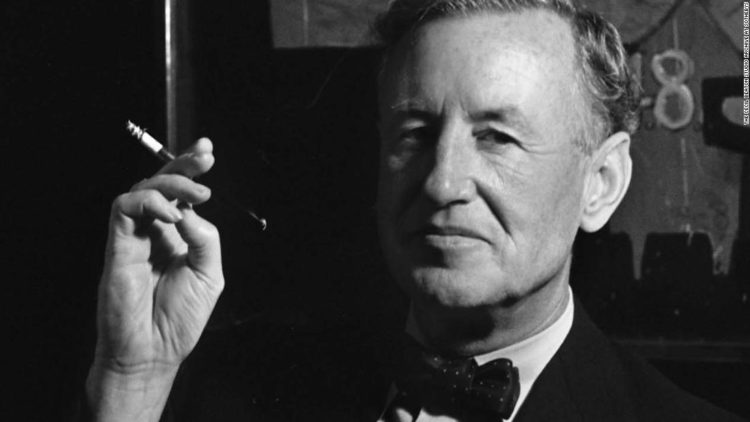
Fleming was behind the plan for “Operation Mincemeat,” which was a disinformation operation to throw the Germans off of the main Allied plan to invade Sicily. The British would drop a corpse off the coast of Spain with fake plans outlining an invasion of Sardinia and Greece. So completely did the Germans fall for it that Churchill was sent a memo, stating, “Mincemeat swallowed, rod, line, and sinker.” Godfrey also put Fleming in charge of “Operation Goldeneye” in Spain — another Bond reference.
Fleming also met with OSS chief William Donovan and he shared with the Americans some ideas on how to set up their own fledgling intelligence agency.
While visiting Jamaica during the war, Fleming fell in love with the place and wrote to his friends who already lived there, “when we have won this blasted war, I am going to just live in Jamaica and write books and swim in the sea.”
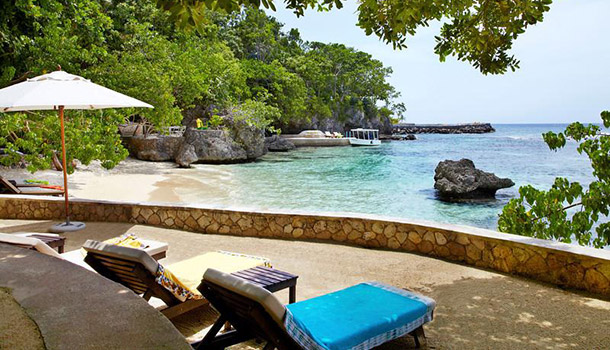
After the war was over, Fleming indeed purchased a property in Jamaica. He promptly named his property “Goldeneye.” It would be where he did all of his writing. Interestingly enough, Fleming’s “Goldeneye” villa in Jamaica is available for rent for any vacationers who would like to spend time on the island at the home of Fleming. For a cool $2,500 a night, you too can stay there.
After carrying on a longtime affair with Ann Charteris, the two were married in 1952 after it was learned that she was pregnant with his child.
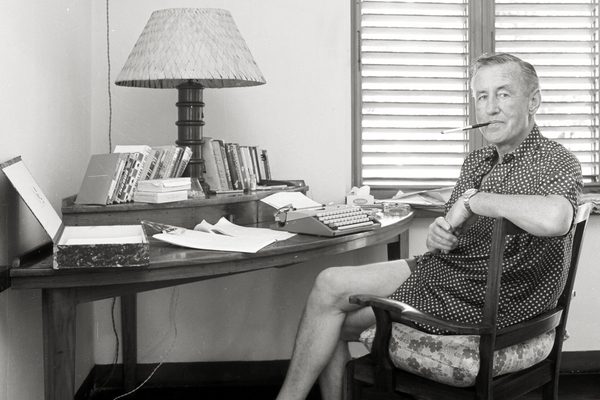
During that time, Fleming wrote his first James Bond novel “Casino Royale.” Its writing process would become a ritual. Every January Flemming would begin a two-month period to write within which to write the next Bond story. He described Bond looking like a cross between himself and the singer Hoagy Carmichael.
After writing three Bond novels “Casino Royale,” “Live and Let Die,” and “Diamonds Are Forever,” Fleming had grown tired of Bond, but the stories were proving to be immensely popular. He decided to write a fourth book, “From Russia With Love” in 1961. Then, the American media quoted new U.S. President John F. Kennedy as saying that the book was his favorite. In retrospect, Fleming’s decision to continue with Bond was a sound one.
He followed “From Russia With Love” with “Dr. No,” “Goldfinger,” and “For Your Eyes Only.” However, it was his next novel “Thunderball” that he hoped would bring his books to the big screen.
Fleming continued on with James Bond in the critically panned “The Spy Who Loved Me.” At that point, he suffered a major heart attack. His health had suffered from a lifetime of drinking and smoking that were finally catching up with him. His womanizing had not ceased either and both he and his wife were unfaithful during this time and carried on numerous affairs.
While recovering in the hospital, he was denied a typewriter so that he could rest. Nevertheless, he used a pen and paper to write the children’s book “Chitty-Chitty, Bang-Bang.” He then returned to James Bond with “On Her Majesty’s Secret Service,” a book lauded as one of his best.
It was during this time that Fleming finally saw his character Bond enter the silver screen. James Bond would prove to be the most durable and profitable series ever. The first Bond film was “Dr. No” and it starred Sean Connery as James Bond. Fleming wasn’t happy that a working-class Scot was hired to play 007; he wanted Cary Grant or James Mason. Supposedly he said, “I am looking for Commander Bond, not some over-developed stuntman.”
Fleming would also see “From Russia With Love” released. He was involved in “Goldfinger,” too, but didn’t live to see the film released.
Fleming suffered another massive heart attack on August 11, 1964, and died the next day at the age of 56. His last work published before his death was “You Only Live Twice.” He left two other works that were published posthumously: “The Man with the Golden Gun” and the short stories “Octopussy” and “The Living Daylights.”
Fleming was buried in the churchyard of Sevenhampton, near Swindon.
Fleming was one of the most influential writers of his generation and his character, James Bond has endured and flourished since 1962. The latest Bond film “No Time to Die” was slated for an April 2020 release but due to the coronavirus, it has been pushed back to at least November.








COMMENTS