

Iran’s Foothold in Lebanon
The Iranian Revolution saw the long-standing Pahlavi monarchy overthrown by the hardline theocratic Mullahs led by Ruhollah Khomeini. Not wanting just a hardline Islamic theocracy in Iran, Khomeini would dispatch his personal army, the IRGC to ‘export’ the revolution across the Middle East—Lebanon would become the example.
Several hundred IRGC officers were flown to a destabilized Lebanon and connected with the disenfranchised Shiite community. Using their emotions as a perfect recruitment tool, the IRGC helped create the Islamic Jihad Organization, a precursor to Hezbollah, which was commanded by Iranian veterans. With the goal of expelling Western peacekeepers and Israel from the country, this new organization would quickly become dominant in Lebanon.
High-valued attacks against embassies, military bases, and Israeli convoys quickly made the group popular, and ultimately Hezbollah became the only militia left in Lebanon with heavy weaponry. Supported by Assad and his Syrian troops that occupied the nation for another two decades, the Iranian-backed militia held a constant flow of arms.
After waging multiple wars against Israel, with the 2006 one giving Hezbollah a major popularity boost in the Arab world, Iran had solidified their foothold in the nation. The militia would become Lebanon’s largest political party as demographics greatly shifted when millions of Lebanese migrated for better opportunities. In some cases, Hezbollah became better at providing social services than the highly inept Lebanese government (which behind the scenes answers to the group).
State of Lebanon
Lebanon is currently facing one of the world’s most rapidly deteriorating economic collapses in modern history. The best and brightest have left, while the younger generation has applied for visas around the world due to the deteriorating state. The worst of Lebanon has consolidated power and the country is ruled by the same warlords that dragged their neighbors out of their homes and executed them.
The Lebanese government is highly inept, and even when Lebanon’s former President finished his term, the MPs still have not been able to elect a new one nearly seven months later. Hezbollah is a major player in the government and despite their popularity decreasing, the government cannot form without them or their other pro-Iranian Shia partners, the Amal Movement.
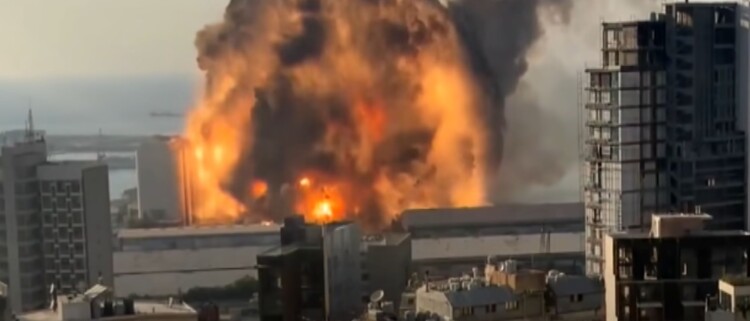
With a collapsing currency, uncertainty in government, and negligence, the people of Lebanon would suffer from this, particularly the Beirut Port Blast. Ammonium nitrate, funneled by Assad and Hezbollah, was stored in an unstable condition in Lebanon’s port with many parliamentary and military members knowing this. The chemicals combusted in August 2020, which destroyed the port and most grain soils and marked the state of the nation.
Though a judiciary investigation has been ongoing, there have been no major arrests, and pro-Hezbollah parties affiliated with the corrupt inner circle have done their best to block and dismiss the investigation. With no sign of light in the darkness, the country’s future continues to look bleak.
Increased Tensions in the Region
The United States, UAE, Saudi Arabia, and France mark the countries that continuously finance the Lebanese government to keep it from collapsing. Particularly, the State Department funds the salaries of the Lebanese Security Forces to keep them from collapse.
Lebanon’s socioeconomic issues have been at a boiling point, with many in the country calling for the expulsion of two million Syrians back across the border due to the financial strain on the economy. The South, which is directly governed and controlled directly by Hezbollah, has seen increased tensions with UN Peacekeepers and Israel.
Cross-border attacks have up-ticked the past two years as Hamas’ Chief has met with the militia’s leadership to set up another front against Israel inside the heavily armed Palestinian camps in the south, which the Lebanese army is incapable of militarily stopping. Israel’s President has stated he will not allow this power base and the IDF and reserves have been placed on high alert.
Preparing for Escalation
There are several potential scenarios America must prepare for that would be detrimental to regional security. The first is a potential regional war between Israel and Iran—especially if the latter achieves nuclear weapons. Hezbollah and Hamas directly receive funding and orders from the IRGC, and the recent uptick of a united front has the hallmarks of the Islamic Republic—one of the reasons why the Pentagon announced the movements of one of its nuclear subs to the region.
Another regional threat is the uptick in attacks by Iranian-backed militias against US forces in Syria, a country that holds a major IRGC and Hezbollah’s presence. Assad and the Quds Force have transferred a wide variety of sophisticated weapons to Hezbollah, some of which could target American forces, along with naval and civilian ships in the Eastern Mediterranean.
If Lebanon continues to spiral into collapse, the country could once again become a lawless nation. Like the civil war in the 70s, the country became a safe haven for warlords and drug lords, and the IRGC and other hardline groups used the lack of security in the country for militant training camps. Akin to Somalia, Afghanistan, Bosnia, Libya, Iraq, Syria, and the late USSR, if central authority continues to diminish, a new round of wars and ethnic violence could take place, once again requiring international intervention.
Lebanon was once the shining jewel of the Middle East, and if it falls into another catastrophic collapse or becomes trapped in a potential war, it would leave a humanitarian crisis the world cannot afford. With the rise of warlords in the region and Iranian proxies becoming ever more emboldened, US Central Command and now the biggest American embassy must prepare for all contingency options.








COMMENTS