

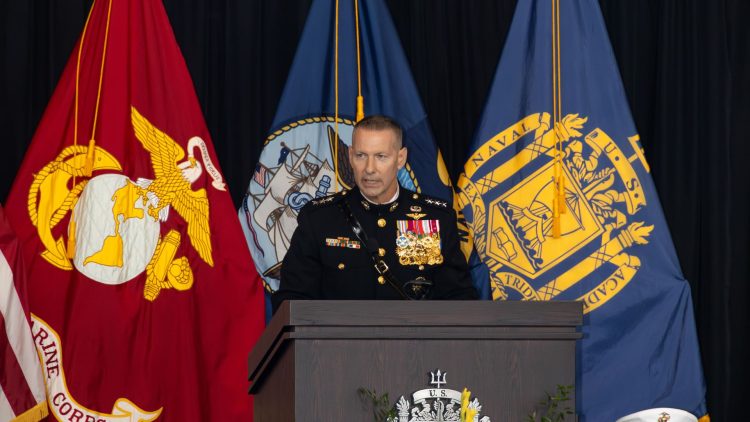
Colleagues describe him as a hybrid leader who’s “a military mix of modern tactics and ancient attitudes.”
Translation: a warrior who embraces innovation but insists on old-school accountability.
Climbing the Ladder
Borgschulte’s résumé is as stacked as they come. He’s commanded a Marine attack helicopter squadron, led the 3rd Marine Aircraft Wing at Miramar in San Diego, and served as deputy commandant for Manpower and Reserve Affairs in Quantico, Virginia.
Promoted to lieutenant general in 2024, he became a trusted voice on everything from force structure to recruitment policy.
Along the way, he testified before Congress, telling senators bluntly about the need to raise wages for childcare staff at military centers.
“I’ve taken advantage of child care opportunities at every duty station,” he said at a Senate Armed Services Subcommittee hearing in April, noting the challenge of raising two boys while serving with a physician spouse.
Massachusetts Senator Elizabeth Warren, rarely generous with Pentagon brass, praised his candor.
A Marine’s Mission for Annapolis
So what does this appointment mean for the Academy? For Borgschulte, it’s about purpose.
“The academy exists not to pursue academic rankings or institutional accolades,” he declared at the change of command. “Yes, we have those — but to fulfill a sacred mission, and that’s to develop the next generation of Navy and Marine Corps officers who will protect and defend the freedoms we as Americans so often take for granted.”
He’s not walking into a quiet campus. The Academy just commissioned 776 Navy ensigns and 258 Marine Corps second lieutenants this year alone. With global threats rising and retention always a concern, Borgschulte’s mandate is clear: shape officers ready for a world that grows more complex by the day.
He’s already signaled his style. At the Academy’s Marine Corps Awards Ceremony earlier this year, where he served as guest of honor, he challenged midshipmen to think about their “personal legacy.”
Drawing from his favorite book, Legacy by James Kerr, about New Zealand’s All Blacks rugby team, he reminded them: “Your legacy has already started.”
“Your personal legacy. How your peers will look at you, how your seniors will look at you, and most importantly, how those Marines you’re about to lead will talk about you.”
The Symbolism
There’s more than sentiment here. A Marine superintendent changes the symbolic DNA of Annapolis. For decades, the Academy has produced naval officers first, Marines second.
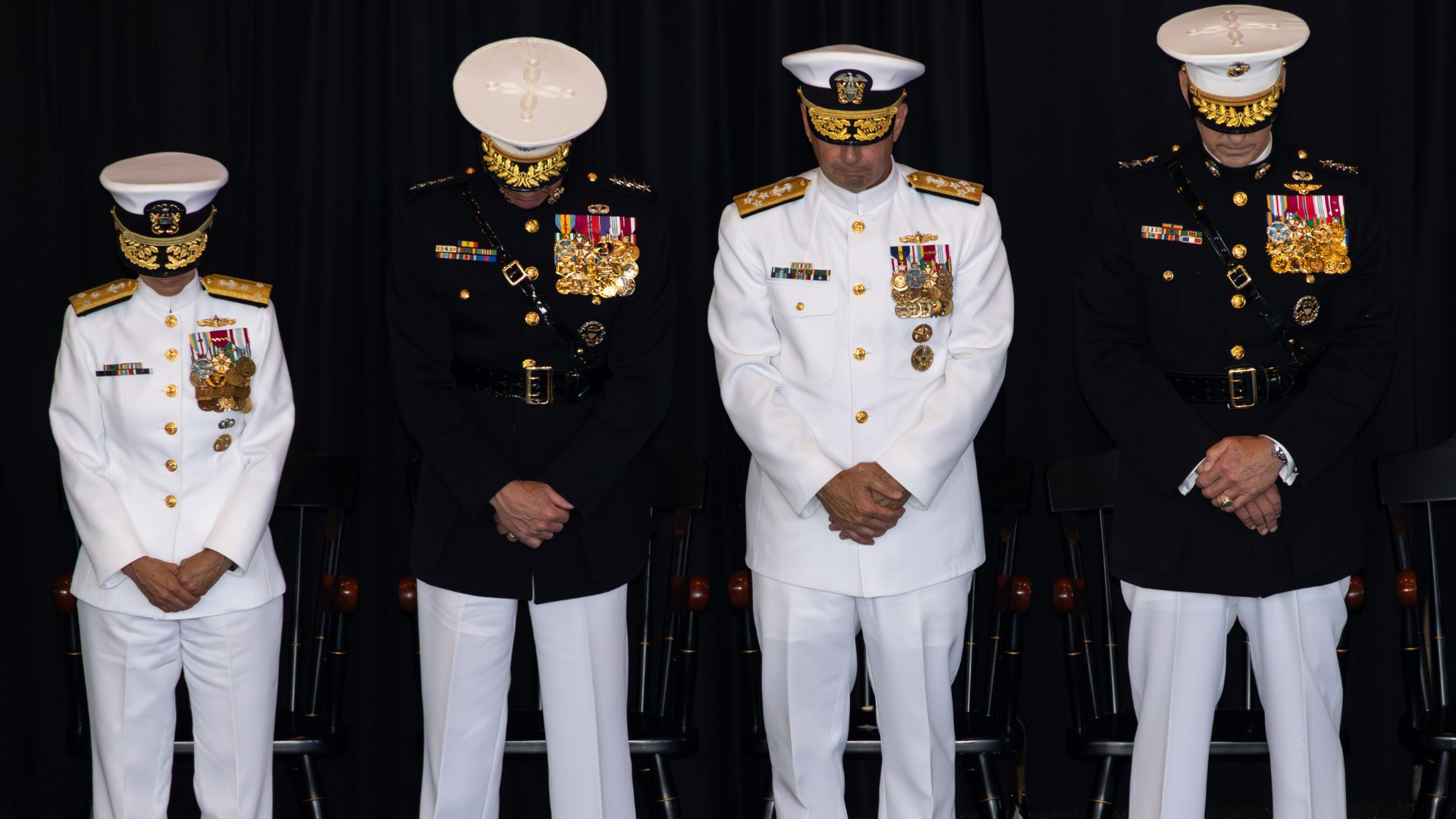
Borgschulte embodies the joint culture of the sea services at a time when integration between the Navy and Marine Corps is not just ceremonial but operationally vital. From AUKUS submarine commitments to expeditionary warfare in the Pacific, the two services will rise, or stumble, together.
Phelan underscored the point by highlighting Borgschulte’s record.
Borgschulte has been credited with achieving the highest recruitment and retention numbers in Marine Corps history. Furthermore, described as someone who treats everyone like they’re his best friend, but who also holds the line with toughness.
It’s that duality—compassionate but uncompromising—that Annapolis may need as it prepares officers for wars that span cyber, space, and sea.
Looking Ahead
So what’s next? Borgschulte inherits a proud institution at a pivotal moment.
He must balance tradition with innovation, ensuring midshipmen leave with not only technical skills but the resilience to lead sailors and Marines under fire.
He must also continue Davids’ push for inclusion and strategy, while answering to civilian overseers who demand results in everything from readiness to recruitment.
He seems up for it.
“Most people wouldn’t do this these days. In fact, less than 1% of our country serves,” he reminded the Class of 2025 Marine Selects in May. “Be proud. Stay humble. The title you’re about to earn… is earned every single day.”
In other words, the chin straps are fastened. Annapolis has a Marine in charge now, and he’s not here for accolades. He’s here for the mission.








COMMENTS