

From surfboard to rifle—Wai’s transition had begun.
Combat and Heroism: New Guinea and the Shores of Leyte
In May 1943, Wai sailed to Australia with his Division; by January 31, 1944 they were at Goodenough Island preparing the island-hop to Hollandia and Biak in New Guinea. These operations hardened men, built character, and built a leader whom soldiers trusted. One veteran later said Wai was “a man men would go through a wall for.”
Then came October 20, 1944: the invasion of Leyte (Philippines), part of Douglas MacArthur’s return. Wai landed with the fifth wave at a place called Red Beach. The first four waves were pinned down, leaderless, suffering under concentrated machine-gun and rifle fire from Japanese positions situated in palm groves and rice paddies.
Wai assumed command. Despite being a staff officer (not a front-line rifle company commander), he picked up a Browning Automatic Rifle (BAR), marched through the open rice paddies without cover, and deliberately exposed himself to draw fire and locate enemy strong points. He systematically led assault after assault, destroyed three bunkers with grenades, and while leading the assault on the final pillbox he was killed in action.
Without his self-sacrifice, the beachhead may not have been secured so swiftly.
His original award was the Distinguished Service Cross (DSC). However, in 1996, Congress ordered a review of Asian-American recognition.
In 2000, his DSC was upgraded to the Medal of Honor, which was presented to his brother in a White House ceremony. Wai remains the only Chinese-American soldier to receive the Medal of Honor, and one of only two non‐Japanese Asian-American officers so honored.
Culture, Background & Barriers
Wai’s story intersects culture, identity, and war. A Chinese-immigrant father, a Native Hawaiian mother, surfing the Pacific waves, then leading men under fire—his life bridged worlds. In an era when Asian-Americans often faced discrimination in uniform, Wai led the way with performance, leadership, and self-sacrifice.
He embodies the Hawaiian warrior-spirit: athletic, fearless, modest. He rarely sought the spotlight—surfing before the war, excelling at UCLA, then stepping up when the bullets flew.
After the War – Legacy & Memory
Wai never lived to see the end of his war—he died at age 27 on October 20, 1944, on Leyte. His body was later interred at the National Memorial Cemetery of the Pacific (“Punchbowl”), Honolulu, in a solemn ceremony held September 8, 1949.
His legacy, however, grew. In 2014, UCLA inducted him into its Athletics Hall of Fame.
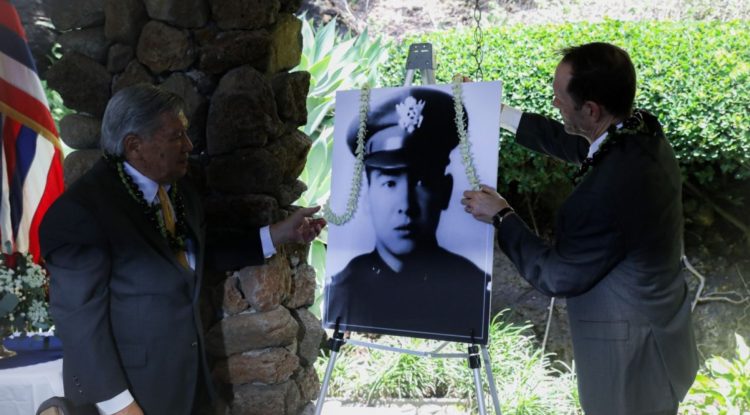
In April 2025, a replacement Medal of Honor medallion was received by the Wai family at Punahou School, Honolulu—his original award is held at the Smithsonian.
Streets and memorials in Hawaiʻi carry his name; his story inspires young athletes, soldiers, Pacific-Islanders, and Asian-Americans alike.
Why His Story Matters
In the roar of the Pacific campaign, amidst amphibious assaults, palm groves, rice paddies, and machine-gun nests, Capt. Wai did more than fight—he led. At a time when his background might have confined him, he soared beyond. His life reminds us that heroism doesn’t always look like Hollywood—it often looks like discipline, quiet resolve, and the readiness to step into chaos.
In Hawaiʻi, there’s a phrase: ōlelo no’eau—wise words. Wai didn’t idle in talk; he walked into the fire.
May his name echo every Medal of Honor Monday—and may we remember that courage doesn’t demand perfection, only action.








COMMENTS