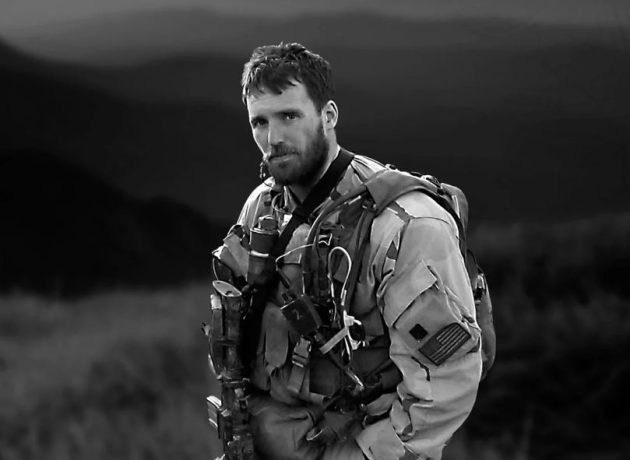
He stepped into the open, phone in hand and grit in his teeth, trading the last of his cover for a handful of breaths for his teammates — the kind of small, brutal choice that carves a quiet legend out of an ordinary life.
Read the full article for more on:
Important insights and detailed analysis
Expert commentary on current events
Breaking developments and updates
Updating summary...
Medal of Honor Monday: Michael P. Murphy – Protector, SEAL, Legend
Guy D. McCardle
Speed
1x
Listen
COMMENTS
He stepped into the open, phone in hand and grit in his teeth, trading the last of his cover for a handful of breaths for his teammates — the kind of small, brutal choice that carves a quiet legend out of an ordinary life.
Lt. Michael P. Murphy — a quiet, resolute leader whose courage on Operation Red Wings earned him the Medal of Honor. Image Credit: The Murph Challenge
Early years: Long Island grit
Michael Patrick Murphy never looked away, not from bullies, not from danger, not from duty.
Advertisement
He was born May 7, 1976, in Smithtown, New York, and raised in Patchogue on Long Island — a kid who learned early that you stood up for people who couldn’t stand up for themselves. The young man of Irish ancestry was unsurprisingly given the nickname “Murph” and, in middle school, he earned a reputation as “The Protector” after physically intervening when a classmate with special needs was being bullied. Murphy left Patchogue for Penn State, where he graduated in 1998 with degrees in political science and psychology, and where classmates remember a quietly intense young man who loved the outdoors and team competition.
A protector at heart
Friends and family tell the same types of stories. I had the unique opportunity to talk about Mike with his father, a number of years after he passed. It was moving and informative.
There was Murph the lifeguard, Murph the teammate, Murph the kid who refused to watch cruelty happen. Those early instincts matter because they map directly onto the choice he made later: when others needed someone to take the risk, Murph’s hand went up. His father, Daniel — a wounded Vietnam veteran and a lifelong public servant — understood the cost of combat and did not want his son to follow him into military service; Michael’s choice was therefore not born of family pressure but of personal conviction. That resistance at home only sharpened the decision: he wanted purpose, not a desk.
Advertisement
Choosing the SEALs: a different path
After Penn State, Murphy turned down several law-school offers and instead enlisted in the Navy. He volunteered for BUD/S — the brutal Basic Underwater Demolition/SEAL training that breaks men in order to build teams. He graduated with Class 236 and went on to earn his SEAL Trident. The man who had once been a lifeguard became a student of cold water, cramped subs, and close-of-contact violence — and he carried into that world the same instinct to shield the vulnerable.
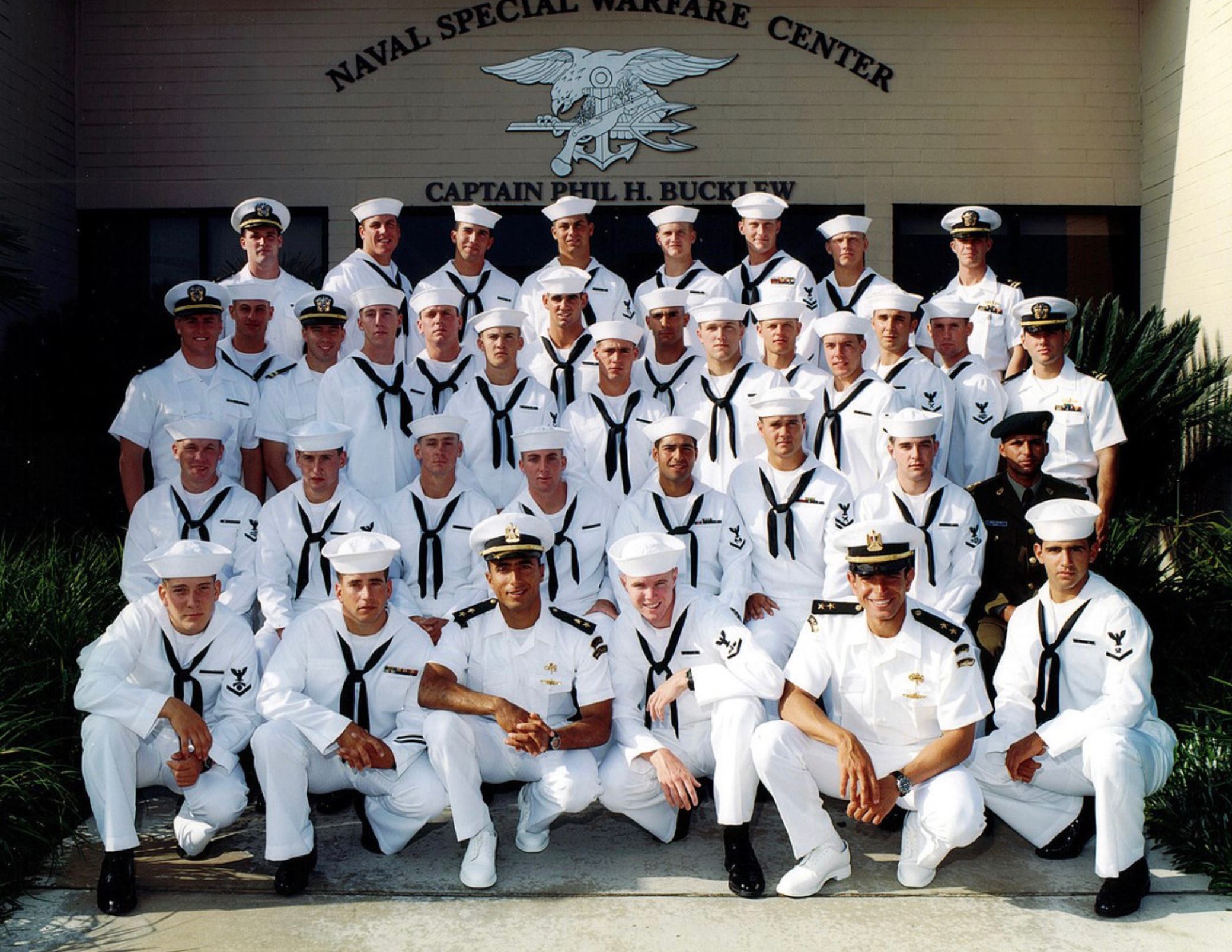
SEAL Class 236. Murphy is in the back row, all the way to the left.
BUD/S and the early Navy
Murphy’s early Navy career wasn’t a parade of cinematic action so much as a ledger of disciplined preparation: deployments, specialty training, and the quiet accumulation of leadership by example. Those who served with him recall a calm decisiveness; he wasn’t loud. He was someone who read maps, calculated odds, and put others first. That temperament — stoic, steady, quietly ferocious — is what became crucial on the mountain in Afghanistan.
Advertisement
Operation Red Wings — the crucible
On June 27–28, 2005, Murphy led a four-man SEAL reconnaissance element tasked with locating a high-value insurgent in the Kunar Province. The team was spotted, later ambushed, and pinned in a narrow gulley under overwhelming fire. With communications failing, Murphy moved into the open — twice according to the official account — to gain a signal for a satellite phone and call for a quick reaction force. He exposed himself to enemy fire to make that call; despite being critically wounded, he continued the transmission until he lost consciousness. Three SEALs were killed in the contact; Murphy’s final acts of leadership — sacrificing his own cover to save his men’s only chance of rescue — were later judged to be “above and beyond the call of duty.”
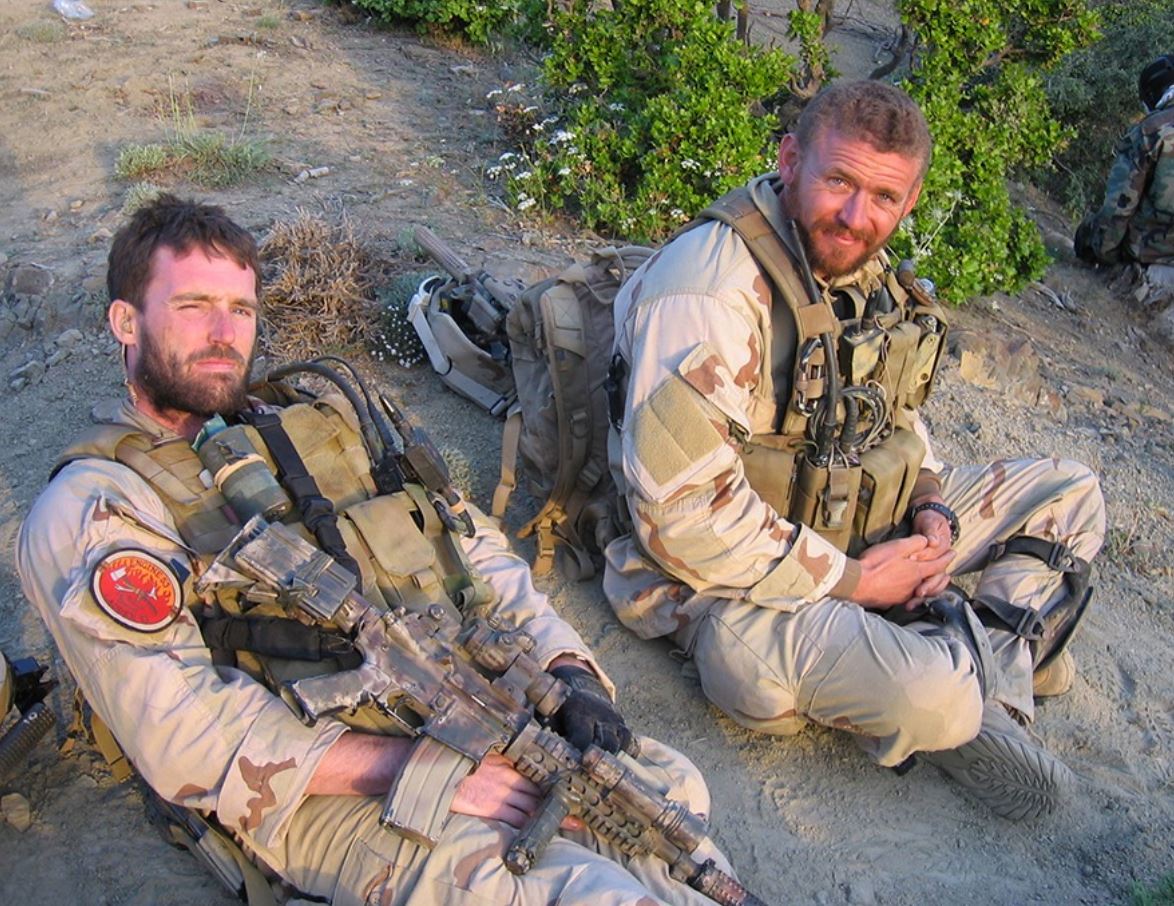
Murphy (left) is shown here with fellow SEAL Matt Axelson in Afghanistan. Axelson was KIA during Operation Red Wings. Image Credit: Murph Foundation
Medal of Honor and how he’s remembered
For his conspicuous gallantry, Michael P. Murphy was posthumously awarded the Medal of Honor — the Navy’s citation recounts the decision-making, the selflessness, the final phone call that was the team’s only lifeline. He is remembered not as an abstract hero but as a man: son, brother, Penn Stater, and leader who chose to be the last line between his teammates and annihilation. His story rippled outward — a destroyer (USS Michael Murphy), memorials at Penn State, a post office and park in Patchogue, and even a workout named “Murph,” all attest to a legacy that is both concrete and communal.
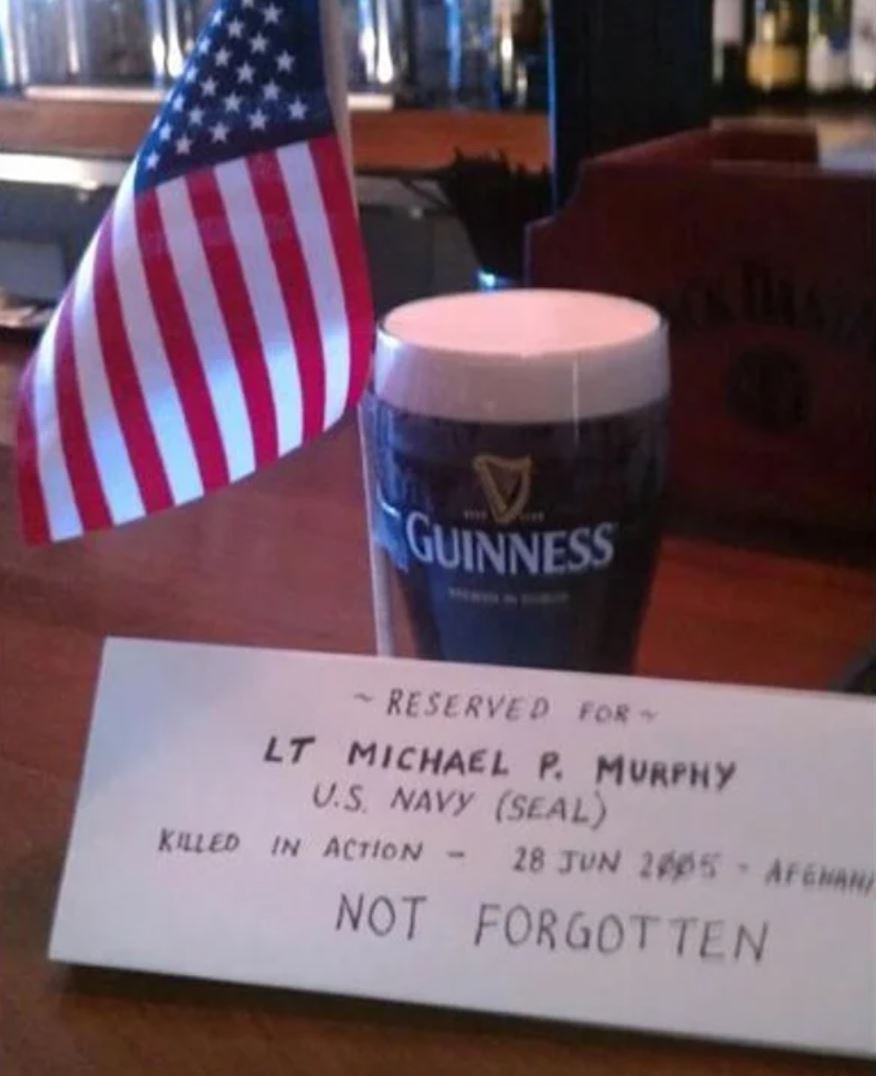
A Newtown, CT bar left a “Reserved” sign along with instructions for a random person to be bought a Guinness every hour. When the surprised bar patron asked who it was from, they were to be told it was from LT. Michael P. Murphy and then pointed to the sign. Image Credit: Huff Post
Burial and legacy
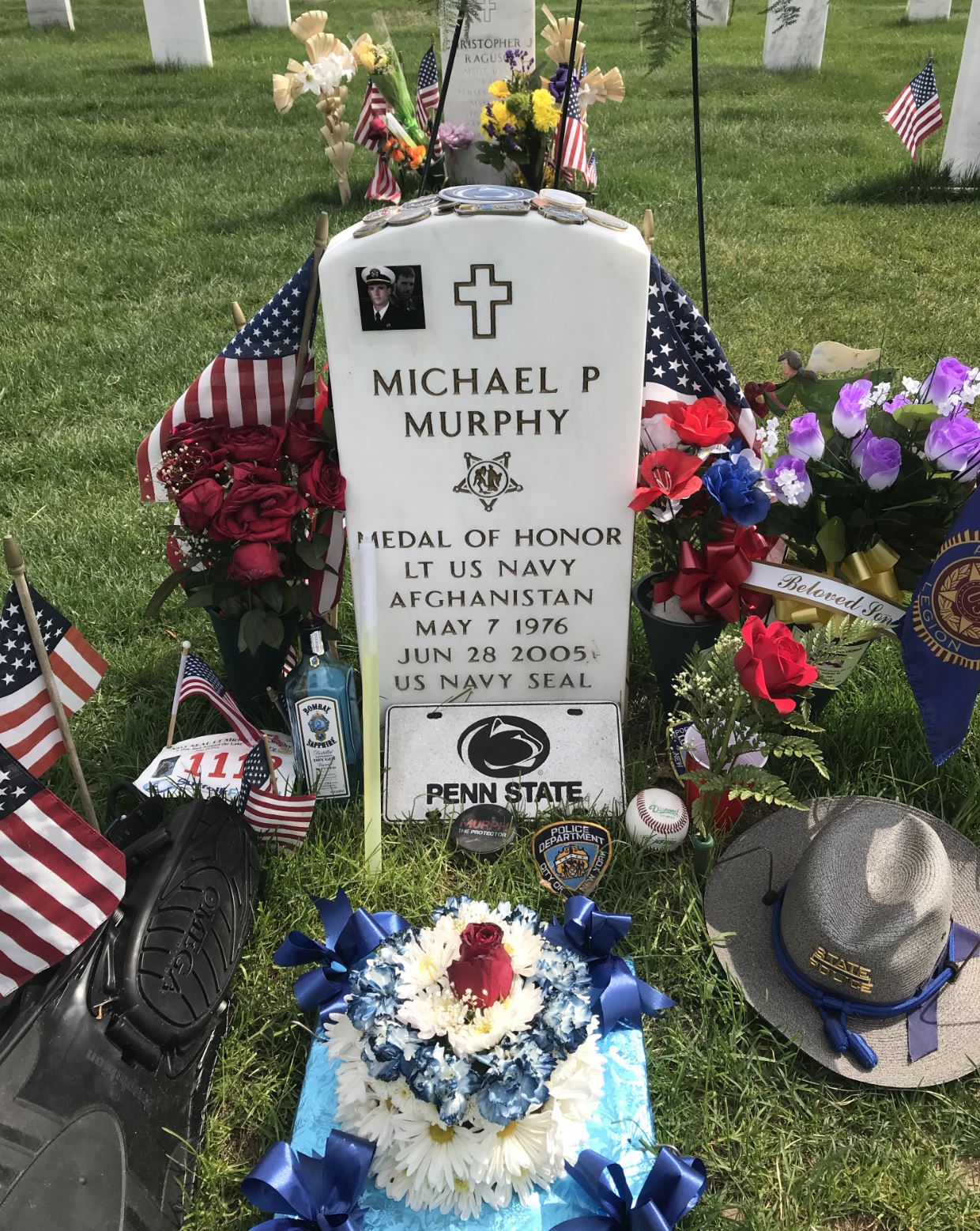
Murphy was laid to rest at Calverton National Cemetery on Long Island, surrounded by family and a country suddenly more aware of what those quiet, decisive choices cost. Friends and loved ones describe his legacy the way men who survive hard missions do: not in medals but in memory and in small rituals — visits to his gravesite, the preservation of his letters, the museum his parents helped build. Veterans and civilians alike invoke Murph as the distilled version of a life well-lived: courage, choice, and the willingness to go where others could not.
Advertisement
Murphy’s final resting place is at Calverton National Cemetery. Image Credit: Find a Grave
Murphy’s story is built from ordinary elements — a boy who wouldn’t look away, a family who feared the cost, and a man who chose a dangerous clarity over comfortable certainty.
That choice is his monument, and we honor him today.
Michael Patrick Murphy never looked away, not from bullies, not from danger, not from duty.
He was born May 7, 1976, in Smithtown, New York, and raised in Patchogue on Long Island — a kid who learned early that you stood up for people who couldn’t stand up for themselves. The young man of Irish ancestry was unsurprisingly given the nickname “Murph” and, in middle school, he earned a reputation as “The Protector” after physically intervening when a classmate with special needs was being bullied. Murphy left Patchogue for Penn State, where he graduated in 1998 with degrees in political science and psychology, and where classmates remember a quietly intense young man who loved the outdoors and team competition.
A protector at heart
Friends and family tell the same types of stories. I had the unique opportunity to talk about Mike with his father, a number of years after he passed. It was moving and informative.
There was Murph the lifeguard, Murph the teammate, Murph the kid who refused to watch cruelty happen. Those early instincts matter because they map directly onto the choice he made later: when others needed someone to take the risk, Murph’s hand went up. His father, Daniel — a wounded Vietnam veteran and a lifelong public servant — understood the cost of combat and did not want his son to follow him into military service; Michael’s choice was therefore not born of family pressure but of personal conviction. That resistance at home only sharpened the decision: he wanted purpose, not a desk.
Choosing the SEALs: a different path
After Penn State, Murphy turned down several law-school offers and instead enlisted in the Navy. He volunteered for BUD/S — the brutal Basic Underwater Demolition/SEAL training that breaks men in order to build teams. He graduated with Class 236 and went on to earn his SEAL Trident. The man who had once been a lifeguard became a student of cold water, cramped subs, and close-of-contact violence — and he carried into that world the same instinct to shield the vulnerable.
SEAL Class 236. Murphy is in the back row, all the way to the left.
BUD/S and the early Navy
Murphy’s early Navy career wasn’t a parade of cinematic action so much as a ledger of disciplined preparation: deployments, specialty training, and the quiet accumulation of leadership by example. Those who served with him recall a calm decisiveness; he wasn’t loud. He was someone who read maps, calculated odds, and put others first. That temperament — stoic, steady, quietly ferocious — is what became crucial on the mountain in Afghanistan.
Operation Red Wings — the crucible
On June 27–28, 2005, Murphy led a four-man SEAL reconnaissance element tasked with locating a high-value insurgent in the Kunar Province. The team was spotted, later ambushed, and pinned in a narrow gulley under overwhelming fire. With communications failing, Murphy moved into the open — twice according to the official account — to gain a signal for a satellite phone and call for a quick reaction force. He exposed himself to enemy fire to make that call; despite being critically wounded, he continued the transmission until he lost consciousness. Three SEALs were killed in the contact; Murphy’s final acts of leadership — sacrificing his own cover to save his men’s only chance of rescue — were later judged to be “above and beyond the call of duty.”
Murphy (left) is shown here with fellow SEAL Matt Axelson in Afghanistan. Axelson was KIA during Operation Red Wings. Image Credit: Murph Foundation
Medal of Honor and how he’s remembered
For his conspicuous gallantry, Michael P. Murphy was posthumously awarded the Medal of Honor — the Navy’s citation recounts the decision-making, the selflessness, the final phone call that was the team’s only lifeline. He is remembered not as an abstract hero but as a man: son, brother, Penn Stater, and leader who chose to be the last line between his teammates and annihilation. His story rippled outward — a destroyer (USS Michael Murphy), memorials at Penn State, a post office and park in Patchogue, and even a workout named “Murph,” all attest to a legacy that is both concrete and communal.
A Newtown, CT bar left a “Reserved” sign along with instructions for a random person to be bought a Guinness every hour. When the surprised bar patron asked who it was from, they were to be told it was from LT. Michael P. Murphy and then pointed to the sign. Image Credit: Huff Post
Burial and legacy
Murphy was laid to rest at Calverton National Cemetery on Long Island, surrounded by family and a country suddenly more aware of what those quiet, decisive choices cost. Friends and loved ones describe his legacy the way men who survive hard missions do: not in medals but in memory and in small rituals — visits to his gravesite, the preservation of his letters, the museum his parents helped build. Veterans and civilians alike invoke Murph as the distilled version of a life well-lived: courage, choice, and the willingness to go where others could not.
Murphy’s final resting place is at Calverton National Cemetery. Image Credit: Find a Grave
Murphy’s story is built from ordinary elements — a boy who wouldn’t look away, a family who feared the cost, and a man who chose a dangerous clarity over comfortable certainty.
That choice is his monument, and we honor him today.
Murph never looked away, and neither should we.
Advertisement
What readers are saying
Generating a quick summary of the conversation...
This summary is AI-generated. AI can make mistakes and this summary is not a replacement for reading the comments.










COMMENTS