

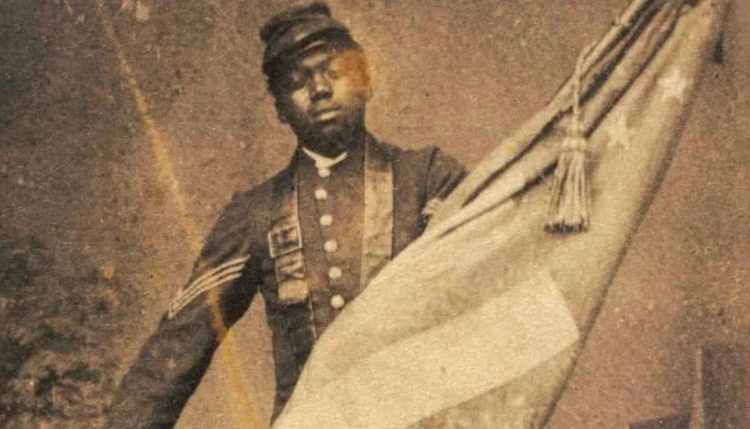
His actions during the battle preserved the regiment’s colors—a symbol of unity and morale—and inspired both his fellow soldiers and the nation.
A Historic Medal of Honor
Carney was promoted to the rank of sergeant for his bravery. However, it would take decades for the full weight of his heroism to be officially recognized. On May 23, 1900, nearly 37 years after the assault on Fort Wagner, Carney received the Medal of Honor.
The citation read in part: “When the color sergeant was shot down, this soldier grasped the flag, led the way to the parapet, and planted the colors thereon. When the troops fell back he brought off the flag… under a fierce fire in which he was twice severely wounded.”
Carney’s actions in July 1863 make him the first African American whose deeds merited the nation’s highest military decoration. His valor marked a pivotal moment in the long struggle for racial equality in the U.S. armed forces.
Life After the War
Carney was honorably discharged in 1864 due to the severity of his wounds. Returning to New Bedford, he resumed civilian life with dignity and purpose. He worked for several decades as a mail carrier for the U.S. Postal Service—becoming one of the first African American letter carriers in Massachusetts—and later as a messenger at the Massachusetts State House.
In addition to his civil service, Carney remained active in veterans’ affairs and education. He spoke often about the importance of Black military service and civic responsibility, especially to young people. He was also involved in various fraternal and charitable organizations that supported African American communities.
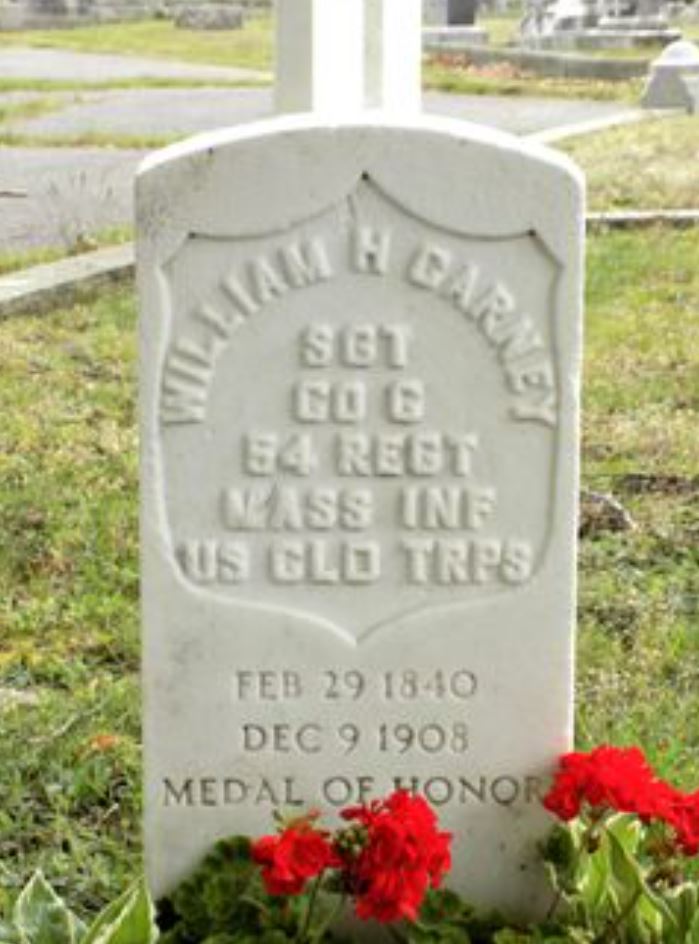
Carney died on December 9, 1908, from complications after an elevator accident. He was buried with full military honors in Oak Grove Cemetery in New Bedford, where his gravestone is inscribed with the words “Medal of Honor”.
Enduring Legacy
William H. Carney’s story is one of profound bravery and enduring principle. His commitment to preserving the Union flag under fire served not only as an act of wartime gallantry but as a powerful symbol of African American patriotism in an era when their humanity was still fiercely contested.
Today, his legacy endures in schools, monuments, and military commemorations. Carney’s actions at Fort Wagner helped change the course of public opinion about Black soldiers and laid the groundwork for a more inclusive vision of American heroism.
His life reminds us that courage is not confined by race or rank. It is defined by action—and in William Carney’s case, by a flag that never touched the ground.
Bonus Graphic Novel
SOFREP is proud to be partnering with the Association of the United States Army (AUSA) to bring you this free graphic novel highlighting the bravery of William H. Carney. It is part of their Medal of Honor Graphic Novel Series, and we sincerely thank them for sharing it with all of us.
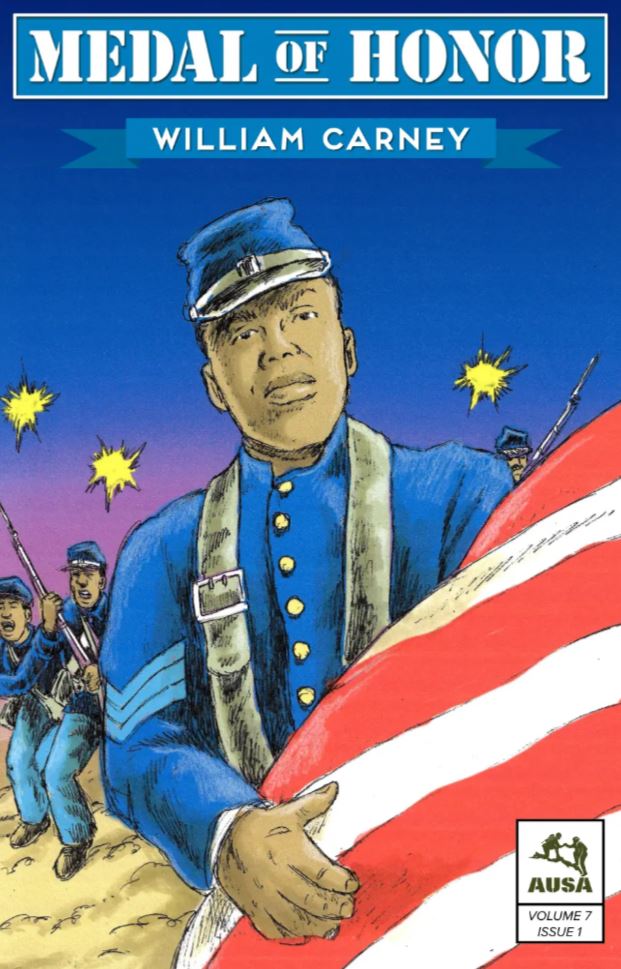
https://77a9072e.flowpaper.com/MoHWilliamCarney/#page=1








COMMENTS