Right, Jack. But what if we’re shrugging this off a little too fast?
In 2013, Jack Murphy warned SOFREP readers not to treat rumors and pseudo-science like evidence in Michael Hastings’ death. He was right. But in 2025, it is better understood how connected cars are rolling networks, and that changes what is technically plausible. Not proven. Plausible. A disciplined “what if” is not a conspiracy. It is threat modeling.
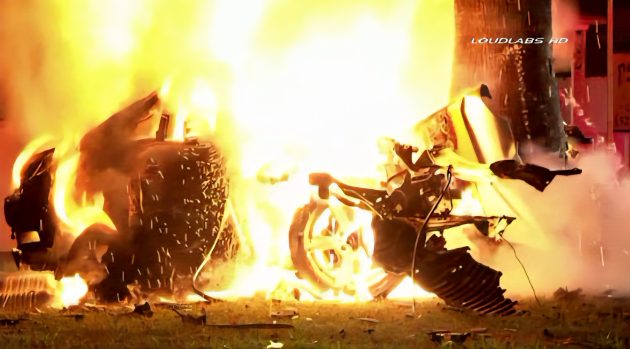
Back in 2013, Murphy, a well-respected former writer here at SOFREP, wrote “The Death of Michael Hastings.” Hastings, the Rolling Stone journalist tied to the McChrystal fallout, had died in a violent single-vehicle crash in Los Angeles. The internet immediately lit up with assassination talk. Jack’s response was blunt. Conspiracies exist, but you do not get to declare one because a story feels spicy. Evidence still counts.
He proved his point by putting in the work. One viral claim said an engineering professor had calculated Hastings was only doing around 35 miles per hour. Jack contacted the professor and the university. The school said the professor had been misquoted and had no knowledge of the case. That is what real reporting looks like. Check the source. Check the claim. Torch the nonsense. Then he ended with a familiar warning to the conspiracy crowd: c’mon folks.
That piece still holds up. Hastings’ death was ruled an accident and no publicly released forensic record has proven otherwise. If someone wants to claim murder, they still own the burden of proof. Full stop.
But … and here’s the butt:
This is not about validating internet conspiracies. It is about updating assumptions. In 2013, most people still pictured cars as mechanical machines with a radio and maybe Bluetooth connectivity. In 2025, we understand cars are computer networks with an engine bolted on. Newer cars have dozens of electronic control units, internal network buses, and gateways that route traffic. They also have multiple ways to talk to the outside world, depending on the platform and trim. That design is normal now, and it increases the number of ways a car can be manipulated into doing the wrong thing, compared to what most people understood in Hastings’ era.
If a sophisticated actor ever wanted a crash to look like an accident, they wouldn’t need to “remote drive” a car like a video game. They would only need a narrow window where the vehicle behaves incorrectly at speed, long enough for physics to do the rest. The credible model is cyber intrusion into a connected subsystem, then transitioning inward producing a short, controlled effect.
That is not easy. It is platform-specific. It requires targeting, access, mapping, and testing. Access is the whole game, either physical access at some point in the vehicle’s life cycle or a weakness in a connected component that already talks to the outside world. Mapping and testing are key. How do modules behave when sensors disagree? What triggers fail-safes? What gets logged? What self-corrects? What sets off warning lights? Professionals do not gamble on the first try.
Then comes operational cover. If the goal is deniability, the outcome must read like reckless driving, mechanical failure, or human error. Boring is the objective. And if post-impact fire destroys data, it degrades proof on both sides. It can erase traces of wrongdoing, but it can also erase the evidence needed to validate any conspiracy claim.
So yes, Jack was right to mock bad science. But, if your entire rebuttal in 2025 is “a connected car could never be influenced by a sophisticated actor,” c’mon folks.
Already have an account? Sign In
Two ways to continue to read this article.
Subscribe
$1.99
every 4 weeks
- Unlimited access to all articles
- Support independent journalism
- Ad-free reading experience
Subscribe Now
Recurring Monthly. Cancel Anytime.
Right, Jack. But what if we’re shrugging this off a little too fast?
In 2013, Jack Murphy warned SOFREP readers not to treat rumors and pseudo-science like evidence in Michael Hastings’ death. He was right. But in 2025, it is better understood how connected cars are rolling networks, and that changes what is technically plausible. Not proven. Plausible. A disciplined “what if” is not a conspiracy. It is threat modeling.
Back in 2013, Murphy, a well-respected former writer here at SOFREP, wrote “The Death of Michael Hastings.” Hastings, the Rolling Stone journalist tied to the McChrystal fallout, had died in a violent single-vehicle crash in Los Angeles. The internet immediately lit up with assassination talk. Jack’s response was blunt. Conspiracies exist, but you do not get to declare one because a story feels spicy. Evidence still counts.
He proved his point by putting in the work. One viral claim said an engineering professor had calculated Hastings was only doing around 35 miles per hour. Jack contacted the professor and the university. The school said the professor had been misquoted and had no knowledge of the case. That is what real reporting looks like. Check the source. Check the claim. Torch the nonsense. Then he ended with a familiar warning to the conspiracy crowd: c’mon folks.
That piece still holds up. Hastings’ death was ruled an accident and no publicly released forensic record has proven otherwise. If someone wants to claim murder, they still own the burden of proof. Full stop.
But … and here’s the butt:
This is not about validating internet conspiracies. It is about updating assumptions. In 2013, most people still pictured cars as mechanical machines with a radio and maybe Bluetooth connectivity. In 2025, we understand cars are computer networks with an engine bolted on. Newer cars have dozens of electronic control units, internal network buses, and gateways that route traffic. They also have multiple ways to talk to the outside world, depending on the platform and trim. That design is normal now, and it increases the number of ways a car can be manipulated into doing the wrong thing, compared to what most people understood in Hastings’ era.
If a sophisticated actor ever wanted a crash to look like an accident, they wouldn’t need to “remote drive” a car like a video game. They would only need a narrow window where the vehicle behaves incorrectly at speed, long enough for physics to do the rest. The credible model is cyber intrusion into a connected subsystem, then transitioning inward producing a short, controlled effect.
That is not easy. It is platform-specific. It requires targeting, access, mapping, and testing. Access is the whole game, either physical access at some point in the vehicle’s life cycle or a weakness in a connected component that already talks to the outside world. Mapping and testing are key. How do modules behave when sensors disagree? What triggers fail-safes? What gets logged? What self-corrects? What sets off warning lights? Professionals do not gamble on the first try.
Then comes operational cover. If the goal is deniability, the outcome must read like reckless driving, mechanical failure, or human error. Boring is the objective. And if post-impact fire destroys data, it degrades proof on both sides. It can erase traces of wrongdoing, but it can also erase the evidence needed to validate any conspiracy claim.
So yes, Jack was right to mock bad science. But, if your entire rebuttal in 2025 is “a connected car could never be influenced by a sophisticated actor,” c’mon folks.










COMMENTS