
We spend billions ensuring our warfighters have the most advanced aircraft, precision-guided munitions, encrypted communications, and hardened vehicles on the planet. We test, retest, and certify every system that touches the battlefield.
But there is one system we rarely scrutinize with the same intensity.
Food.
Military readiness begins with what we feed the force. If we demand the highest standards for weapon systems, why not food?
Recent independent testing commissioned by the advocacy group Moms Across America examined a limited sample of military cafeteria meals and Meals, Ready-to-Eat. The study reported the presence of pesticide residues, heavy metals, and trace veterinary drugs in tested items. It also questioned mineral consistency in comparison to established USDA benchmarks.
Those findings deserve careful, independent review. They do not require alarmism. They require scrutiny.
Because whether one agrees with every conclusion in that report or not, the underlying issue is not controversial. The quality of inputs determines performance outputs. That principle governs aircraft maintenance, marksmanship, physical training, and logistics. It also governs nutrition.
Fuel Is Not a Side Issue
For years, we have framed food on SOFREP as operational fuel. Not lifestyle branding. Not wellness fashion. Fuel.
Macronutrient balance affects recovery. Micronutrient density influences immune resilience. Protein quality impacts muscle repair and cognitive steadiness under stress. Chronic exposure to low-quality ingredients does not create elite performance.
The military understands this in theory. Special operations units and high-performance communities increasingly work with nutritionists who treat food as a performance lever, not a cafeteria line afterthought.
Yet most large-scale procurement systems still operate on volume and cost efficiency first, nutrient density and sourcing transparency second.
That is not a moral failing. It is a structural lag.
And structural lag can be corrected.
Below Standard Does Not Mean Inevitable
If even a portion of the reported discrepancies between military meals and USDA composition standards holds true, that is not an indictment of the force. It is a procurement challenge.
American soldiers should not be consuming food that falls below basic nutrient benchmarks when alternatives exist.
They should not be dependent on opaque global supply chains when traceable domestic sourcing is available.
They should not be limited to highly processed rations when real-food, field-ready options can meet or exceed operational requirements.
The idea that substandard institutional food is unavoidable is outdated.
An Alternative Already Exists
This is where companies like Essential Provisions enter the conversation.
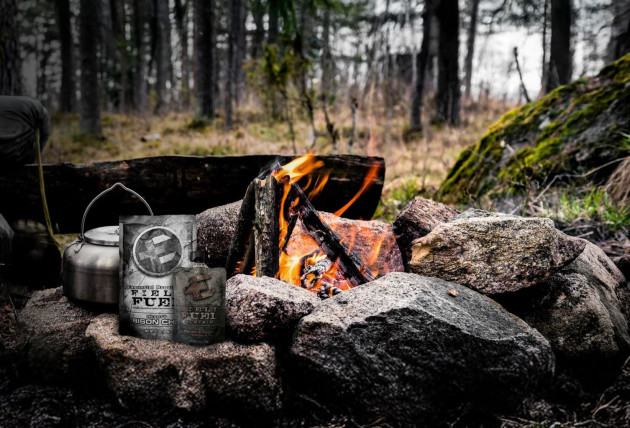
We have written before about Essential Provisions and its Field Fuel meals not as novelty rations, but as performance tools. Grass-fed, grass-finished bison. Regeneratively raised meat. No antibiotics. No added hormones. No industrial seed oils. Third-party testing. Real ingredients you can pronounce and trace.
The Base to Bellies initiative pushes the idea further, linking soil health to human performance and national resilience. That is not marketing language. It is a supply chain philosophy.
Essential Provisions meals are shelf-stable, field-ready, and built for operational use. They can be heated quickly or eaten cold. They deliver dense protein and meaningful calories without the crash associated with ultra-processed alternatives.
More importantly, they demonstrate that clean, traceable, nutrient-dense food can be produced at scale.
That shifts the debate from “Is this possible?” to “Why aren’t we doing it?”
Readiness Is Holistic
Readiness is not only about training hours and equipment availability rates. It is metabolic health, hormonal balance, immune function, and sustained cognitive clarity.
When service members rely on institutional food as their primary intake during training cycles and deployments, that intake becomes part of the readiness equation.
No one is arguing that every dining facility can flip a switch overnight. No one is suggesting that procurement systems change in a single budget cycle.
But we should be asking harder questions.
If we can demand precision manufacturing tolerances measured in thousandths of an inch for a weapons component, we can demand transparent sourcing and nutrient integrity in the meals that fuel the operator pulling the trigger.
Essential Provisions is not the only company thinking in these terms. But it is a clear example that higher standards are achievable now, not in some theoretical future.
And that alone changes the conversation.
Raise the Standard
American soldiers do not need substandard food. They do not need to accept lower nutrient density, unclear sourcing, or institutional complacency.
They deserve the same seriousness applied to their meals that we apply to their rifles, aircraft, and body armor.
Military readiness begins with what we feed the force.
Questions about sourcing and contamination deserve scrutiny. Procurement standards deserve modernization. Regenerative, traceable, nutrient-dense alternatives deserve consideration.
If we demand the highest standards for weapon systems, why not food?








COMMENTS