

On February 25, 2026, the U.S. Treasury Department announced sanctions against more than 30 individuals, entities, and vessels tied to Iran’s shadow fleet and networks supplying inputs for ballistic missile and advanced conventional weapons production. The State Department issued a parallel announcement describing the action as an effort to disrupt Iran’s weapons procurement networks.
Sanctions do not stop missiles already built. They are intended to degrade procurement pipelines over time. That is a long game.
At the same time, regional instability has created friction in global logistics. Reporting has documented that Red Sea attacks and associated maritime risk have forced the rerouting of vessels and disrupted supply chains. U.S. Transportation Command has acknowledged adapting operations and expanding information-sharing in response to these disruptions.
That’s important because advanced missile systems rely on precision components, specialty materials, and complex subcontractor networks. Even when factories are operational, logistics disruptions can slow throughput.
What This Means for U.S. Bases
The following is my informed analysis based on publicly documented inventory strain and production timelines.
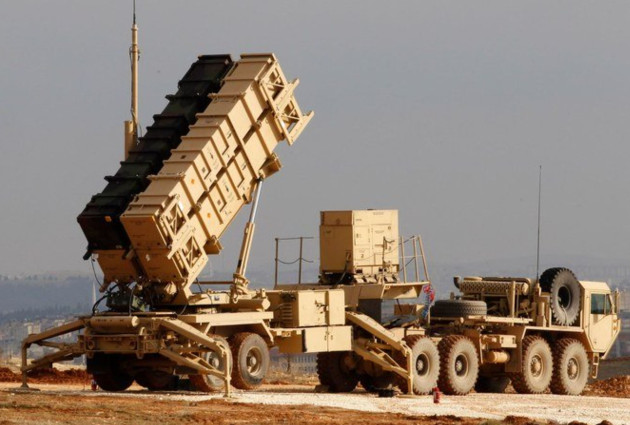
U.S. bases in the Middle East rely on layered air defense, including Patriot, THAAD, and Aegis-equipped platforms. These systems are highly capable. Their limiting factor in sustained operations is magazine depth, the number of interceptors immediately available, and the speed at which they can be replaced.
If interceptor inventories are tight relative to demand, commanders face tradeoffs.
One likely adjustment is prioritization. High-value nodes such as major airfields, command centers, and logistics hubs would logically receive the densest defensive coverage. Smaller facilities may rely more heavily on early warning, dispersal, and passive defense measures. That is not evidence of weakness. It is standard risk management under constrained resources.
Another likely effect is increased emphasis on “left-of-launch” options, striking launchers, storage sites, and command networks before missiles are fired. While no official statement ties current planning directly to inventory concerns, it is a well-established principle of air and missile defense that reducing inbound volume decreases interceptor expenditure.
Finally, naval logistics impose their own realities. Vertical launch systems on surface combatants cannot be rapidly reloaded in combat conditions at sea in the same way small arms are replenished. Reload timelines and port access, therefore, influence operational endurance. This is a general operational fact about modern naval missile systems.
None of this suggests imminent collapse. It does underscore that sustained high-tempo missile exchanges stress even advanced defense architectures.
What This Means for Allies
Allies in the region depend on a mix of national systems and U.S.-supplied interceptors. When production ramps are underway but not yet realized, inventory allocation becomes a strategic decision.
The announced PAC-3 MSE production expansion signals recognition of allied demand as well as U.S. requirements. However, production increases measured in years do not immediately solve near-term consumption spikes.
In a prolonged missile exchange, allied governments may push for deeper stockpiles, co-production arrangements, and forward positioning of additional U.S. assets. From Washington’s perspective, those decisions involve balancing Middle East commitments with global requirements in other theaters.
Again, this is an analysis, not a forecast of failure. It reflects how industrial timelines intersect with operational tempo.
The Blunt Assessment
A missile supply chain interruption does not always look like a destroyed WWII factory. It can look like inventories declining faster than they are replenished. It can look like sanctions slowly constricting procurement networks. It can look like shipping lanes rerouted and delivery timelines stretched.
The hard fact is this: interceptor inventories are under documented strain, production is being expanded but will take time, and sanctions are targeting adversary procurement networks even as regional logistics face disruption.
The sky over the Middle East is defended by technology.
The endurance of that defense is determined by industry, shipping, and magazine depth.
That is not dramatic. It is structural.
And structure, not headlines, determines how long the shield can stay thick.








COMMENTS