Israeli airstrikes on Iranian targets have intensified, with the U.S. expanding its military operations in the region. The conflict is widening, affecting multiple fronts including Lebanon and Azerbaijan, while NATO faces divisions over the military campaign against Iran.
Key points from this article:
The Israeli airstrikes targeted missile infrastructure and air defense systems in Tehran, marking one of the most sustained waves of air operations in years.
How the conflict affects Azerbaijan: Iranian drones struck Azerbaijan's Nakhchivan exclave, injuring civilians and raising concerns of a broader regional escalation.
Why this matters: The widening conflict disrupts global energy supply chains, particularly as Azerbaijan hosts critical oil and gas pipelines that bypass Russia, and highlights divisions within NATO regarding military support for the U.S.-Israeli campaign.
Updating summary...
Morning Brief: Iran Bombing Campaign Intensifies as War Spreads Across the Region
Benjamin Reed
Speed
1x
Listen
COMMENTS
Israeli and U.S. airstrikes across Iran intensify as the conflict spreads into Lebanon and Azerbaijan, disrupts Gulf aviation and shipping routes, exposes divisions among NATO allies, and coincides with renewed U.S.–Venezuela diplomatic and energy negotiations.
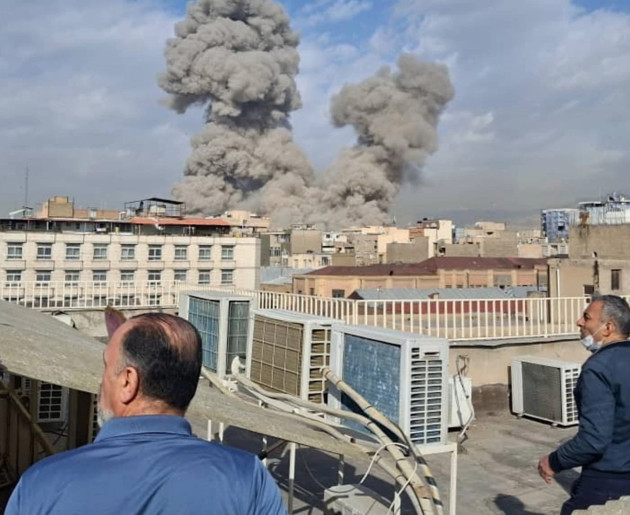
Israeli airstrikes hitting targets in Iran during the opening phase of the conflict. Source: Financial Times.
Iran: Israeli Strikes Intensify as Regional Fronts Expand
Israeli airstrikes continued to pound Iranian targets overnight as the United States signaled that the joint campaign against Tehran is entering a more aggressive phase. Explosions were reported across parts of Tehran early Friday as Israeli aircraft targeted missile infrastructure and air defense systems, while additional strikes hit Hezbollah-linked positions in Lebanon as the conflict widened across multiple fronts.
Advertisement
The United States has also expanded its own military operations in the region. American forces reportedly struck an Iranian drone carrier at sea, part of a broader effort aimed at degrading Tehran’s naval capabilities and limiting its ability to launch drone attacks across the Gulf and Arabian Sea.
Defense officials in Washington warned that the tempo of attacks is likely to increase in the coming days as the United States and Israel continue targeting Iran’s missile launchers, command facilities, and air defense networks. The latest strikes mark one of the most sustained waves of air operations in the region in years.
Iran has continued launching retaliatory missile and drone strikes across the region, including attacks aimed at countries hosting U.S. military bases. Air defense systems in several Gulf states have intercepted incoming drones and missiles in recent days as the conflict expands beyond the initial Israeli–Iranian confrontation.
Advertisement
At the same time, Israeli forces have widened operations against Iranian-aligned groups in Lebanon. Airstrikes have struck Hezbollah positions in Beirut’s southern suburbs following evacuation warnings issued to residents, while fighting continues along the Israeli–Lebanese border.
This morning, US/Israeli forces mounted a series of airstrikes in Iran’s capital, Tehran.
The war also risks expanding northward after Iranian drones struck Azerbaijan’s Nakhchivan exclave, damaging the region’s international airport and injuring civilians. Azerbaijani officials said the drones crossed from Iranian territory and struck infrastructure near the airport complex.
Baku condemned the attack as a violation of its sovereignty and summoned Iran’s ambassador for an explanation. Azerbaijan’s Ministry of Defense warned that the strike would not go unanswered, raising concerns that the war could spread into the South Caucasus.
Tehran has denied responsibility for the incident, though the attack comes amid long-standing tensions between the two countries. Azerbaijan maintains close security and intelligence ties with Israel and has become a major buyer of Israeli drones and missile systems, a relationship Iran has repeatedly criticized.
The location of the strike adds to the geopolitical risk. Nakhchivan is an Azerbaijani exclave bordered by Iran, Armenia, and Turkey, placing the incident along one of the region’s most sensitive strategic corridors. Any escalation there could draw in additional actors, particularly Turkey, which maintains close military ties with Azerbaijan.
Energy infrastructure also raises the stakes. Azerbaijan hosts pipelines carrying oil and gas from the Caspian basin to European markets, including routes that bypass Russia. Instability along those corridors would have implications for global energy supply at a time when markets are already reacting to disruptions linked to the broader war.
NATO Divisions Emerge Over Iran Campaign
The widening war is also exposing divisions within the NATO alliance. Spain’s government publicly rejected claims by NATO Secretary General Mark Rutte that there is broad support among alliance members for the military campaign against Iran.
Spanish officials said Madrid does not support the conflict and will not permit U.S. forces to use joint military facilities on Spanish territory for operations linked to the war. Spain hosts several bases used by American forces, including the naval facility at Rota and Morón Air Base, both of which play key roles in U.S. military operations in the Mediterranean.
The dispute highlights differing views among European governments about how far the alliance should align itself with the expanding U.S.–Israeli military campaign. While some NATO members have backed Washington’s actions, others have urged restraint and warned that the war risks further destabilizing the Middle East.
Spain has called for de-escalation and renewed diplomatic engagement, reflecting broader concerns within parts of Europe that the conflict could expand beyond its current fronts and draw additional countries into direct confrontation with Iran.
Civilian Strike Under Investigation
Meanwhile, U.S. officials are investigating reports that an airstrike on a school in southern Iran may have been caused by American munitions. Early assessments by U.S. investigators suggest it is possible that the strike was carried out by U.S. forces, though the investigation remains ongoing.
Defense officials say the review is examining targeting data and weapon system records to determine what caused the explosion. No final determination has been made, and officials have not confirmed whether the site was near military infrastructure or whether the strike may have been the result of a misidentification or secondary detonation.
Civilian casualties have been reported in several areas of Iran since the bombing campaign began, though exact figures remain difficult to verify amid the intensity of ongoing strikes.
Regional Infrastructure Disruptions
The widening conflict is already affecting infrastructure beyond the battlefield. Aviation authorities across the Gulf have reported significant disruptions to commercial air traffic as airlines reroute flights around Iranian and Iraqi airspace.
Dubai International Airport, one of the world’s busiest aviation hubs, slowed operations as carriers adjusted routes and delayed departures while regional airspace conditions remained unstable. Airlines including Emirates have begun gradually restoring flights, though schedules remain disrupted due to the security environment across the region.
The aviation disruptions highlight how the conflict is beginning to affect global transportation corridors and commercial networks. As military operations continue across Iran, Lebanon, and surrounding regions, the risk of further spillover into civilian infrastructure and international transit routes remains high.
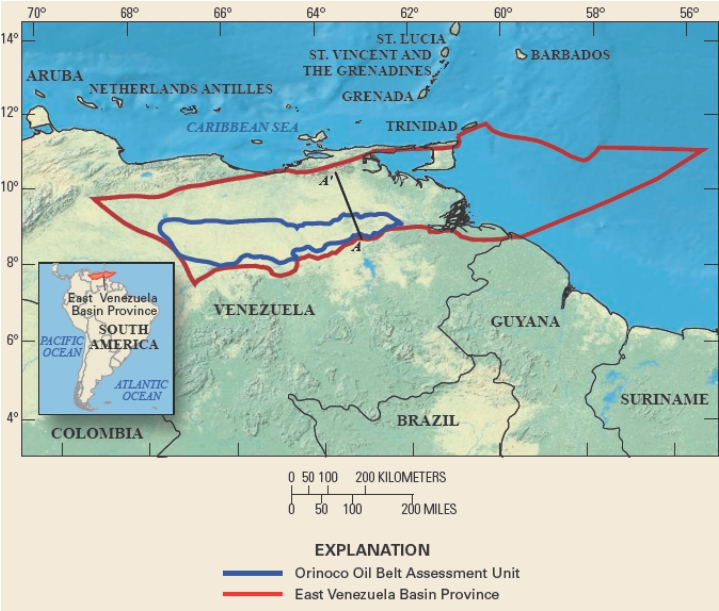
Map showing the U.S. Geological Survey assessment unit of the Orinoco tar sands belt in Venezuela, one of the world’s largest concentrations of extra-heavy crude oil. Source: U.S. Geological Survey (USGS).
Venezuela: Diplomatic Reset and Energy Deals Signal Strategic Reopening
The United States and Venezuela are moving toward renewed diplomatic engagement after years of frozen relations, signaling a shift in Washington’s posture toward the oil-rich South American country. Officials from both governments confirmed this week that discussions are underway to restore diplomatic and consular ties, a step that could reopen embassies and normalize communications between the two countries.
The diplomatic freeze dates back to 2019, when Washington cut formal relations with Caracas amid sanctions targeting the government of Nicolás Maduro. U.S. officials at the time recognized opposition leader Juan Guaidó as Venezuela’s legitimate interim president, setting off years of strained relations and economic isolation.
Recent developments suggest both governments are now recalibrating. American officials have framed renewed engagement as part of a broader effort to stabilize Venezuela’s political transition and encourage economic recovery after years of crisis. Venezuelan officials, meanwhile, have presented the talks as the beginning of a pragmatic phase of dialogue with Washington, focused on rebuilding diplomatic channels and reopening the country to international investment.
While the process remains in early stages, the discussions mark one of the most significant diplomatic openings between the two countries in nearly a decade. Restoring formal diplomatic ties would allow both governments to manage issues ranging from migration and sanctions enforcement to energy cooperation.
Venezuela Opens Oil and Gas Sector to Foreign Investment
Energy remains the central driver behind the renewed engagement. Venezuela holds the world’s largest proven crude oil reserves, but years of sanctions, infrastructure decay, and financial isolation have sharply reduced the country’s production capacity.
In a sign that Caracas is attempting to rebuild the sector, Venezuelan authorities confirmed this week that the government and Shell are moving forward with agreements covering offshore gas development and oil projects. The deals include work tied to the Dragon gas field, an offshore deposit that could supply natural gas to neighboring Trinidad and Tobago.
The Dragon project has been under discussion for several years but stalled amid political uncertainty and sanctions. Development of the field could help feed gas into the Atlantic LNG complex in Trinidad, a major export hub in the Caribbean energy market.
Caracas has also begun pursuing broader reforms designed to attract international investors back into its energy industry. Proposed policy changes would lower taxes on oil projects, expand operational roles for foreign companies, and create new production-sharing frameworks aimed at increasing output.
These reforms come as the United States has begun cautiously relaxing certain sanctions restrictions to allow energy companies to resume limited activity in Venezuela under licensing agreements. The adjustments are intended to allow international firms to explore projects while still maintaining oversight over financial flows and political developments in the country.
Strategic Implications for Energy Markets and U.S. Policy
The evolving relationship carries significant implications for global energy markets and regional geopolitics. Venezuela’s oil sector once produced more than three million barrels per day but now operates far below that level after years of underinvestment and sanctions pressure.
If foreign investment returns at scale, the country could gradually restore production capacity over the coming years. Additional Venezuelan crude entering global markets would provide new supply at a time when energy markets remain sensitive to geopolitical disruptions.
For Washington, the renewed dialogue reflects a pragmatic calculation. Re-engaging with Caracas offers a potential pathway to diversify energy supply chains in the Western Hemisphere while reducing Venezuela’s reliance on partners such as China and Russia.
At the same time, U.S. officials remain cautious about the political trajectory inside Venezuela. Any sustained normalization will likely depend on the country’s ability to maintain internal stability and follow through on promised economic reforms.
The coming months will determine whether the diplomatic reopening translates into lasting economic partnerships. If the political transition holds and investment returns, Venezuela’s vast oil and gas reserves could once again become a meaningful factor in the global energy landscape.
Advertisement
What readers are saying
Generating a quick summary of the conversation...
This summary is AI-generated. AI can make mistakes and this summary is not a replacement for reading the comments.










COMMENTS