A fire erupted at the U.S. Embassy in Riyadh following an explosion amid escalating tensions between Israel and Iran, prompting heightened security measures for American facilities in the region. Israeli airstrikes have intensified against Iranian targets, raising concerns about potential retaliatory actions against U.S. interests.
Key points from this article:
The fire at the U.S. Embassy in Riyadh occurred after an explosion in the Diplomatic Quarter, with Saudi officials confirming no fatalities.
How the ongoing Israeli airstrikes in Tehran and Beirut affect regional stability, as Iranian officials warn of retaliation against U.S. bases if perceived support for Israel continues.
Why the incident at the embassy highlights the vulnerability of diplomatic infrastructure in secure zones, indicating a shift in the geographic scope of conflict between Israel and Iran.
Updating summary...
Morning Brief: Iran Conflict Escalates as U.S. Embassy in Riyadh Hit; Russia’s Ukraine Advance Slows
Benjamin Reed
Speed
1x
Listen
COMMENTS
A fire at the U.S. Embassy in Riyadh amid expanding Israeli strikes on Iran highlights rising regional risk, while Russia records its slowest advance in Ukraine since 2024, signaling strain across two active conflict theaters.
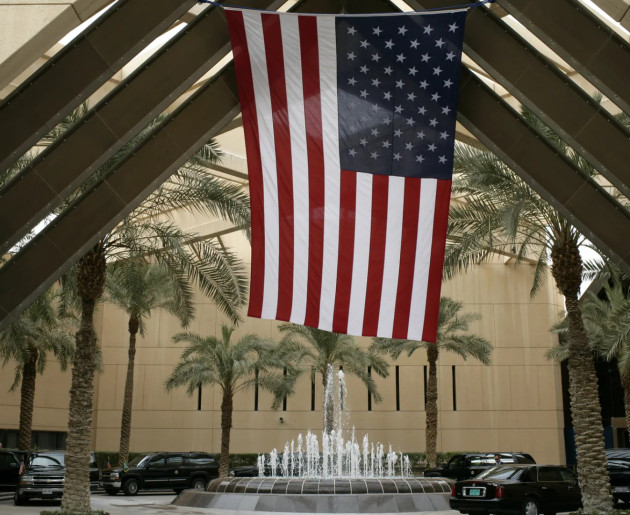
The U.S. Embassy in Riyadh, Saudi Arabia. Photo: Brooks Kraft LLC/Corbis via Getty Images.
Fire at U.S. Embassy in Riyadh as Israel Expands Strikes on Iran and Regional Alert Rises
(Editor’s note: Information updated as of 0600 EST, 3/3/2026)
Advertisement
A fire broke out inside the United States Embassy compound in Riyadh early Tuesday following an explosion that shook the Diplomatic Quarter, Saudi security officials confirmed. Emergency teams responded quickly and contained the blaze within the perimeter of the compound. No fatalities have been reported. An investigation into the cause of the explosion is ongoing.
The incident comes amid rapidly escalating hostilities between Israel and Iran and heightened warnings that U.S. facilities in the region could become targets for retaliatory action. American diplomatic missions and military installations across the Gulf have shifted to elevated force protection levels over the past 48 hours.
Saudi authorities have not publicly attributed responsibility for the explosion. The embassy complex sits inside one of the kingdom’s most secure zones, with layered perimeter controls and constant security patrols. The breach underscores the widening geographic scope of the confrontation and the difficulty of insulating diplomatic infrastructure from regional escalation.
Advertisement
Israeli Strikes Deepen Inside Iran
Overnight, Israeli aircraft conducted additional strikes in Tehran, with explosions reported in multiple districts associated with military and defense infrastructure. Iranian state media acknowledged impacts in several areas but did not release detailed damage assessments.
Israeli defense officials describe the ongoing air campaign as a sustained effort to degrade Iran’s missile production capacity, command networks, and air defense systems. Recent strikes have targeted facilities linked to weapons manufacturing and storage, as well as infrastructure connected to the Islamic Revolutionary Guard Corps.
Advertisement
The expansion of operations deeper into Iranian territory marks a shift from previous rounds of confrontation that were often confined to proxy positions in Syria or limited covert activity. The current campaign reflects direct engagement between the two states.
Iran has condemned the strikes and vowed retaliation. Senior Iranian officials warned that U.S. bases and allied infrastructure across the region could face consequences if Washington is perceived to support Israeli military operations.
Lebanon and the Proxy Front
Israeli aircraft also struck targets in Beirut, focusing on southern districts long associated with Hezbollah’s operational footprint. Lebanese security officials reported structural damage but did not immediately confirm casualty figures.
Advertisement
Hezbollah has historically responded to Israeli strikes with rocket or drone launches along the southern Lebanese border. While exchanges have remained limited in recent days, the organization retains significant short- and medium-range strike capability. Analysts assess that Hezbollah’s decision-making calculus will weigh domestic stability concerns against pressure to demonstrate alignment with Tehran.
Beyond Lebanon, Iranian-aligned militias in Iraq and Syria have shown signs of increased operational readiness. U.S. military installations in both countries have faced intermittent drone and rocket activity in recent days. Most incoming projectiles were intercepted, according to defense officials.
The current pattern reflects a familiar escalation ladder: indirect pressure applied through proxy networks while avoiding overt state-to-state declarations. That ambiguity complicates response thresholds and increases the risk of miscalculation.
European Posture and Gulf Security
France signaled that it stands ready to assist Gulf partners if hostilities expand further. French officials referenced existing defense commitments and regional security arrangements while urging restraint from all sides.
European governments are balancing public calls for de-escalation with practical contingency planning. Embassies across the region have reviewed evacuation procedures. Military planners are assessing air and maritime security corridors.
Gulf states face a delicate position. Saudi Arabia and the United Arab Emirates seek to prevent spillover into their own territory while maintaining strategic relationships with Washington. Both countries host critical infrastructure and international transit hubs that would be highly disruptive if targeted.
Aviation and Airspace Disruptions
Commercial aviation across the Middle East has experienced rolling disruptions as airlines reassess route safety. Several carriers temporarily suspended flights through Iranian and Iraqi airspace following missile launches and expanded air defense activity. Flights are gradually resuming in phases, subject to security review.
Regional hubs in Dubai, Abu Dhabi, and Doha have implemented delays and rerouted traffic. Insurance costs for flights operating near contested airspace have increased, adding financial strain to carriers already navigating volatile fuel markets.
The Gulf serves as a central node for global cargo traffic. Even short-term airspace instability affects supply chains across Europe and Asia. Energy transport routes remain open, but insurers are adjusting premiums in response to elevated risk assessments.
Maritime traffic through the Strait of Hormuz continues under enhanced naval surveillance. U.S. and allied naval assets remain deployed to ensure freedom of navigation.
Footage of an American C-RAM shooting down an incoming Iranian attack drone over northern Iraq this morning. pic.twitter.com/mKzK4RLsxG
President Donald Trump stated that current operations could extend for several weeks, describing U.S. involvement as focused on deterrence and protection of American personnel. Administration officials have emphasized that Washington does not seek territorial expansion but will respond to attacks on its facilities.
Military bases across the region have shifted to higher alert status. Additional air defense systems have been positioned around critical installations. While no large-scale troop deployments have been announced, posture adjustments indicate preparation for sustained tension.
The attack on the Riyadh embassy compound highlights the vulnerability of diplomatic infrastructure even in heavily secured capitals. It also signals that the confrontation is no longer confined to recognized battle zones. Diplomatic facilities, transit hubs, and economic corridors now sit inside the operational environment.
Strategic Outlook
The current moment reflects simultaneous escalation and restraint. Israel continues targeted strikes aimed at degrading Iranian military capacity. Iran signals readiness to retaliate while managing escalation thresholds. Proxy networks increase pressure without formal declarations of war.
Energy infrastructure has not suffered sustained damage, but risk premiums have widened. Aviation corridors remain functional but unstable. Diplomatic missions are tightening security protocols across multiple countries.
The coming days will determine whether the confrontation stabilizes into controlled cycles of retaliation or broadens into sustained multi-front engagement. Attribution of incidents, particularly the explosion at the U.S. Embassy in Riyadh, will heavily influence subsequent responses.
As of March 3, 2026, the regional security environment remains fluid. Military operations continue. Diplomatic channels remain active. Force protection measures are tightening across the Middle East as governments attempt to contain escalation while preparing for further shocks.
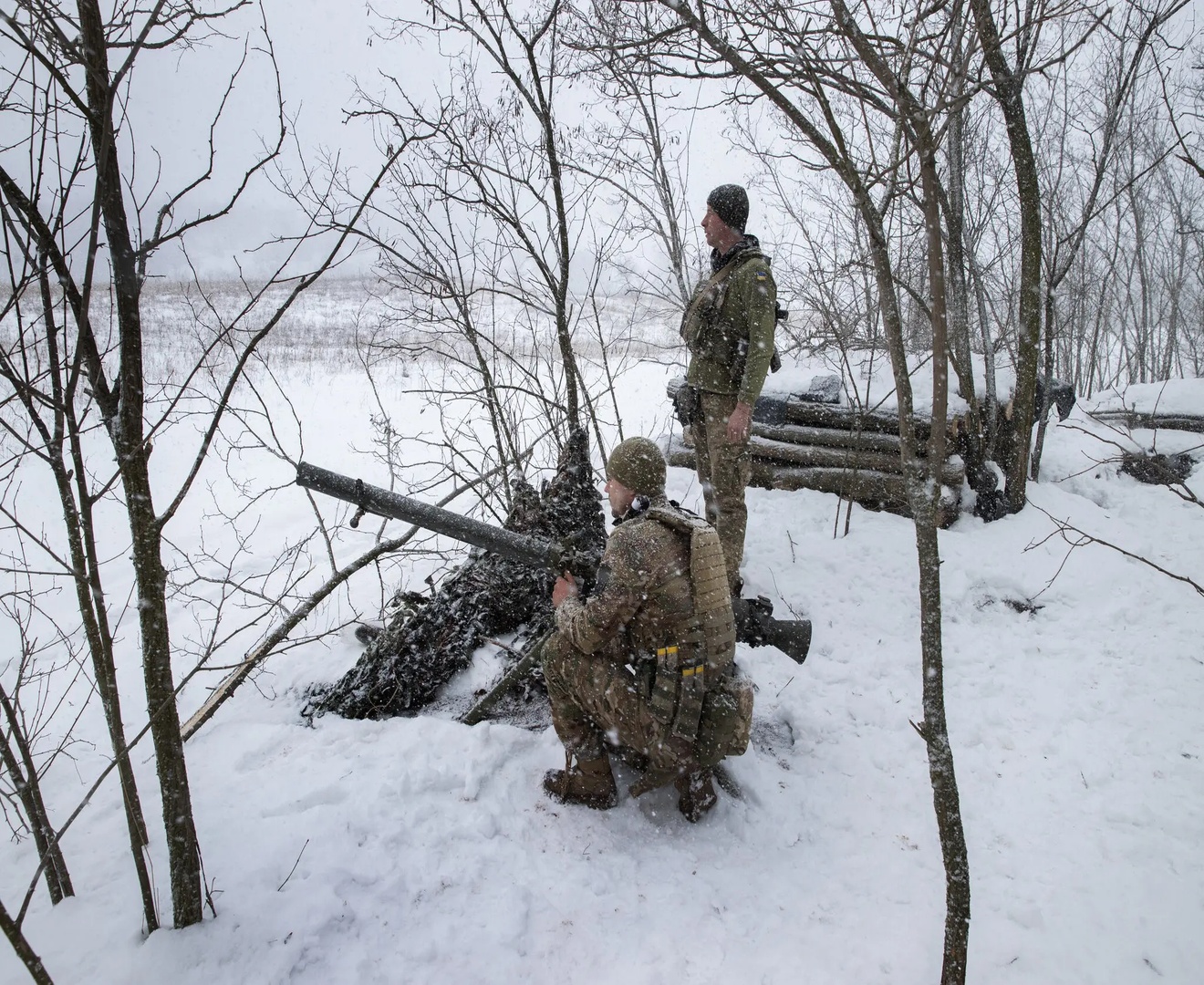
Ukrainian soldiers set up an SPG-9 anti-tank weapon during winter operations along the front line. Credit: Tyler Hicks/The New York Times
Ukraine’s Frontline Tempo Slows as Strike Campaign Expands Inside Russia
Russia’s rate of territorial advance in eastern Ukraine has slowed to its lowest pace since 2024, according to battlefield data cited by The Guardian. The findings come as Ukrainian forces report localized gains in the southeast and expand long-range strike operations inside Russia.
Russian units continue offensive operations along multiple axes in Donetsk and Luhansk but are capturing less ground per week than in previous phases of the war. Ukrainian defensive lines have held despite sustained pressure. The slowdown follows months of costly Russian assaults marked by high personnel losses and heavy equipment attrition.
Ukrainian officials point to improved integration of drones, counter-battery fire, and dispersed fortifications. The front has evolved into a dense surveillance environment where large armored movements rarely go undetected. Infantry-led assaults remain Russia’s primary method of advance.
At the same time, uncertainty surrounding access to Starlink satellite communications has complicated planning in some sectors. Ukrainian forces rely heavily on satellite connectivity for drone control, artillery coordination, and reconnaissance. Any disruption forces units to fall back on more vulnerable terrestrial systems.
While there has been no confirmed full cutoff, the episode underscores Kyiv’s dependence on external technology providers for critical battlefield functions.
Zaporizhzhia Gains and Southern Pressure
Reuters reported that Ukrainian forces achieved incremental advances in parts of the Zaporizhzhia region. Kyiv stated that assault units pushed Russian troops back from selected defensive positions.
The southern axis remains strategically important. Control of territory in Zaporizhzhia affects logistics routes supporting Russian forces in Crimea. Even limited Ukrainian gains increase strain on Russian command and require reinforcement of defensive belts.
Russia has constructed layered fortifications across the south since 2023, including trench systems, anti-tank obstacles, and extensive minefields. Any movement forward suggests localized weaknesses or improved Ukrainian breach tactics. The fighting remains positional; progress is measured in hundreds of meters rather than sweeping breakthroughs.
Bringing the War Home to Russia
Beyond the front line, Ukraine has expanded long-range strikes against military and industrial targets inside Russia. Analysts at the Atlantic Council assess that domestically produced Ukrainian missiles and drones are increasingly capable of reaching strategic infrastructure beyond border regions.
Targets have included oil refineries, ammunition depots, air bases, and command facilities. Ukraine frames these operations as lawful strikes on military objectives sustaining the invasion. Russian authorities have increased air defense deployments around key industrial hubs.
The strategic effect is cumulative. Each strike imposes repair costs and forces Russia to redistribute air defense assets away from the front. Protecting energy infrastructure deep inside Russia creates trade-offs in force allocation.
Russian President Vladimir Putin continues to frame the war as an existential confrontation with the West. Strikes on Russian territory reinforce that narrative domestically while exposing the limits of defensive coverage.
Operational Outlook
The current picture reflects constrained momentum. Russian offensives continue but at reduced tempo. Ukraine has held defensive lines, achieved selective gains in the south, and expanded cross-border strike capacity.
Russia retains manpower advantages and significant artillery stocks despite attritional losses. Ukraine’s ability to sustain its position will depend on communications reliability, ammunition supply, and force regeneration.
As of early March 2026, the conflict remains a war of endurance and adaptation. Territorial shifts are limited, but the battlespace continues to widen.
Advertisement
What readers are saying
Generating a quick summary of the conversation...
This summary is AI-generated. AI can make mistakes and this summary is not a replacement for reading the comments.










COMMENTS