

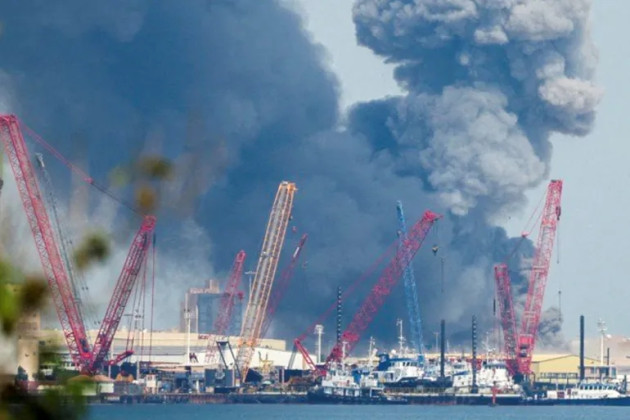
Iranian missile and drone activity has now affected at least eight regional states, including Bahrain, Iraq, Jordan, Oman and Saudi Arabia, though not all have confirmed direct impacts.
British Base in Cyprus Struck
A suspected Iranian-made drone struck RAF Akrotiri in Cyprus overnight, causing limited damage to runway infrastructure. British authorities confirmed no casualties. The incident marks the first strike on the sovereign base area since the 1980s.
The attack pulls the Eastern Mediterranean directly into the conflict’s footprint and places NATO-linked infrastructure under active threat.
U.S. Aircraft Losses and First American Fatalities
In Kuwait, multiple U.S. military aircraft were lost during heightened defensive operations. At least one F-15E Strike Eagle crashed after its crew ejected safely. All aircrew survived and were recovered.
Initial defense assessments indicate the aircraft were likely engaged by friendly air defenses amid the chaos of intercepting Iranian missiles and drones. The losses are not currently assessed as confirmed enemy shoot-downs.
Separately, three U.S. service members were killed at Camp Arifjan in Kuwait following Iranian strikes on coalition facilities. These are the first confirmed American combat fatalities since the conflict began.
U.S. personnel in Kuwait and other Gulf states have been placed under shelter-in-place protocols as missile and drone alerts continue.
At least two USAF F-15E Strike Eagles were shot down in what’s being called a friendly fire incident over Kuwait this morning.
All crew involved successfully ejected and were picked up by locals on the ground; the Kuwaiti MOD says that all were recovered safely. pic.twitter.com/EApl2kVwAp
— OSINTtechnical (@Osinttechnical) March 2, 2026
Iraq Instability and Force Protection Concerns
In Baghdad, clashes erupted near the Green Zone amid demonstrations and unrest linked to the regional escalation. Security personnel were injured during confrontations involving live fire and vehicle burnings.
While Iraq has not formally entered the conflict, instability near diplomatic and coalition compounds increases security risks. Iran maintains significant political and militia influence inside Iraq, raising concern about proxy mobilization.
The situation in Baghdad continued to deteriorate early in the morning, with pro-Iran protestors and militants seen firing potshots at security forces outside of the Green Zone. pic.twitter.com/NimlVh165p
— OSINTtechnical (@Osinttechnical) March 2, 2026
Civilian and Aviation Disruption
Airspace closures and emergency alerts have become widespread across Israel, Lebanon and Gulf states. Commercial airlines have canceled or rerouted hundreds of flights as missile and drone warnings persist.
Casualty counts continue to rise across multiple countries from direct strikes, debris and secondary explosions. Emergency services in Israel and Lebanon remain on high alert.
Oil futures climbed toward $80 per barrel as markets price in elevated regional risk, though no confirmed sustained damage to major production facilities has been reported.
Pentagon Bars Military Attendance at Select Elite Universities
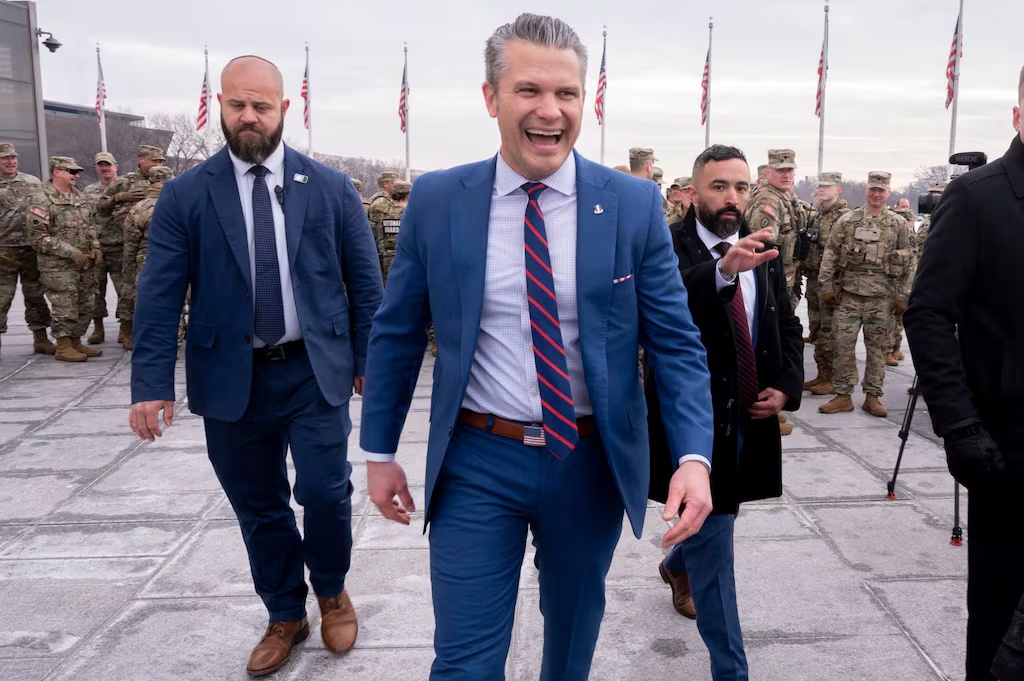
Department of War Secretary Pete Hegseth has ordered the Pentagon to end military participation in graduate and fellowship programs at several elite universities, including Columbia, Yale, Brown, Princeton, MIT, Georgetown, and Johns Hopkins, beginning with the 2026–2027 academic year.
In public remarks and a department memo, Hegseth described the institutions as advancing ideologies incompatible with military values and combat effectiveness. He characterized them as hostile to what he called “lethality” and mission focus.
The directive centers on professional military education and related academic programs. Uniformed service members will no longer attend graduate schools, fellowships, or senior-level civilian academic programs at the named institutions under Defense Department sponsorship. The order applies to future attendance; current students are expected to complete ongoing programs.
The move does not, at this stage, formally terminate defense research grants, laboratory partnerships, or existing federally funded research agreements. Pentagon officials have not announced broader cuts to DARPA projects, technology contracts, or cooperative research arrangements.
🚨 BREAKING: Secretary Pete Hegseth just announced the Department of War is CUTTING TIES with woke leftist Ivy League universities
DoW will NO LONGER be subsidizing Yale, Columbia, Brown, MIT, Princeton, and others.
“We’re DONE paying for the privilege of our enemies’ wicked… pic.twitter.com/pOW8hyQSxc
— Nick Sortor (@nicksortor) February 27, 2026
Focus on Professional Military Education
For decades, the military has sent senior officers and civilian defense officials to elite universities for advanced degrees in public policy, international relations, engineering, and regional studies. These programs function as supplements to war colleges and service academies, exposing officers to civilian academic environments and broader policy debates.
The new directive removes those institutions from the approved list for Pentagon-sponsored attendance.
Supporters of the decision argue that professional military education should reinforce operational priorities rather than expose officers to academic environments they view as politically adversarial. They frame the shift as a corrective measure designed to align education pathways with defense objectives.
Critics counter that elite universities have long contributed to the intellectual development of senior leaders across administrations of both parties. They warn that limiting exposure to civilian academic settings could narrow the range of perspectives available to future commanders and policymakers.
Civil-Military Boundaries and Institutional Friction
The decision reflects escalating tension between parts of the federal government and prominent universities over governance, speech norms, and diversity initiatives.
Historically, military fellowships at civilian universities have been viewed as a bridge between the armed forces and broader society. Officers embedded in academic programs often participate in research seminars, publish policy papers, and engage with civilian scholars. The exchanges have served as informal civil-military connectors.
By restricting attendance, the Pentagon signals a recalibration of that relationship. The order reinforces civilian control over military education pathways while also inserting ideological criteria into institutional selection.
The long-term implications remain uncertain. War colleges and in-house defense education programs could absorb additional students. Alternatively, the department may expand partnerships with universities considered more aligned with current leadership priorities.
Congressional and Institutional Response
Because the directive centers on attendance rather than research funding, immediate legal friction appears limited. The Department of War retains authority over where it sends its personnel for education.
However, members of Congress representing states with major research universities may scrutinize the policy if it expands beyond attendance restrictions. A broader review of research contracts would carry budgetary and statutory implications that extend beyond education policy.
University leaders have not publicly indicated plans to challenge the decision. For now, the impact remains concentrated on officer education pipelines rather than on defense-funded laboratories or technology programs.
The policy marks a clear shift in how the Pentagon defines acceptable academic partnerships for its personnel. Whether it remains confined to educational attendance or evolves into a wider reassessment of institutional ties will determine its lasting effect on the relationship between the U.S. military and American higher education.
Financial Markets React to Middle East Escalation
Crude Oil soars to highest price since June 📈📈 pic.twitter.com/KN5MJbO6PW
— Barchart (@Barchart) March 2, 2026
Editor’s note: Financial data referenced in this section was sourced at 2140 EST on March 1, 2026. The author is reporting from Asia, where local markets were entering Monday trading, approximately 12 hours ahead of U.S. Eastern Time.
Global financial markets opened the week under pressure as escalating tensions involving the United States, Israel, and Iran drove volatility across equities, oil, gold, and digital assets.
Asian markets led the reaction. Japan’s Nikkei index declined in early trading, while Hong Kong’s Hang Seng also fell. U.S. stock futures pointed lower ahead of the American session.
Investors moved into traditional defensive positions as geopolitical uncertainty increased.
Oil prices rose sharply at the open. Brent crude and West Texas Intermediate both gained on concerns that further escalation could affect supply flows from the Middle East. Traders focused on the potential risk to energy infrastructure and shipping routes in the region.
Energy markets have historically reacted quickly to military developments involving Iran due to the country’s role in global oil supply and the strategic importance of transit corridors in the Persian Gulf.
Gold advanced as investors sought safe-haven assets. The U.S. dollar strengthened modestly against several currencies in risk-off trading.
Bitcoin showed volatility during Asian hours, reflecting broader shifts in risk appetite.
Equities Under Pressure
Equity markets reflected caution rather than panic. Energy stocks benefited from higher crude prices, while sectors sensitive to fuel costs faced pressure.
Broader indices remained vulnerable to headline risk. Analysts noted that markets are repricing geopolitical risk rather than responding to signs of financial instability.
There were no indications of liquidity stress in early sessions.
Oil as the Primary Barometer
Energy markets remain the central variable. Oil price movements are often the first signal of how investors interpret the scale and duration of geopolitical events in the Middle East.
Absent confirmed disruption to production or transit routes, price spikes tied to military developments have historically moderated once uncertainty eases.
For now, markets appear to be adjusting to heightened geopolitical risk rather than anticipating sustained supply loss.
Near-Term Outlook
Investors are likely to remain sensitive to developments in the region throughout the week.
The trajectory of oil prices will influence broader market sentiment. Sustained increases could affect inflation expectations and transportation costs, while stabilization may ease pressure on equities.
At present, financial conditions remain orderly. The reaction reflects uncertainty tied to geopolitical escalation rather than systemic economic stress.








COMMENTS