Tehran Rejects Trump’s Surrender Demand as Iran War Enters a Dangerous Phase
The war in the air over Iran now has a matching war of words, and the language coming out of Washington and Tehran suggests neither side is preparing for a quick exit.
President Trump raised the stakes this week when he declared that there would be “no deal with Iran except unconditional surrender.” The phrase carries historical weight. It echoes the Allied demand during World War II, when surrender meant the total defeat and restructuring of an enemy state.
Trump later offered a looser interpretation of the phrase in interviews, suggesting that “unconditional surrender” could simply mean Iran reaching a point where it can no longer wage war or threaten U.S. forces in the region. White House officials reinforced that interpretation, describing the goal as eliminating Iran’s ability to threaten American troops and allies in the Middle East.
Tehran’s response was swift and defiant.
Iranian President Masoud Pezeshkian rejected the demand in a televised address, calling the idea of surrender “a dream they should take to their grave.”
Iranian Foreign Minister Abbas Araghchi struck a similar tone, saying Iran would not accept outside pressure to capitulate and warning that the country is prepared for a prolonged conflict.
The exchange is taking place at a moment of extraordinary instability inside Iran itself.
On February 28, Israel carried out an airstrike in Tehran that killed Iran’s Supreme Leader, Ayatollah Ali Khamenei. Iranian officials confirmed his death the following day. As of this writing, no permanent successor has been publicly confirmed, leaving the Islamic Republic navigating a war while also confronting the most serious leadership vacuum it has faced since the 1979 revolution.
Even without a supreme leader in place, Iran’s government has maintained its long-standing posture of resistance to outside pressure. Accepting the language of surrender would cut directly against decades of political messaging built around defiance of the United States and Israel.
Meanwhile, the fighting continues.
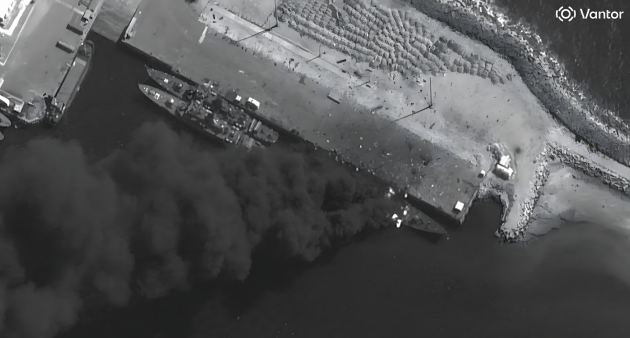
U.S. and Israeli forces have carried out repeated strikes against Iranian military infrastructure, including air defenses and facilities connected to the country’s missile and drone programs. Israeli officials say more than 80 aircraft participated in one recent wave of strikes targeting several military sites.
Already have an account? Sign In
Two ways to continue to read this article.
Subscribe
$1.99
every 4 weeks
- Unlimited access to all articles
- Support independent journalism
- Ad-free reading experience
Subscribe Now
Recurring Monthly. Cancel Anytime.
Iran has responded with missile and drone attacks aimed at Israel and at locations in the region that host U.S. military forces, including several Gulf states.
The conflict is already producing significant consequences beyond the battlefield. Iranian officials report more than a thousand people killed in the country since the strikes began, and tens of thousands of civilians have fled Tehran. Global oil markets have reacted sharply, with crude prices surging amid concerns that the war could threaten shipping through the Strait of Hormuz.
What Iran’s rejection of the surrender demand signals most clearly is that neither side is currently leaving much room for diplomacy. Washington is framing the war in terms of eliminating Iran’s military threat. Tehran is framing it as a fight for national survival.
Those two positions rarely produce quick endings.
Washington Turns the Legal Screws on Havana
Something unusual is happening in South Florida, and it is not another raft slipping off the Malecón under cover of darkness. The movement is happening in federal offices, where prosecutors are quietly looking at ways to bring criminal cases tied to people inside Cuba’s ruling system.
According to reporting from the Associated Press, the U.S. attorney for the Southern District of Florida, Jason Reding Quiñones, has assembled a working group of federal prosecutors and investigators to examine potential criminal cases involving individuals connected to the Cuban government and Communist Party. The effort reportedly includes officials from the DEA, FBI, ATF, Homeland Security Investigations, and the Treasury Department’s Office of Foreign Assets Control, among others.
At this stage, there are no announced indictments. It is not yet clear who could ultimately be targeted or what charges prosecutors might pursue. The Justice Department has not publicly confirmed the details of any specific investigation. But the formation of such a group signals that Washington is exploring whether legal pressure can be applied directly to people operating within the Cuban regime.
That kind of move would represent a different lever in the long American campaign against Havana.
For decades, U.S. policy toward Cuba has relied primarily on sanctions, diplomatic isolation, and the economic chokehold created by the embargo. What appears to be emerging now is the possibility of using federal criminal law as another form of pressure, potentially exposing regime figures to prosecution if they travel, hold assets abroad, or interact with the international financial system.
At the same time, President Donald Trump has been speaking about Cuba in language that sounds less like traditional diplomacy and more like a prediction.
In remarks reported by several outlets, Trump said Cuba is “going to fall pretty soon” and suggested that Secretary of State Marco Rubio could play a major role in what follows, saying he might “put Marco over there.”
Trump has also indicated that Cuba could become a focus of U.S. policy once the current war with Iran stabilizes.
Official policy language from the White House is more restrained. Administration guidance describes the goal as promoting a “stable, prosperous, and free Cuba,” encouraging economic independence through a private sector not controlled by the state, and pursuing accountability for human rights abuses.
But the pressure campaign surrounding the island has intensified.
The Trump administration has maintained Cuba’s designation as a state sponsor of terrorism and expanded sanctions targeting the government’s economic lifelines. In January, Trump issued an executive order threatening tariffs on any country exporting oil or petroleum products to Cuba. The result has been a sharp collapse in the island’s oil imports. Because more than 80 percent of Cuba’s electricity generation depends on oil, the policy has contributed to widespread power outages and a worsening energy crisis.
Blackouts, fuel shortages, and economic stagnation are now part of daily life across the island.
Whether the Justice Department’s effort in Miami eventually produces indictments remains an open question. But the strategy taking shape suggests Washington believes Havana may be entering a period of vulnerability.
If that assessment proves correct, the next chapter in the long American effort to influence Cuba’s political future may not begin with diplomats.
It may begin with prosecutors.
Iran’s Assassination Playbook: Brooklyn Verdict Exposes a Deadly Plot
A federal courtroom in Brooklyn just delivered a verdict that reads like something pulled from the darker chapters of Cold War intelligence history. A Pakistani man has been found guilty in a murder-for-hire conspiracy that prosecutors say was tied to Iran and aimed at high-profile American political leaders.
The man, Asif Merchant, was convicted by a federal jury on terrorism and murder-for-hire charges connected to a 2024 plot targeting U.S. politicians. According to prosecutors, Merchant traveled to the United States to recruit assassins for the job.
What he did not realize was that the people he approached were working with the FBI.
The first person he contacted was a civilian acquaintance who reported Merchant’s behavior to law enforcement and became a cooperating source. Through that source, Merchant was later introduced to two men he believed were professional hitmen but who were actually undercover FBI agents recording the entire exchange.
The plot moved forward far enough for Merchant to hand over $5,000 in cash inside a parked car in Manhattan, a down payment meant to show he was serious.
During meetings with the supposed killers, the conversation turned to potential targets. Testimony presented in court indicated names floated in the discussion included Donald Trump, Joe Biden, and Nikki Haley, though prosecutors said a specific target had not yet been formally assigned at the time of the arrest.
The U.S. government told the jury that Merchant had been sent to the United States by Iran’s Islamic Revolutionary Guard Corps, the powerful security organization responsible for many of Tehran’s covert operations abroad. Iranian officials have denied any involvement.
The motive prosecutors pointed to is not hard to understand. Since the January 3, 2020 U.S. strike that killed IRGC commander Qassem Soleimani, Iranian leaders and affiliated groups have repeatedly vowed retaliation against American officials.
The Merchant case is not the only alleged Iran-linked assassination effort aimed at U.S. leadership.
In November 2024, the Justice Department announced charges against Farhad Shakeri, an Afghan national living in Tehran. Prosecutors described him as an asset working with Iran’s Revolutionary Guard and alleged he was tasked with surveilling and developing an assassination plan targeting then president-elect Donald Trump.
Shakeri later claimed he did not intend to carry out the plot, a defense that remains part of the ongoing legal proceedings.
It is important to separate those alleged foreign-directed plots from the two actual assassination attempts against Trump in 2024.
The shooting at a campaign rally in Butler, Pennsylvania, and the later armed incident near Trump’s Florida golf course have not been publicly linked by investigators to Iran. Authorities have said the Butler gunman appeared to have acted alone, even as intelligence agencies acknowledged monitoring Iranian threats against Trump at the time.
Meanwhile, the regional conflict surrounding Iran continues to evolve. U.S. officials say the senior IRGC commander allegedly connected to some of these assassination plots was recently killed during U.S. and Israeli strikes on Iranian targets, removing one of the figures believed to be tied to Tehran’s overseas operations.
Taken together, the Brooklyn verdict and the other cases now moving through federal courts paint a picture that is difficult to ignore.
The U.S. government believes Iran or actors connected to it have explored using assassination plots against major American political figures.
For decades, that kind of confrontation lived mostly in the shadows of intelligence work.
Now parts of it are showing up in open court.










COMMENTS