

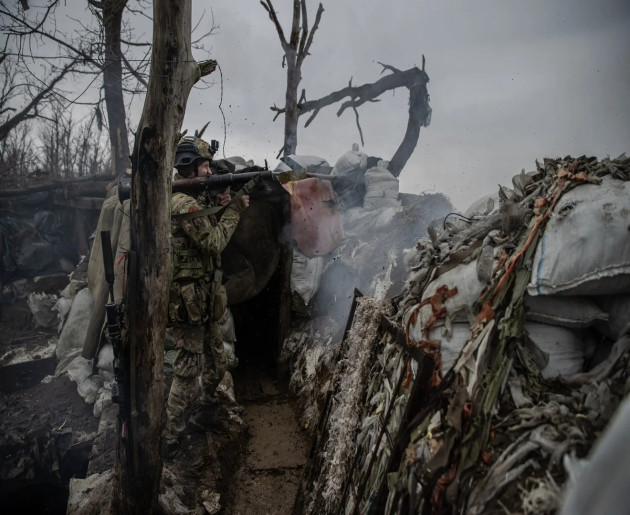
NEW: US Secretary of State Marco Rubio confirmed that the United States and Ukraine have finalized security guarantees for Ukraine. The Kremlin continues to reject Western security guarantees for Ukraine, however. More ⬇️
– US President Donald Trump stated that Russian President… pic.twitter.com/zPOZbDU4kM
— Institute for the Study of War (@TheStudyofWar) January 30, 2026

United States–Cuba: New Executive Action Signals Hardening Posture
The White House on Thursday issued a new executive action aimed at what it described as “ongoing threats to the United States posed by the Government of Cuba.” The order expands authorities to impose financial, travel, and commercial restrictions on Cuban government entities, senior officials, and affiliated organizations assessed as participating in intelligence cooperation with U.S. adversaries, cyber activity, or regional destabilization efforts. Administration officials framed the move as a response to a pattern of behavior rather than a single triggering incident.
The action restores and broadens measures that had been partially eased in prior years, reasserting a pressure-based approach to Havana. While the order stops short of a full embargo expansion, it tightens enforcement mechanisms and clarifies executive discretion to escalate penalties without additional congressional action.
Intelligence and Security Concerns Drive Policy Shift
According to administration language, the decision reflects heightened concern over Cuban cooperation with foreign intelligence services and permissive activity targeting U.S. interests in the Western Hemisphere. While specific allegations remain classified, officials referenced intelligence-sharing arrangements, cyber-enabled activity, and logistical support networks operating through Cuban territory. The order emphasizes counterintelligence risk and proximity, signaling that geographic considerations are again central to U.S. threat assessments.
The framing marks a shift away from engagement-oriented rhetoric toward a posture rooted in state competition and internal security. Rather than emphasizing democratic reform or human rights as primary drivers, the administration grounded the action in national security authorities and threat mitigation.
Regional Implications and Enforcement Outlook
Regionally, the move complicates efforts by Caribbean and Latin American governments that have sought to maintain pragmatic ties with both Washington and Havana. Expanded U.S. restrictions could affect shipping, financial services, and aviation arrangements involving third countries, particularly where Cuban state-owned enterprises act as intermediaries. Enforcement will likely hinge on Treasury and Homeland Security coordination, with secondary compliance pressures emerging over time.
For U.S. agencies, the order provides a clearer legal framework to pursue investigations, sanctions designations, and asset freezes linked to Cuban government entities. It also signals to partners that Washington intends to treat Cuban state activity as an active security concern rather than a residual Cold War issue.
Strategic Context
The timing aligns with a broader recalibration of U.S. policy toward adversarial or semi-aligned governments in the hemisphere. As Washington manages simultaneous pressure campaigns against Russia and others, the Cuba action underscores an intent to reduce permissive spaces close to U.S. borders. Whether the measures meaningfully alter Cuban behavior remains uncertain, but the policy direction is clear: engagement is no longer the default assumption.
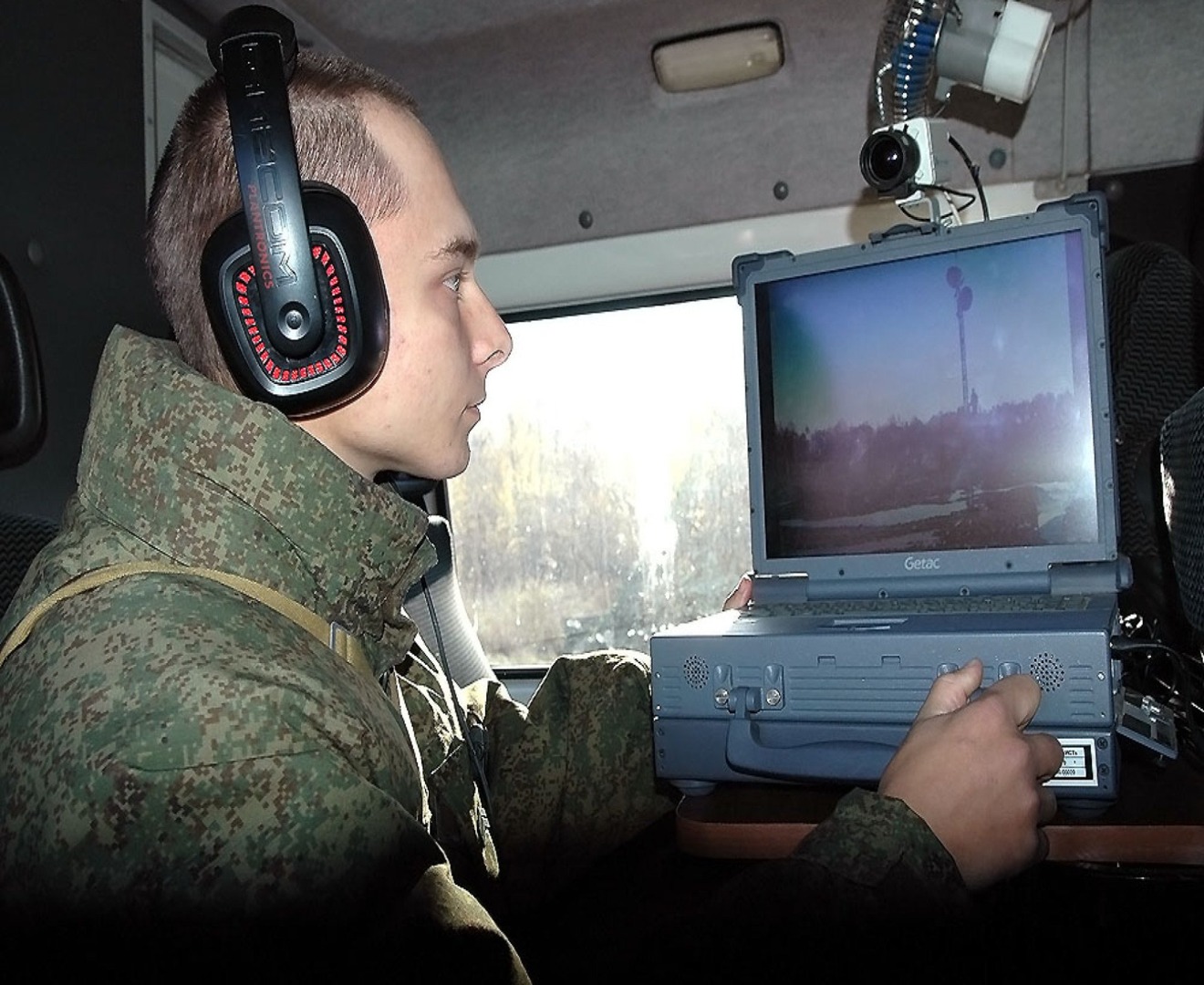
Technology and Sanctions: Ubiquiti’s Role in Sustaining Russian Network Infrastructure
NEW from @hntrbrkmedia: Equipment from the US tech giant Ubiquiti is a major enabler of the Russian army in Ukraine.
We spend months infiltrating the Russian military’s supply chain, unearthing military documents and other evidence that show how Russia relies on $UI equipment. pic.twitter.com/MkRJYIZu0w
— OSINTtechnical (@Osinttechnical) January 27, 2026
An investigative report published this week documents how Ubiquiti, a U.S.-based networking equipment company, has continued to enable Russian access to its network management ecosystem despite Western sanctions imposed after Russia’s invasion of Ukraine. According to the reporting, Russian internet service providers, surveillance operators, and infrastructure entities retained access to Ubiquiti’s cloud-based management platforms long after sanctions were in effect, allowing continued operation, updates, and remote administration of network equipment.
The report details how Ubiquiti’s architecture — particularly its centralized cloud control systems — allowed Russian entities to maintain functionality even as other Western technology firms curtailed services. In several cases, Russian operators reportedly relied on Ubiquiti equipment to support fixed wireless networks and local communications infrastructure critical to civilian and state use.
Sanctions Compliance and Corporate Responsibility
While Ubiquiti publicly stated that it complied with applicable sanctions regimes, the investigation raises questions about enforcement gaps and the distinction between formal compliance and practical enablement. Continued access to software updates, authentication services, and centralized management tools effectively preserved operational capability, blunting the intended impact of sanctions designed to degrade Russia’s technological base.
The case illustrates a broader challenge facing sanctions enforcement in the technology sector: hardware deployed prior to sanctions, paired with cloud-based management systems, can remain operational unless companies actively sever access. The absence of clear regulatory mandates governing service-level disengagement has created space for continued Russian use of Western-built systems.
Strategic Implications
From a security standpoint, the issue extends beyond one company. Networking equipment sits at the foundation of surveillance, command-and-control, and information flow. Allowing sanctioned states to retain access to Western network management platforms risks normalizing a model in which sanctions apply to future sales but not ongoing operational support.
For U.S. policymakers, the episode underscores the need to treat cloud services and software access as sanctions-relevant capabilities, not ancillary features. For defense and security audiences, it reinforces a recurring lesson of the Ukraine war: the modern battlespace depends as much on routers and firmware as it does on armor and artillery.

Domestic Security and Elections: Federal Search in Georgia Reopens 2020 Fault Lines
Federal authorities this week executed a court-authorized FBI search at Fulton County’s election operations center in Georgia, seizing ballots and related materials connected to the 2020 U.S. presidential election. The search, conducted on January 28, was tied to a Trump administration review of long-standing claims of irregularities in Georgia’s 2020 vote, which President Trump lost by fewer than 12,000 ballots.
No arrests were made, and federal officials have not publicly detailed the full scope of the investigation. Judicial approval of the warrant indicates a finding of probable cause, reportedly linked to chain-of-custody documentation and election system records. Fulton County officials said they were cooperating with federal authorities but expressed concern over what they described as an unprecedented intrusion into local election administration.
DNI Tulsi Gabbard Joins Federal Search at Georgia Election Facility
The operation drew immediate scrutiny due to the presence of Tulsi Gabbard, who accompanied federal agents during the execution of the search warrant. Gabbard, now serving as Director of National Intelligence under President Trump, has emerged as a leading figure in the administration’s renewed effort to frame unresolved 2020 election disputes as national security concerns rather than settled electoral outcomes.
As DNI, Gabbard holds no statutory authority over state or county election infrastructure. Her direct involvement at a local election facility is therefore unusual and has prompted questions from lawmakers and election officials about the appropriate boundaries between intelligence oversight and civilian election administration. Critics described her presence as politically charged, while administration officials defended it as necessary oversight tied to intelligence assessments of potential foreign influence or system vulnerabilities.
Networks, Institutions, and the Expansion of Election Security
Reporting suggests the investigation is focused less on individual wrongdoing and more on institutional processes, including ballot handling procedures, data access, and record retention dating back to 2020. The inquiry reflects a broader shift in how the federal government is approaching election security under the current administration, blending intelligence-driven threat assessments with law enforcement action at the state and local level.
Democratic lawmakers and election experts have warned that such actions risk undermining public confidence in election systems by casting routine administrative processes as potential criminal activity. Supporters of the probe argue that unresolved questions surrounding past elections represent a persistent vulnerability that warrants continued scrutiny, particularly as the United States approaches future federal contests.
Political and Institutional Implications
The search reopens unresolved political and institutional tensions that have persisted since 2020, particularly in Georgia, which has remained a focal point for Trump-aligned efforts to revisit the election. Gabbard’s visible role adds an additional layer of controversy, given her evolution from former Democratic congresswoman to senior intelligence official in a Republican administration pursuing aggressive oversight of election infrastructure.
For federal agencies, the episode underscores the difficulty of enforcing election-related investigations without appearing to politicize intelligence and law enforcement authorities. For state and local officials, it raises concerns about federal reach into domains traditionally insulated from national political pressure. While the investigation remains ongoing, its significance lies less in any immediate findings than in what it signals: elections are increasingly treated as a contested security domain, with intelligence leadership now stepping directly into spaces once governed almost exclusively by civil administration.








COMMENTS