

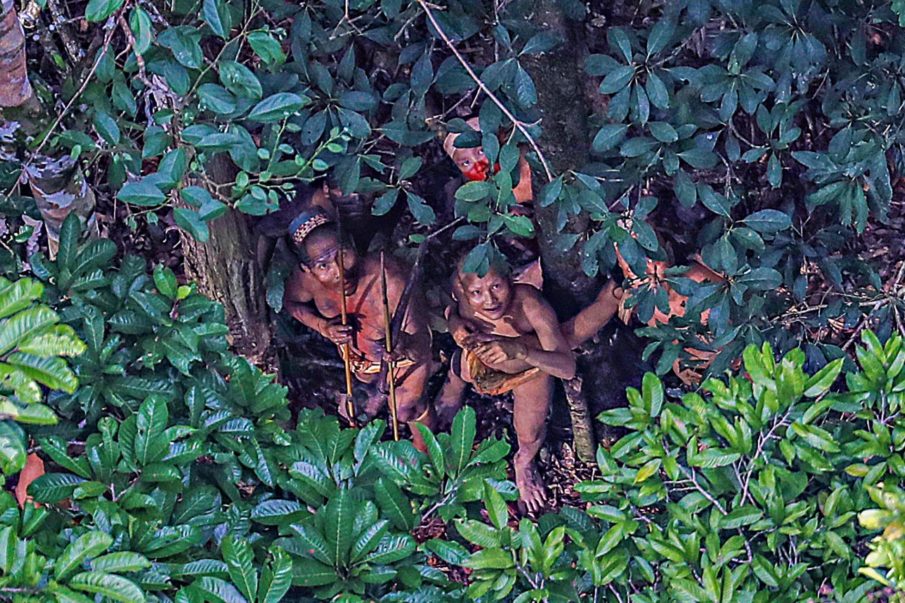
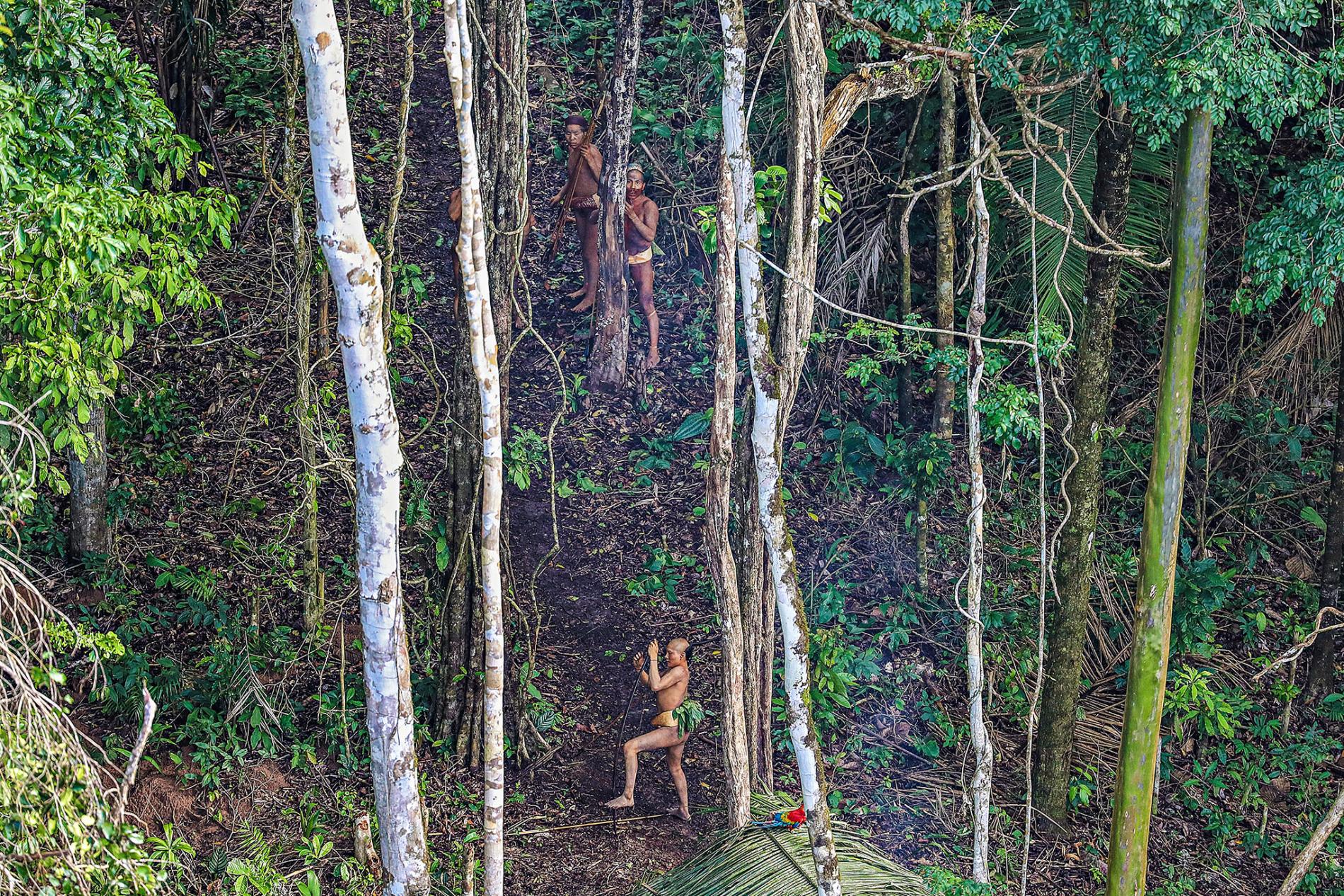
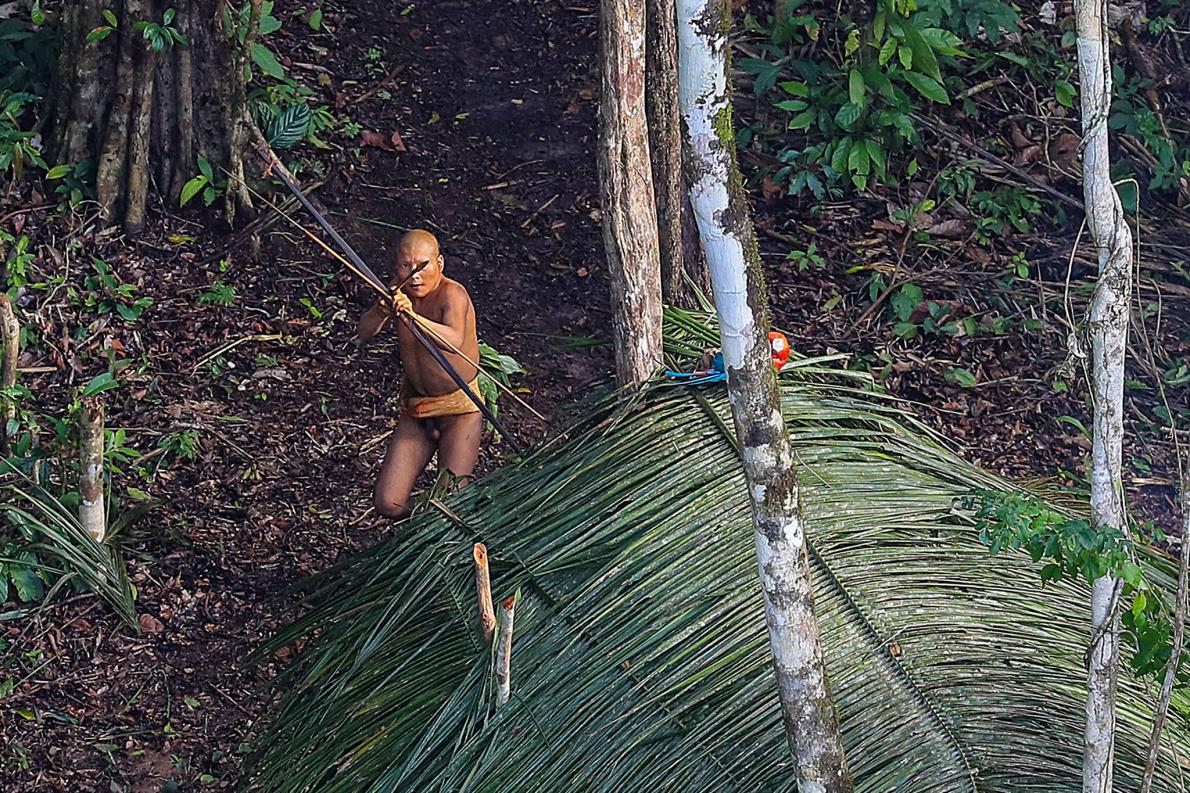
After what Stuckert described as an “initial panic” in which many of the natives took up arms and attempted to shoot the helicopter, the people of the tribe seemed to adopt a more investigative posture, studying the aircraft and its photographer.
“They seemed more inquisitive than fearful,” Stuckert told National Geographic. “I felt there was a mutual curiosity, on their part and mine.”
“It was surprisingly powerful and emotional,” he recalled. “The experience touched me deeply as a unique event. We live in an age when men have been to the moon. Yet here in Brazil there are people who continue to live as humankind has for tens of thousands of years.”
As long as the tribe remains on the Brazilian side of the border, they will remain fairly safe, as Brazil enforces strict laws regarding the use of protected rainforest and the engagement of tribal people. Unfortunately, just over an invisible line in the dense forest lies Peru, where illegal logging, gold mining, and drug trafficking have wiped out entire tribes in the past.
“Once their territory is encroached by loggers or prospectors, the isolated groups are finished,” Meirelles said. “They could disappear from the face of the Earth, and we wouldn’t even know it.”
Because there is no historical record of this tribe dating back before 2008, the tribe remains unnamed and is known only as the “isolated Indians of the upper Humaitá,” by scientists. There is no plan to contact these people, as mere physical proximity to outsiders could result in transmitting diseases these natives have no natural immunity against, which could prove disastrous for the small population. Instead, Brazil’s indigenous affairs agency must remain vigilant in their protection of these people from afar—no easy task in the dense rainforest.
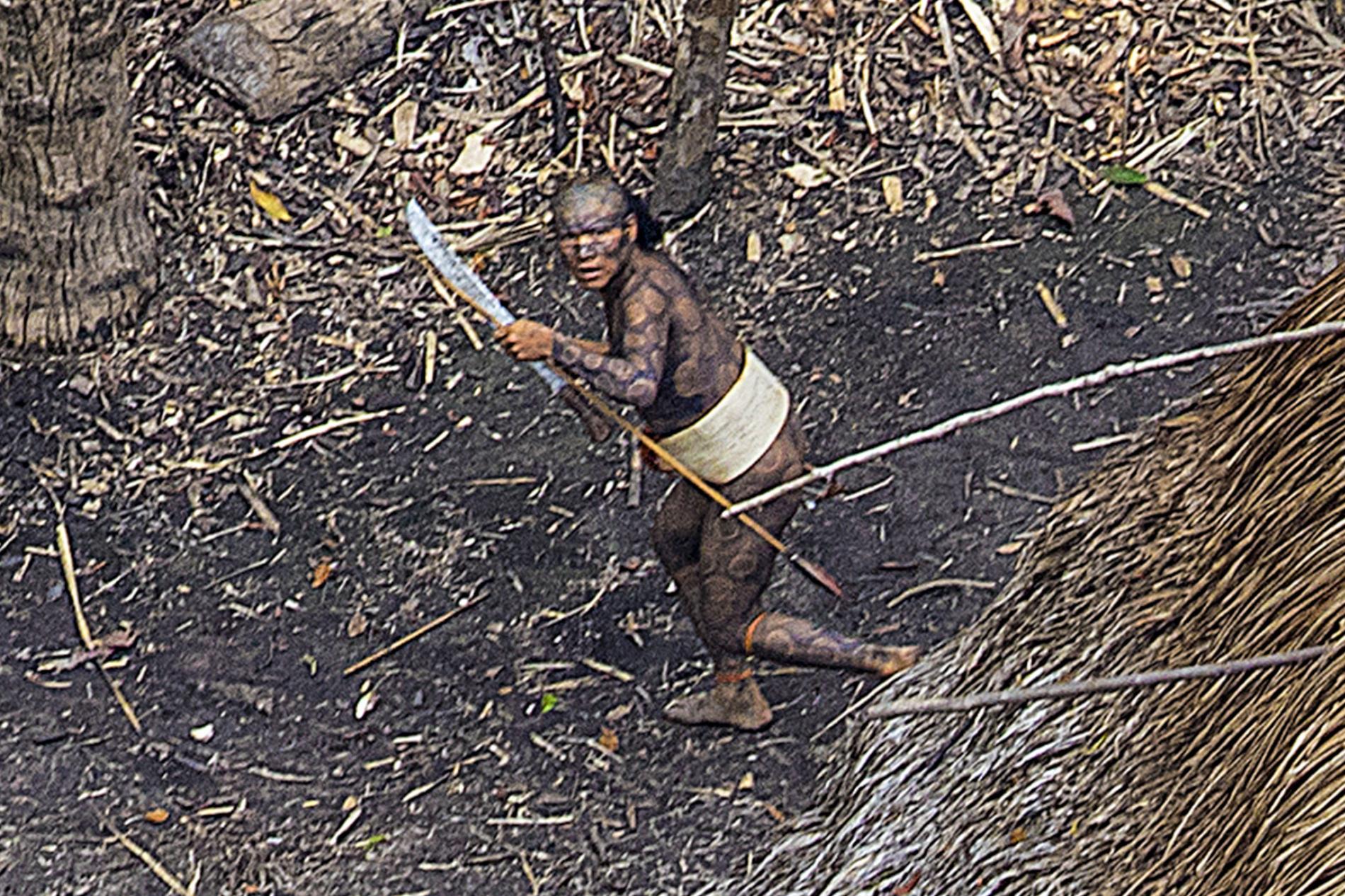
In the 1980s, it was estimated that one Amazonian tribe went extinct per year, often at the hands of Westerners or locals looking to take advantage of the resources in the regions these tribes called home. In 1967, federal prosecutors released a 7000-page report cataloging some of the crimes that had been committed against the native population, including ‘the massacre of the 11th parallel,’ in which sticks of dynamite were thrown into the center of one tribe’s village. All of the survivors of the dynamite attack were then killed by rubber workers who entered the village on foot, armed with machetes.
In the years since, extensive legal reform has placed protections on the land occupied by these natives, but illegal gold mining in particular has taken its toll nonetheless. Mercury used by the miners as a part of the process of separating the gold is allowed to saturate the ground and river water, leading to mercury poisoning among both contacted and uncontacted tribes. Private security organizations and local militias have also killed many natives in defense of privately owned land, or in pursuit of settling new areas for legal agriculture, mining, or logging operations.
Although these pictures depict the beauty of this Brazilian tribe’s neolithic lifestyle, the arrows they fired at the low-flying helicopter speaks to the level of vulnerability these native people have to any kind of armed conflict they may encounter in the region. Only time will tell if these people are able to avoid their own massacre, or if they will disappear into history without us ever learning their name.
Images courtesy of National Geographic








COMMENTS