The Nigerian Air Force has launched extensive airstrikes across six northern states to combat terrorism and banditry, targeting ISWAP and armed groups with significant success. These operations, part of a coordinated effort, aim to dismantle terrorist networks and enhance national security.
Key points from this article:
The Nigerian Air Force conducted precision airstrikes in Borno, Katsina, Kebbi, Kaduna, Zamfara, and Kwara States under Operations Hadin Kai and Fanjan Yamma.
How the airstrikes have led to confirmed kills among ISWAP fighters and disrupted logistics networks, significantly impacting the mobility of armed groups in the region.
Why the operations are crucial for Nigeria's security, as they address the ongoing threats from ISWAP and armed bandits, while also highlighting the need for long-term solutions to underlying issues like poverty and infrastructure.
Updating summary...
Nigerian Air Force Conducts Coordinated Airstrikes Across Six Northern Nigerian States
Galen Fries
Speed
1x
Listen
COMMENTS
In a decisive, intelligence-driven sweep across six northern states, the Nigerian Air Force’s synchronized precision strikes under Operations Hadin Kai and Fanjan Yamma shredded insurgent logistics and eliminated senior fighters — a clear tactical win that nonetheless underlines how airpower, however effective, cannot by itself cure the deeper social and economic rot that fuels the violence.
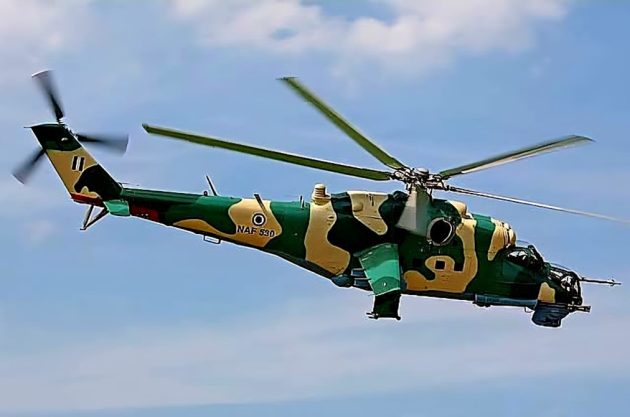
This helicopter is a Mil Mi-35, the export version of the Russian Mi-24 “Hind” attack helicopter. The markings indicate it belongs to the Nigerian Air Force (NAF). Image Credit: The Telegraph
AFRICA – November 9, 2025
Advertisement
The Nigerian Air Force (NAF) has intensified counterterrorism and anti-banditry operations across six northern states, carrying out a coordinated series of precision airstrikes under Operations Hadin Kai and Fanjan Yamma. Targets were hit in Borno, Katsina, Kebbi, Kaduna, Zamfara, and Kwara States, with confirmed kills among Islamic State of West Africa Province (ISWAP) fighters and armed bandit groups.
The operations mark one of the largest synchronized air efforts by NAF this year. According to Air Commodore Ehimen Ejodame, Director of Public Relations and Information, the strikes represent a decisive phase in ongoing joint campaigns to dismantle terrorist and criminal networks across northern Nigeria.
The airstrikes were intelligence-driven, guided by real-time surveillance and reconnaissance data gathered by unmanned aerial systems and ground-based observers. The precision attacks targeted insurgent positions, logistics hubs, and weapons storage facilities. According to post-strike assessments, the operations resulted in significant neutralizations, including the elimination of key leadership figures and the disruption of terrorist logistics networks.
Advertisement
Air Marshal Aneke met Air Component Commanders from all operational theatres at the NAF Headquarters, Abuja, recently. Credit: X/@NigAirForce
In Borno State, NAF aircraft struck ISWAP positions in Mallam Fatori and Shuwaram, both located in the Lake Chad Basin. ISR feeds identified insurgents mobilizing with motorcycles and small boats along the shoreline. Precision-guided strikes destroyed weapons depots, fortified shelters, and transport assets, killing several fighters and restricting the group’s mobility in the northern Tumbuns.
In Kwara State, air assets targeted bandit camps in Garin Dandi and Chigogo based on credible human intelligence reports indicating the movement of armed groups and stolen livestock. Secondary explosions confirmed the destruction of ammunition and fuel caches. Local sources reported widespread panic among surviving bandits following the attacks.
Advertisement
In Katsina State, NAF aircraft hit Zango Hill in the Kankara Local Government Area, a known base of operations for a terrorist commander and his fighters. Multiple attack runs destroyed makeshift structures and vehicles used for transport and logistics. NAF confirmed several casualties among fighters, including senior leadership figures.
The Air Component of Operation Fanjan Yamma also conducted armed reconnaissance missions across the northwest corridor, covering parts of Zamfara, Kebbi, and Kaduna States. These flights focused on known smuggling and movement routes along the Birnin Gwari–Funtua axis. During one mission near Wam Hill, surveillance detected motorcycles carrying armed men attempting to flee. The aircrew engaged immediately, neutralizing the targets and dispersing remaining hostiles.
Air Commodore Ejodame said the renewed air campaign aligns with directives from the Chief of the Air Staff, Air Marshal Sunday Kelvin Aneke, to maintain operational pressure on insurgent and criminal groups through sustained, precision-led strikes. He added that NAF’s objective is to employ intelligence-driven airpower to dismantle terrorist networks, protect civilians, and strengthen national security.
Advertisement
No civilian casualties were reported, though humanitarian organizations have warned that continued air operations could displace civilians in the affected regions. The Nigerian government has pledged to coordinate relief and resettlement efforts where necessary.
Analysts note that while NAF’s kinetic operations have disrupted insurgent mobility and logistics, long-term stability will depend on the military’s ability to secure cleared zones and prevent reoccupation by armed groups. Persistent drivers of conflict – including poverty, lack of infrastructure, and resource competition- remain unresolved.











COMMENTS