

1. Internal Ballistics
Internal ballistics is the study of the bullet’s behavior, and factors that affect that behavior, before it leaves the weapon. There’s a lot of stuff here – for example, the temperature of the bullet while it sits in the magazine, the burn rate of powder in the cartridge, the amount of fouling in the barrel, and its effect on the bullet. Is it possible to over-clean your rifle? How much fouling needs to be in the barrel for the shot to perform in a manner that meets your expectations of the performance of your cartridge?
2. Transitional Ballistics
Transitional ballistics refers to the behavior and factors affecting the behavior of the bullet as it leaves the muzzle. There’s an interface between the barrel’s bore and the outside world called the crown. The crown is the mouth of the bore, and is usually recessed to prevent it from getting dinged. Any imperfection in the rifling here can affect the accuracy of your shot. A lot goes on at the crown. Even before your bullet leaves the barrel, air in the barrel is pushed out by the bullet. Some gasses from the burning powder actually get past the bullet and burst from the muzzle at supersonic speed.
3. External Ballistics
Most of our conversation will revolve around external ballistics. This is the behavior of the bullet, and factors affecting the bullet, after it leaves the muzzle and before it hits the target. The big ones are wind and range. One of the biggest problems of the .223, for example, is that such a tiny bullet is very susceptible to wind. The other is that its range is limited. It was meant to be an assault rifle round for engagements inside two hundred yards. Can it hit at longer ranges? Yes. How effective will it be?
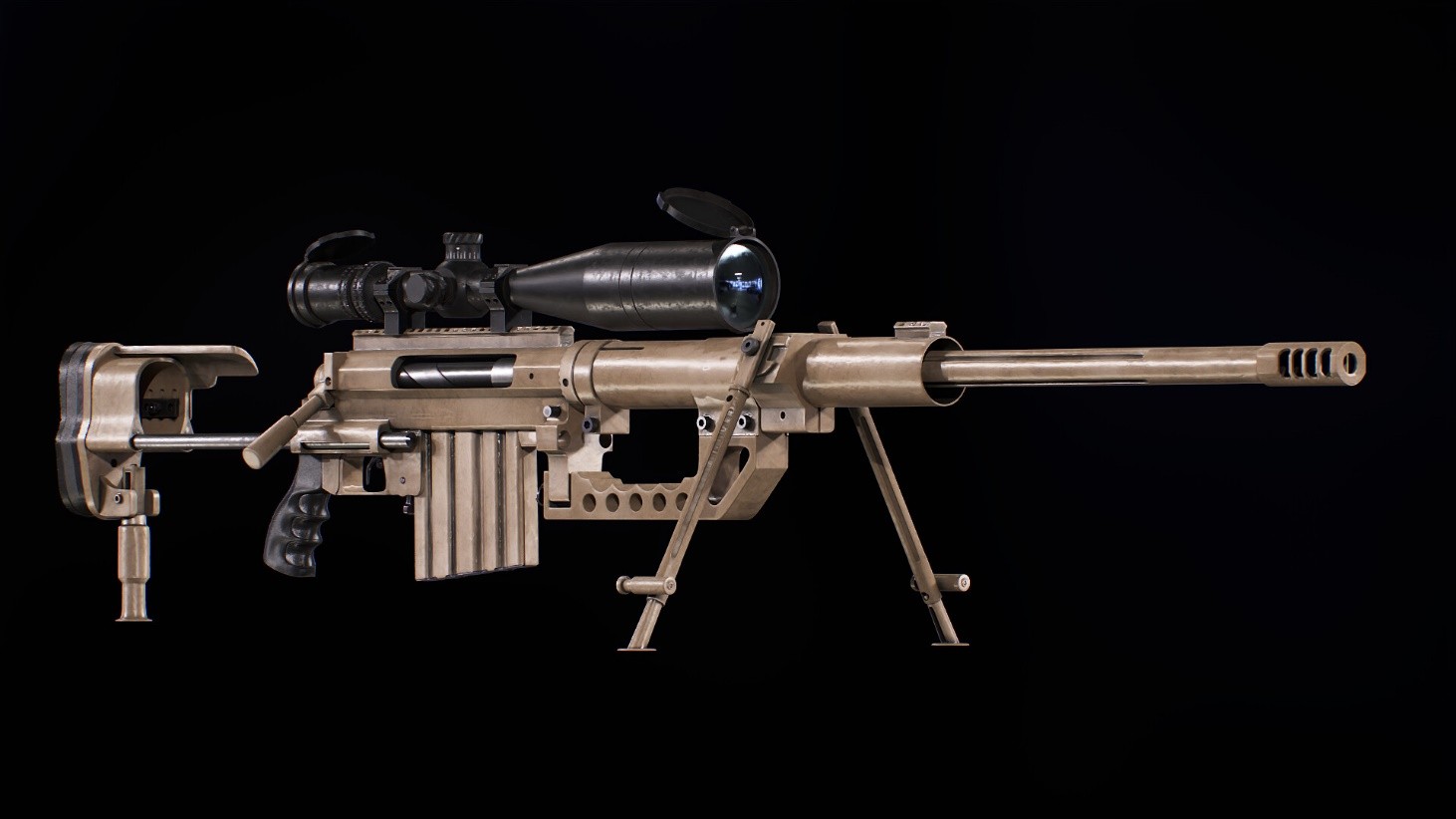
In any case, we will be talking about wind deflection of different bullets, range estimation, and how bullets slow down and become unstable as they reach the transonic zone. That’s the range at which they transition from supersonic to subsonic. That transonic zone determines the maximum effective range of your weapon (except, perhaps, in the case of the .408 Chey Tac, which was designed to maintain stability through the transonic zone).
There are many issues to discuss here. As I’ve said, you might pick the perfect cartridge and bullet on paper, but your rifle has to have certain characteristics in order to realize that ballistic performance. Ammo manufacturers are helpful. They print recommended barrel twists on their boxes. They also provide a tremendous amount of information not only on their products, but also on ballistics in general. If you have a mind of a certain bent, it is really good stuff.
4. Terminal Ballistics
This is what happens when the bullet hits the target. I won’t talk much about wound channels – there’s enough material on YouTube and elsewhere comparing this bullet and that as they blow through gel targets. I will spend time on bullet construction.
Example: There are two schools of thought when going after small game with the intent to preserve the pelt. School A – Use a frangible bullet that self-destructs inside the target and does not produce an exit wound. School B – use a full metal jacket on the theory that it will go straight through and produce two small holes.
Example: You are a police sniper, and body armor has filtered out to the criminal class. What cartridge-bullet combination do you need at a range of thirty to one hundred yards?
Example: You are a military sniper and want to be able to take out an enemy tank’s periscopes to blind its crew. What weapon do you require?
Summary
This article describes my approach to selecting a rifle. It starts from the application and works backward to the rifle selection decision. What we’ll find is that certain applications over certain ranges will naturally lead us to the selection of certain cartridges and bullets. These, in turn, may lead us either to a wide selection of rifles, or to a narrow selection.
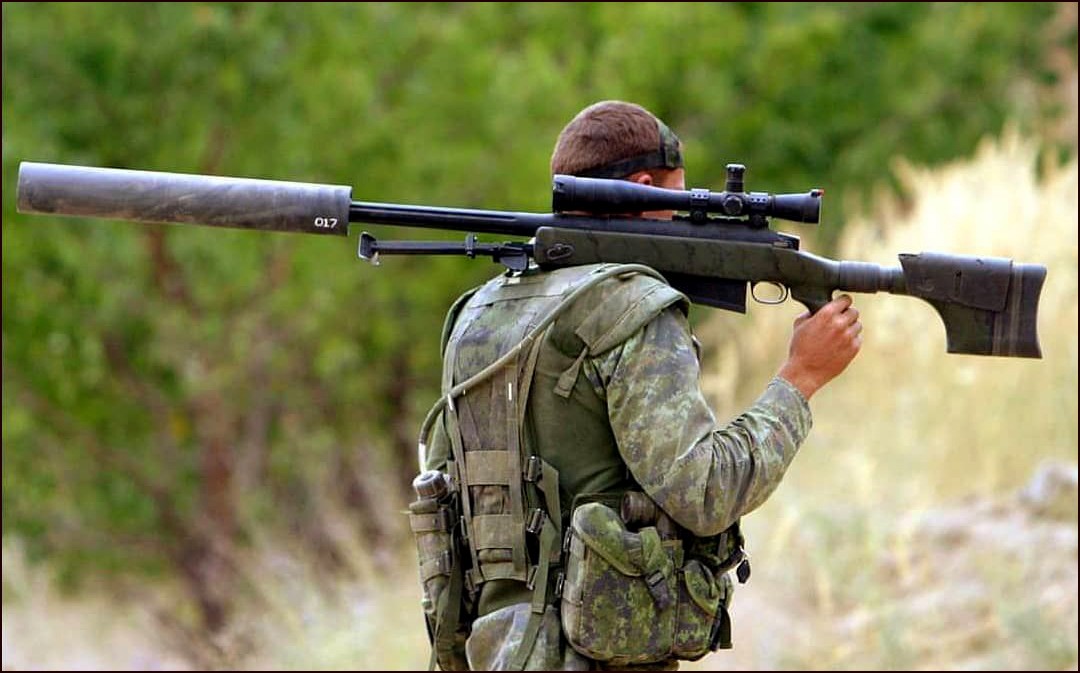
I believe the world record sniper kill is held by a Canadian JTF2 operator, and it’s a bit over 3,000 meters or about two miles. Don’t hold me to that figure, I don’t remember exactly. It was in that ballpark. At the time, I took out a calculator and worked out how long it would take a bullet to travel that far. It came out to be something like twelve or fifteen seconds. I remember thinking, “That target sure could move a lot in twelve seconds.” If he were a Canadian, he was probably using a McMillan TAC-50 (aka Canadian C15). It’s a .50 BMG weapon. As we’ll see, standard military .50 caliber ball doesn’t have the ballistic properties to do that job. He would have had to have been firing a special bullet with an extremely high ballistic coefficient. Something like the bullet fifth from the left in Figure 5.
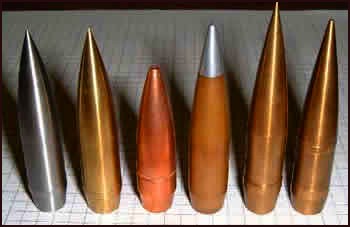
Anyway, that’s more than you or I will ever need.
We’ll look at the Krupp Model and the math of ballistic coefficients later. If you are still reading this, you’re probably up for it. I promise to make it as painless as possible.
About the Author

You may reach Cameron at: [email protected]
Cameron Curtis has spent thirty years in the financial markets as a trader and risk manager. He was on the trade floor when Saddam’s tanks rolled into Kuwait, when the air wars opened over Baghdad and Belgrade, and when the financial crisis swallowed the world. He’s studied military affairs and warfare all his adult life. His popular Breed series of military ad-venture thrillers are admired for combining deep expertise wit/h propulsive action. The premises are realistic, the stories adrenaline-fueled and emotionally engaging.
Check out the books here: Cameron Curtis’s Amazon Page
Book 11, Death Hunt, is now available. For a limited time, all books are priced at $0.99 each:









COMMENTS