

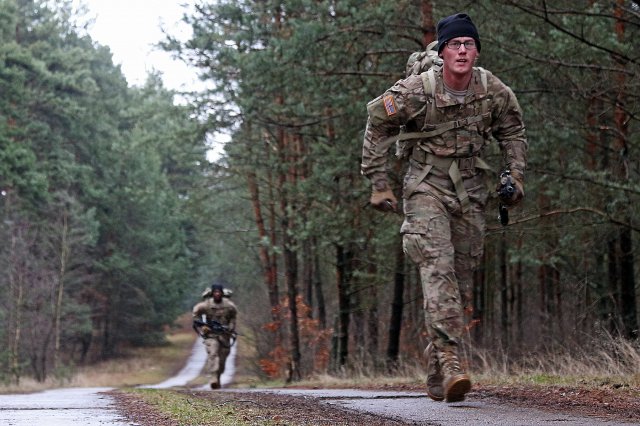
But in Selection, the proper packing of the ruck may not be as important as it will be later. Right now we’re worried about weight. Or to be more specific, having the correct weight.
If the cadre members tell you to have a 45-pound ruck without food and water, that’s exactly what that means and when I say err on the side of caution, the sword cuts both ways. 44 pounds and 15 ounces won’t cut it and will result in failure and the long walk to the truck doing the duffel bag drag. We always would add about 2-5 pounds extra just to be safe.
But just as being smart and adding a couple of extra pounds to be safe, there is also “too much of a good thing.” And yes, we saw this all too often as well. If the cadre says “45-lbs” while 50 is okay, going out there with 75-80 is not. Trust me, you won’t get Brownie points or extra credit for it. And with what you’re going to be tasked to do, adding that much weight will sink you fast. So, don’t go overboard with it. As always, be smart.
Your weight should be packed up high between the shoulder blades. When training, pack your sandbag in the radio pouch up high. I prefer sandbags because they mold to your pack and back and don’t have any sharp edges that can rub you on a ruck.
For preparatory training, the guys over at GoRUCK sell these nice molded plates that will do the trick. They take all the guesswork out of it. I’ve used weighted plates in the past. But as I mentioned above, I have always preferred to use sandbags.
Water and hydration are always very important, even on days when it is cloudy, cool and threatening rain. So, stay hydrated and force yourself to keep sipping while on the trail. Keep your hydration up in pre-training and it will be easier to keep going once you are in the course.
The only way to get better at rucking is to practice, practice and then practice some more. It has to become part of you and become an extension of your own body. As the old saying goes, “Embrace the Suck.” Many people I knew hated rucking, but once they got in the habit of doing it, they would ruck several times a week.
Many of the questions we get here are about rucking for speed. So let’s address the elephant in the room about getting some speed going. When it comes to increasing speed, I highly recommend that you DON’T run with a rucksack on your back while in your prep training.
They’ll be times in your selection course or the qualification course that you’ll have to make up time or want to pick up your pace, especially on the downhill slopes. At those times, you’re going to have to do what you must; but during your pre-training preparation don’t do it. Learn to increase your speed without running. Running with a ruck will hurt your knees and back…take it from the guy with two arthritic knees.
I like to lengthen my stride on the downhill slopes; some guys will tell you the exact opposite. Again, find out what works for you and stick to it. But the bottom line is: don’t resort to running to increase your speed. You’re going to have to learn to ruck quickly without running sooner or later.
The standard is a 15-minute mile pace to pass the courses — you should be aiming to go lower than that. Back in the day, I used to maintain around a 13-minute per mile pace, which would bring myself in with around 20-25 minutes to spare on a 12-miler. And I could keep that pace for a 20-miler.
The better you get acquainted with your rucksack the better off you’ll be in SFAS. For those attempting Selection that are coming from light infantry, airborne, or the Ranger Regiment, this will already be second nature to you. But if you’re enlisting in the 18X program or coming from a soft-skill MOS, this can’t be overstated.
If anyone ever has any questions, feel free to send them along to [email protected]. I’ll be glad to answer them and we may use them in our next article.








COMMENTS