

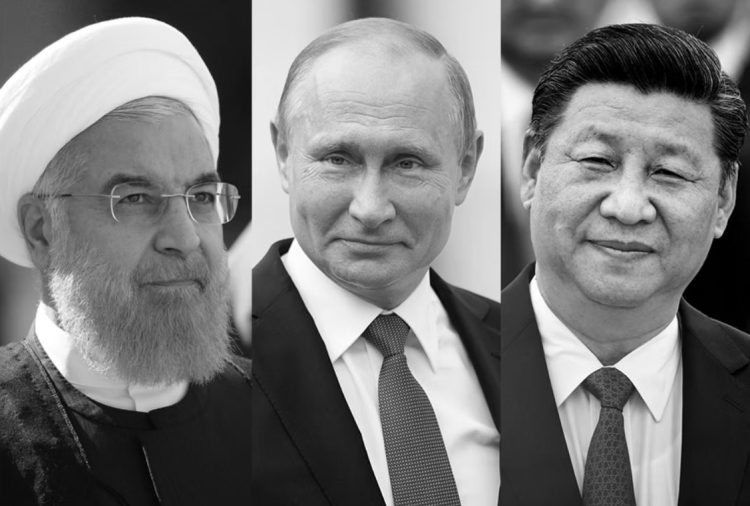
Then there’s the elephant in the war room—no mutual defense agreements. Despite all the photo ops and “strategic partnerships,” neither Russia nor China has promised to defend Iran if things go sideways. That tells you everything. These aren’t alliances built for wartime; they’re relationships built for headlines.
Even their diplomacy is hollow. The March 2025 meeting in Beijing was all smiles and anti-sanctions rhetoric, but when the dust settles, those statements are as flimsy as wet tissue. No weapons. No action. Just more “dialogue” and “multilateral engagement”—the kind of words that sound good in UN speeches and nowhere else.
At the end of the day, China and Russia are playing their own game. They don’t want a nuclear-armed Iran throwing off the balance of power in the Middle East. That kind of instability messes with their energy interests, investment plans, and the kind of soft-power influence they’ve been quietly cultivating for years.
So, while they may talk like Tehran’s best friends, their actions tell a different story. They’re not willing to go down with the ship—and they’re certainly not signing up to fight Iran’s battles.
Chinese State Media, Xinhua News on X:
“China will continue to firmly support Iran in safeguarding its national sovereignty, territorial integrity, and national dignity, and will strongly oppose any external forces interfering in Iran’s internal affairs, said Chinese premier”. pic.twitter.com/bazkrZBeJn
— Truth_teller 🇷🇺 (@Truthtellerftm) July 4, 2025
A $400 Million Crypto Crackdown
Over the past ten years, the U.S. Secret Service has quietly become one of the biggest crypto enforcers on the planet, snagging nearly $400 million in digital assets from scammers, fraudsters, and online hustlers. At the heart of this operation is the agency’s Global Investigative Operations Center—GIOC for short—a cybercrime-fighting unit that knows its way around a blockchain like a bloodhound on a scent.
The GIOC is doing more than poking around in the dark. These guys are using advanced blockchain analysis tools, open-source sleuthing, and old-school detective work to follow dirty money as it bounces through digital wallets and laundering networks like a pinball on steroids. Whether it’s a romance scam that tugs at heartstrings or an “investment opportunity” too good to be true, if there’s crypto involved, the Secret Service is on it.
What really sets this operation apart is how global it is. The agency has teamed up with law enforcement in more than 60 countries and struck deals with crypto giants like Coinbase and Tether to freeze stolen funds before they vanish into the ether. In one jaw-dropping case, they clawed back $225 million in USDT—yep, all from a tangled web of scams that ran through hundreds of thousands of transactions before the crooks tried to stash it in a few wallets. Bad move.
But this isn’t just about chalking up wins for the government. A big part of the mission is getting stolen money back into the hands of the victims. The scammers love to bait people with flashy websites, fake promises, and emotional manipulation. The Secret Service is making sure they pay for it—and making sure some of that stolen cash finds its way home.
Bottom line: the Secret Service has turned itself into a serious player in the war on crypto crime. With $400 million in seized assets tucked away in cold wallets under government control, they’ve built one of the largest digital treasure chests in the world—and they’re just getting started.
The U.S. Secret Service has gathered almost $400 million worth of cryptocurrencies that they seized from criminals
This money is kept in a “cold wallet,” which is a very secure way to store digital currency offline, making it hard for anyone to steal pic.twitter.com/9MfGtpsw5B
— Coinsauce (@CoinsauceCrypto) July 6, 2025








COMMENTS